






Understanding the Earned Income Worksheet
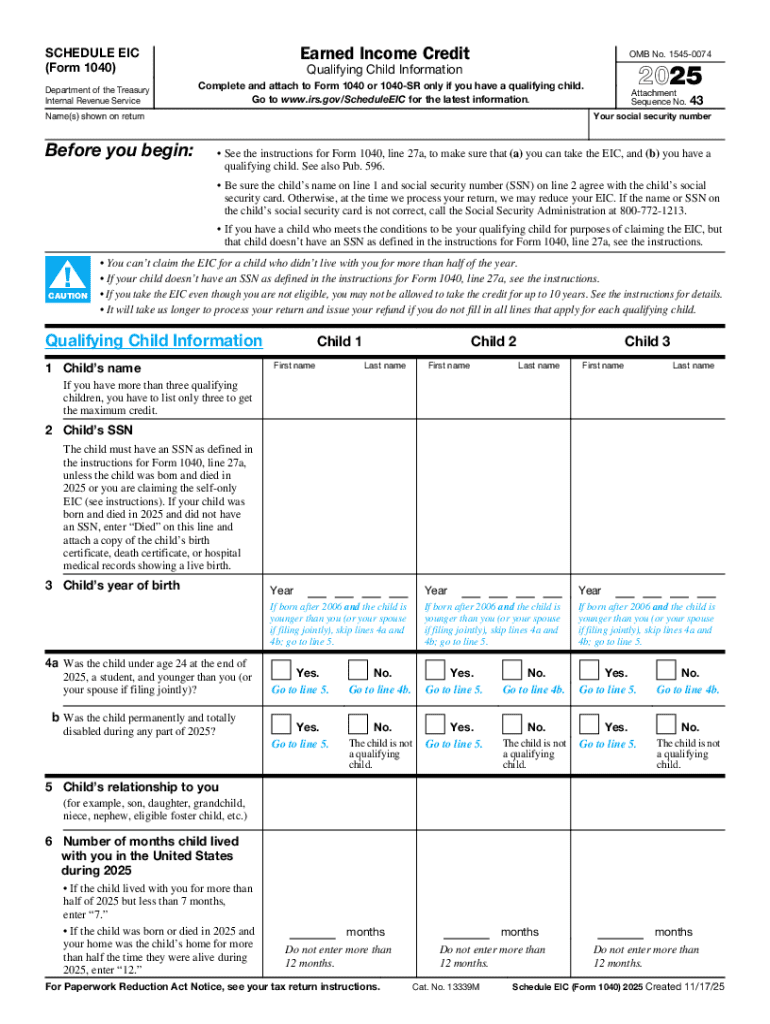
The Earned Income Worksheet is a crucial part of the Form 1040 Instructions, Step 5. It helps taxpayers calculate their Earned Income Credit (EIC), a tax credit available to low- to moderate-income working individuals and families. This worksheet is designed to ensure that taxpayers accurately compute their credit based on the income earned from work.
Components of the Earned Income Worksheet
- Earned Income Definition: Includes wages, salaries, tips, and other compensation. It also encompasses net earnings from self-employment and other sources of compensation.
- Investment and Unearned Income: Excludes income such as interest, dividends, pensions, and other non-earned sources.
- Adjusted Gross Income (AGI): Determines eligibility for EIC; may affect the credit amount if a certain threshold is surpassed.
Key Steps to Complete the Earned Income Worksheet
- Gather Required Financial Information: Collect all pay stubs, W-2 forms, and records of any other income.
- Calculate Total Earned Income: Sum up all sources of earned income for the year.
- Determine Adjusted Gross Income: Refer to your AGI as listed on your tax return.
- Follow IRS Instructions Carefully: Utilize the worksheet instructions to accurately compute the credit and confirm eligibility.
Important Considerations
- Special Rules for Self-Employed: Consider net profits as earned income but exclude certain deductions that apply to traditional wage earners.
- Calculation Errors: Pay close attention to details to avoid mistakes that can affect your refund or tax liability.
Eligibility Criteria for the Earned Income Worksheet


General Requirements
- Income Limits: Must fall below IRS-established limits for AGI and earned income to qualify for the EIC.
- Filing Status: Married filing jointly, head of household, single, and qualifying widow(er) statuses can qualify. Married taxpayers must generally file jointly.
- Dependent Criteria: Can include children under specific age and residency requirements.
Situational Examples
- Single Parent: May qualify for a higher credit amount when claiming dependents.
- Married with No Dependents: Still eligible for certain credits, albeit lower amounts compared to households with children.
IRS Guidelines on Using the Earned Income Worksheet
Compliance and Legal Use
- IRS Instructions: Follow IRS guidelines strictly to ensure compliance with tax laws.
- Auditing Risk: Inaccurate reports can lead to audits and potentially penalties.
- Supporting Documentation: Retain all relevant income documentation for verification purposes.
Penalties for Non-Compliance
- Late Submission: May result in penalties or reduced credits.
- Inaccurate Reporting: Can trigger fines and increased scrutiny from the IRS.
Required Documents for Completing Form 1040 Instructions, Step 5
- Form W-2: Wage and tax statement for employees.
- Form 1099: For independent contractors and other non-employee compensation.
- Tax Return: Previous year's Form 1040 for reference on AGI and other data.
Obtaining the Form 1040 Instructions, Step 5
Methods to Access the Form
- IRS Website: Direct downloads from the IRS portal for the latest forms and instructions.
- Tax Preparation Software: Applications like TurboTax or QuickBooks often incorporate these forms for ease of use.
- Physical Copies: Available at IRS offices or through mail by request.
Impact of Filing Deadlines and Important Dates
- April 15 Deadline: Standard filing deadline unless extended due to special circumstances, such as expected refunds or active military service.
- Extensions: Available upon request but require accurate filing of extension requests to avoid penalties.
Managing Timely Submissions
- Electronic Filing: Recommend using IRS e-file systems for faster processing and confirmation.
- Mail Submissions: Ensure documents are postmarked by the deadline to avoid penalties.
Software Compatibility and Alternatives
Integration with Tax Software
- TurboTax and QuickBooks: Both support Form 1040 and associated worksheets, including automatic calculations for EIC.
- DocHub Integration: For managing documents and tracking changes in a collaborative setting with colleagues or tax professionals.
Paper vs. Digital Filing
- E-File Benefits: Quicker processing, reduced error risk, and immediate confirmation.
- Paper Filing Cons: Longer processing times and increased chance of data entry mistakes.
Conclusion
Understanding and accurately completing the Form 1040 Instructions, Step 5, Earned Income Worksheet is essential for maximizing eligible tax credits. By following IRS guidelines, ensuring thorough documentation, and considering state-specific differences and filing tools, taxpayers can ensure a smooth and compliant tax filing experience.