






Definition & Purpose of Form 15109 (Rev 1-2023)
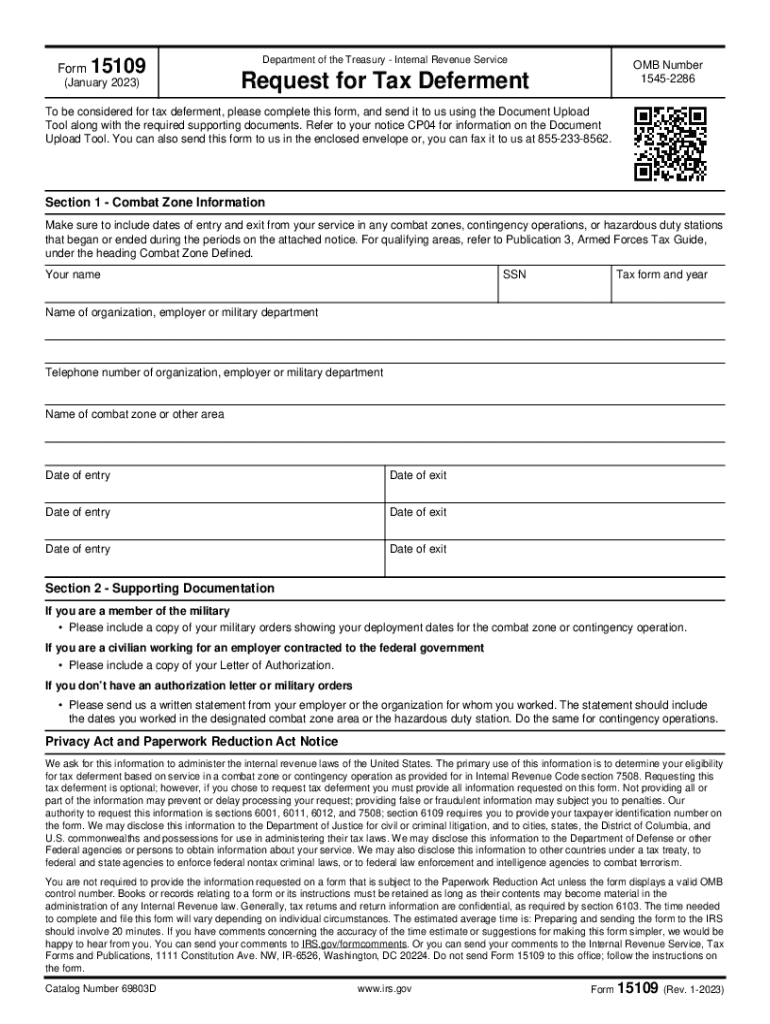
Form 15109 (Rev 1-2023) is issued by the Department of the Treasury, Internal Revenue Service (IRS), and is primarily a request for tax deferment. This form is utilized by individuals or businesses seeking to defer tax payments under specific circumstances. Typically, it is relevant for those experiencing financial hardship or needing temporary relief from their fiscal obligations. The comprehensive nature of the form ensures the IRS receives all necessary information to determine eligibility for deferment.
Steps to Complete Form 15109 (Rev 1-2023)
Completing Form 15109 (Rev 1-2023) involves several critical steps to ensure accuracy and compliance. Below is a detailed guide:
- Gather Required Information: Before commencing, collect all necessary documentation such as identification details, financial statements, and proof of income.
- Review Eligibility Criteria: Ensure you meet the IRS eligibility criteria for requesting a tax deferment.
- Fill in Personal Information: Start by entering your full name, Social Security Number (SSN), and contact information.
- Provide Detailed Financial Information: Include a comprehensive overview of current income, expenses, assets, and liabilities.
- Complete the Statement of Hardship: Clearly articulate your reasons for requesting deferment and any supporting evidence of financial hardship.
- Review and Sign: Double-check for any errors or omissions, then sign and date the form.
- Submit the Form: Follow the specified submission protocols, whether opting for mail, online, or in-person delivery.
Important Terms Related to Form 15109 (Rev 1-2023)
Understanding key terminology is essential when dealing with Form 15109:
- Tax Deferment: A temporary delay in the payment of taxes, often granted due to financial hardship.
- Eligibility Criteria: Set conditions that must be met to qualify for deferment.
- Financial Hardship: A significant and documented financial difficulty that impacts the ability to meet tax obligations.
- Audit Trail: A systematic documentation of the history of the form's completion, submission, and approval status.
Legal Use of Form 15109 (Rev 1-2023)
Form 15109 must be used according to specific legal stipulations set forth by the IRS. It serves as a formal request for tax payment deferment and is legally binding upon submission. The information disclosed in the form must be accurate and truthful; providing false information may result in legal consequences, including penalties or denial of the deferment request.
IRS Guidelines for Form 15109 (Rev 1-2023)
The IRS provides specific guidelines to ensure the correct use of Form 15109:
- Submission Deadlines: Timely submission is crucial. Late forms can lead to automatic denial of deferment requests.
- Accuracy of Information: All details provided must be accurate and complete. Misinformation may result in legal action.
- Financial Disclosure: Full disclosure of all financial situations is mandatory, and failure to do so can lead to denial.
- Supporting Documents: Attach all relevant supporting documents to validate financial hardship claims.
Penalties for Non-Compliance
Failure to comply with the regulations concerning Form 15109 can result in several penalties:
- Interest on Unpaid Taxes: Accrued interest on unpaid amounts if deferment is not granted or the application is found non-compliant.
- Fines: Monetary fines imposed for submitting incorrect or misleading information.
- Ineligibility for Future Requests: Non-compliance may result in becoming ineligible for future deferment requests.
Form Submission Methods
Form 15109 can be submitted through multiple channels:
- Online Submission: Through the IRS's official website or authorized portals.
- Mail: Send the completed form and required documents to the address specified by the IRS.
- In-Person: Submission at an IRS office, which may be necessary for certain cases where physical presence is required.
Each submission method should adhere to specific guidelines to ensure acceptance and processing without delays.
Key Elements of Form 15109 (Rev 1-2023)
Understanding the main components of Form 15109 is essential for successful completion:
- Personal Details: Identification and contact information.
- Financial Overview: Detailed income, expenses, and asset declarations.
- Reason for Deferment: A precise statement of financial hardship or other qualifying conditions.
- Supporting Documentation: Necessary attachments for proving claims made within the form.
Examples of Using Form 15109 (Rev 1-2023)
Practical scenarios illustrate when Form 15109 is typically utilized:
- Personal Financial Hardship: An individual facing unexpected medical expenses that impair their ability to pay taxes.
- Business Cash Flow Issues: A small business experiencing a temporary cash flow crisis due to delayed payments from clients.
- Natural Disasters: Tax deferments following natural disasters that disrupt personal or business finances.
In each case, the form offers a structured way to apply for necessary financial relief.