
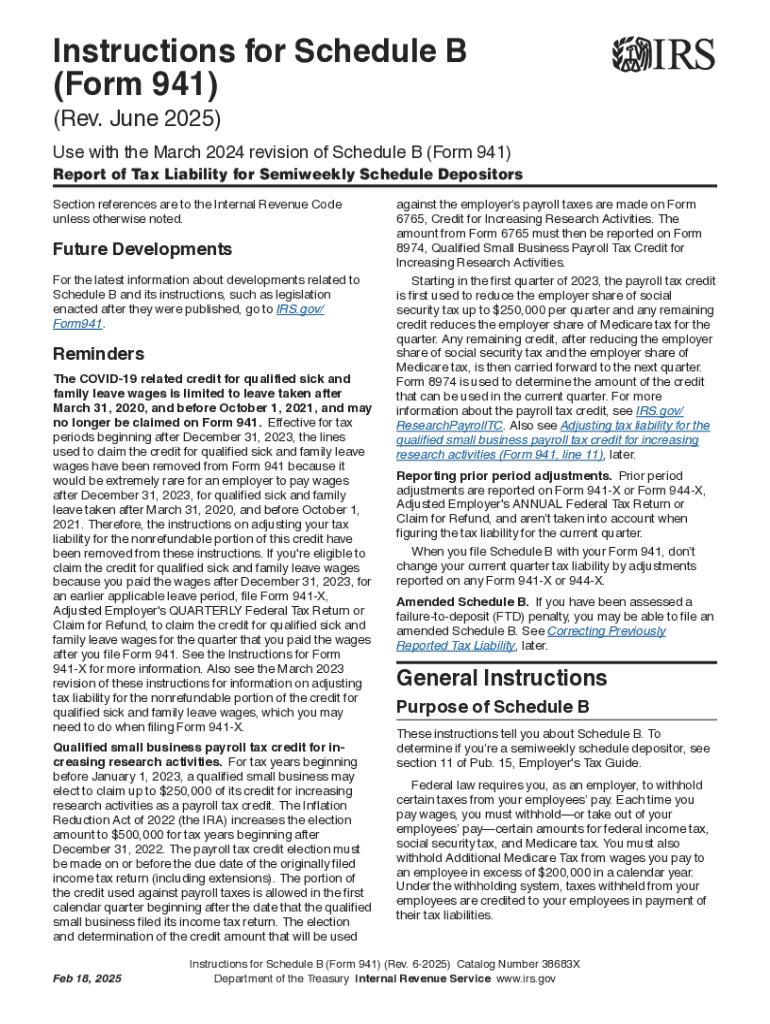







Definition and Purpose of Schedule B (Form 941)
Schedule B (Form 941) is an attachment to Form 941, Employer's Quarterly Federal Tax Return, that is used by semiweekly schedule depositors to report their tax liabilities for each day of the tax period. It plays a crucial role for employers who are required to withhold federal income taxes and Social Security and Medicare taxes from their employees’ wages. This document ensures that tax liabilities are reported accurately and on time, facilitating the Internal Revenue Service's (IRS) ability to maintain accurate records of an employer’s tax obligations. By detailing liabilities on a per-day basis, this schedule aids in preventing discrepancies in tax reporting and ensures compliance with federal tax regulations.
How to Use the Instructions for Schedule B (Form 941)
When filling out Schedule B, it's essential to follow the detailed instructions provided by the IRS to ensure that the form is completed accurately. These instructions guide employers through the process of recording tax liabilities for each payroll date. To use the instructions effectively:
- Review the IRS instructions carefully to understand each section of Schedule B.
- Identify the correct payroll dates related to your tax liabilities.
- Record daily tax liabilities in the correct corresponding fields on Schedule B.
- Verify that the total liabilities for the quarter match the total tax liabilities reported on Form 941.
- Pay special attention to any special provisions or exceptions noted in the instructions, as they may alter the way liabilities are reported.
Steps to Complete Schedule B (Form 941)
Completing Schedule B involves a systematic approach to ensure accuracy:
- Gather Payroll Records: Collect detailed records of all payroll transactions for the quarter.
- Identify Tax Period: Determine the exact dates for which tax liabilities need to be reported.
- Daily Tax Liabilities: Enter the exact amount of tax withheld for each day within the identified tax period. Use the IRS instructions as a guide for entering amounts in the correct fields.
- Verify Totals: The total liabilities recorded on Schedule B should match the overall tax liability reported on Form 941.
- Double-Check Entries: Carefully review all entries for errors or omissions.
- Submit for Review: Before filing, have a second person review the form if possible to ensure completeness and accuracy.
Who Typically Uses the Instructions for Schedule B (Form 941)
Schedule B (Form 941) is primarily used by semiweekly schedule depositors. This category generally includes:
- Employers with a significant payroll tax liability, exceeding established thresholds by the IRS.
- Large corporations and companies dealing with large numbers of employees.
- Organizations that are required to deposit withheld taxes more frequently due to the size of their payroll operations. Individual small businesses may use a different deposit schedule unless they surpass specific IRS limits. Understanding who needs to use Schedule B is crucial for meeting federal tax obligations correctly.


IRS Guidelines for Schedule B (Form 941)
The IRS has established specific guidelines for completing and filing Schedule B. These guidelines not only determine the proper methods for reporting tax liabilities but also set the timelines for submissions:
- Compliance: Employers must ensure compliance with accurate daily reporting of tax liabilities to avoid penalties.
- Submission Deadlines: Schedule B should be filed alongside Form 941 by the end of each quarter: March 31, June 30, September 30, and December 31.
- Reporting Methods: Tax liabilities can be reported electronically or via paper, but accuracy is essential in either format.
- Amendments: If errors are discovered after submission, employers must file an amended form to correct inaccuracies following IRS specified steps.
Filing Deadlines and Important Dates
Understanding the filing deadlines for Schedule B is imperative for avoiding penalties:
- Quarterly Due Dates: Schedule B, along with Form 941, must be filed quarterly by the following dates:
- Quarter one: April 30
- Quarter two: July 31
- Quarter three: October 31
- Quarter four: January 31 of the following year
- Weekend or Legal Holiday: If the deadline falls on a weekend or legal holiday, the due date is the next business day.
- Deposit Schedule: Ensure that deposits are made according to the semiweekly deposit schedule to avoid late penalties.
Required Documents for Filing
For seamless filing of Schedule B:
- Payroll Records: Detailed records for each payroll period and corresponding tax liabilities.
- EIN (Employer Identification Number): Your unique identification number provided by the IRS.
- Form 941: The primary form to which Schedule B is attached. Accurate and up-to-date documents are vital to prevent filing delays and ensure compliance with IRS regulations.
Penalties for Non-Compliance
Filing Schedule B (Form 941) incorrectly or failing to report on time can result in penalties set by the IRS:
- Late Filing Penalty: If the form isn’t filed by the due date, a penalty of 5% of the unpaid tax amount can be assessed for each month or part of a month the return is late, up to 25% of the unpaid taxes.
- Incorrect Reporting: Fines may also apply for significant discrepancies in reported tax liabilities compared to actual payroll activities.
- Interest on Unpaid Taxes: Interest charges can accrue for unpaid taxes if liabilities are not settled in accordance with the IRS deposit schedules. Understanding these penalties can help ensure compliance and prioritize accurate reporting.




