






Definition & Meaning
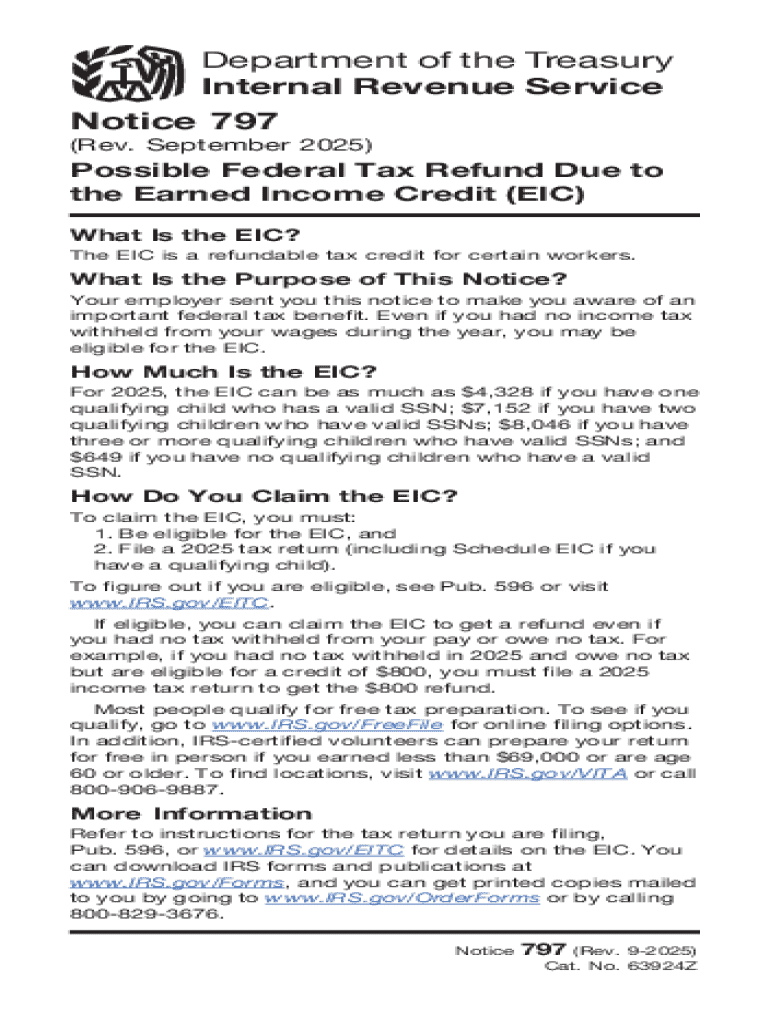
Notice 797 is issued by the IRS to inform workers about the Earned Income Credit (EIC), a significant tax credit that can offer financial relief. As of September 2025, the Notice provides updated information related to the EIC, such as eligibility criteria, potential credit amounts, and essential filing instructions for taxpayers. By understanding the contents of Notice 797, taxpayers can determine if they qualify for the EIC and leverage potential refunds to reduce their tax liabilities.
Important Terms Related to Notice 797
- Earned Income Credit (EIC): A refundable tax credit designed to support low to moderate-income working individuals and families, particularly those with children.
- Refundable tax credit: A credit that can result in a refund if it exceeds the amount of taxes owed.
- Qualifying child: A dependent who meets certain IRS criteria related to relationship, age, residency, and support.
Understanding these terms is crucial for interpreting Notice 797 and effectively applying the EIC.
How to Use the Notice 797 (Rev September 2025)
Notice 797 provides specific information on how to claim the EIC by filing a 2025 tax return. Taxpayers should review their financial situations to check their eligibility for the credit. The Notice also outlines how to report earned income and qualifying children on the tax return accurately. Taxpayers are encouraged to utilize this guidance to maximize their potential refunds.
Steps to Complete Notice 797
- Evaluate Eligibility: Review your income and family status against the IRS criteria.
- Document Verification: Gather relevant documents, such as income statements and dependent records.
- Complete Tax Return: Report necessary details about your income and family status on the tax return.
- File the Return: Submit your return by the deadline to avoid penalties.
Eligibility Criteria
Eligibility for EIC under Notice 797 varies based on income levels, filing status, and the number of qualifying children. Specific criteria include:
- Income Limits: EIC is available to individuals and families earning below designated thresholds.
- Filing Status: Single, head of household, married filing jointly, or qualifying widow(er).
- Qualifying Dependents: Having one or more qualifying children under IRS definitions.


Examples of Using Notice 797
- Single Parent with Two Children: A single parent earning less than the specified threshold can claim a higher credit with two qualifying children, maximizing their refund.
- Married Couples: Married couples filing jointly with a combined income below the limit also qualify for significant EIC benefits.
Filing Deadlines / Important Dates
Notice 797 emphasizes the importance of meeting IRS deadlines to claim the EIC. For the 2025 tax year, taxpayers must ensure their returns are submitted by April 15, 2026, unless an extension is filed. Missing these deadlines could result in missed credits or penalties.
Required Documents
To claim the EIC, taxpayers must present the following documents:
- W-2 Forms: Documentation of wages and withholding provided by employers.
- 1099 Forms: For those with additional income streams, such as freelance or self-employment.
- Proof of Residence and Relationship: Government-issued IDs, school records, or other official documents that confirm the taxpayer's and dependents' identities and relationships.
IRS Guidelines
The IRS provides extensive guidance on leveraging Notice 797 to claim the EIC appropriately. Guidelines include:
- Filing procedures: Details on completing and filing tax returns accurately.
- Common errors: IRS warns against errors like incorrect Social Security numbers or filing status discrepancies.
- Free tax preparation services: Notice 797 outlines available resources and IRS-approved services to assist in tax filing.
Form Submission Methods
There are several ways to submit your tax return to claim the EIC:
- Online: File electronically using authorized IRS e-file providers.
- Mail: Send completed forms and paperwork via postal mail to designated IRS addresses.
- In-Person: Some IRS offices offer direct assistance, though availability may vary.
Digital vs. Paper Version
Taxpayers have the option to file either electronically or via paper submission. Electronic filing is generally faster, more secure, and preferred by the IRS, as it reduces the likelihood of errors compared to paper forms.
Penalties for Non-Compliance
Failing to comply with Notice 797's guidelines when claiming the EIC can lead to significant penalties. These may include:
- Fines for incorrect filings
- Disallowance of the credit for future years
- Potential audits and further penalties for fraudulent claims
Versions or Alternatives to Notice 797
Besides Notice 797, taxpayers might encounter other forms or notices regarding the EIC, each with unique specifications or for previous years. Staying updated with the latest version ensures compliance with current tax laws.
Form Variants
- Prior Year Notices: For reference in understanding any changes year-over-year.
- Alternative EIC Forms: Specific applications and worksheets that aid in calculating credit eligibility.
State-by-State Differences
While federal guidelines are consistent, state-specific rules may differ. Some states provide additional credits or have different filing processes. Taxpayers should consult their state's tax agency for localized guidance.
Key Takeaways
Reviewing the Notice 797 provides essential insights into eligibility and claiming procedures for the EIC. By adhering to the IRS guidelines, taxpayers can ensure accurate and timely submission, thereby maximizing their potential credits and avoiding penalties.