






Definition and Meaning of Formulario 2290
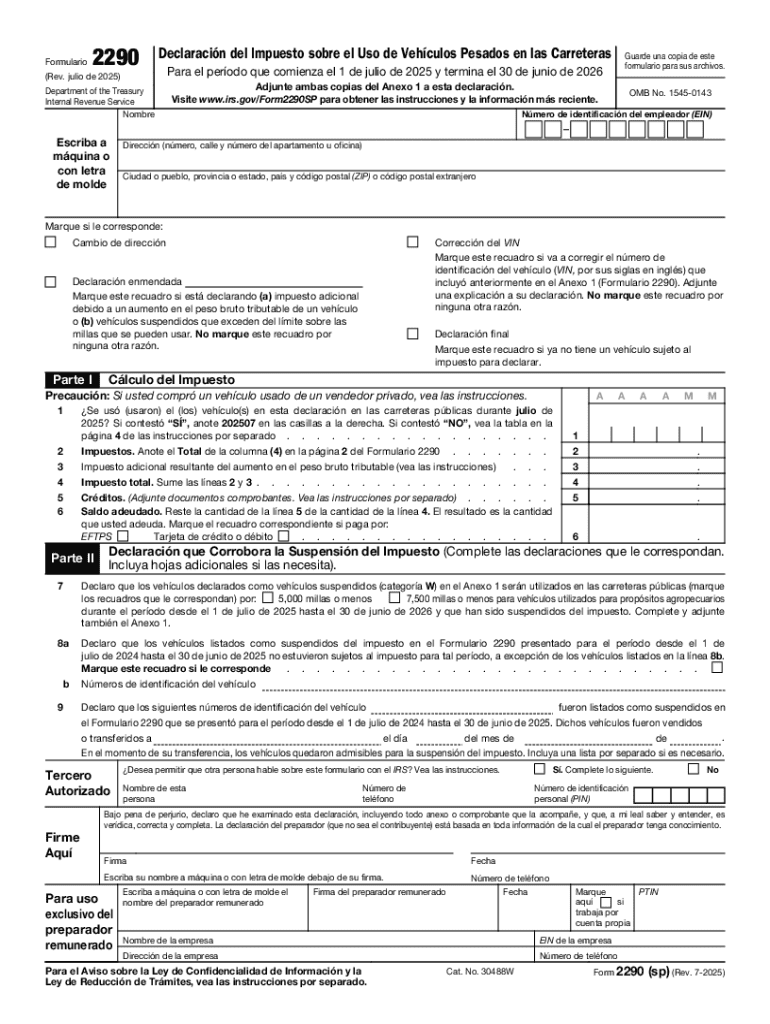
Formulario 2290, commonly known as Form 2290, is used in the United States to report and pay the Heavy Highway Vehicle Use Tax (HVUT). This federal tax applies to vehicles with a taxable gross weight of 55,000 pounds or more that are used on public highways. The taxes collected go toward the maintenance of these roads. It's essential to understand that this form is specifically designed for reporting the use of heavy vehicles, differentiating it from other tax forms designed for different purposes.
Taxable Vehicles and Exemptions
- Taxable Vehicles: Trucks, tractors, and buses weighing 55,000 pounds or more.
- Exempt Vehicles: Certain vehicles may be exempt, including:
- Those operated by government entities.
- Vehicles used by the American Red Cross.
- Vehicles operating as a mobile machinery unit for non-transportation functions.
How to Use the Formulario 2290
Using Formulario 2290 involves detailed procedures given its specificity in reporting highway use. Preparation and organization of necessary documents are crucial.
Essential Usage Steps
- Determine Liability: Calculate if your vehicle meets the HVUT criteria.
- Prepare Documents: Gather information about the vehicle(s), including the Vehicle Identification Number (VIN) and gross weight.
- Calculate Tax: Use the IRS tax table to compute the amount owed based on vehicle weight and expected road usage.
- Complete Form: Fill out all relevant sections accurately.
Practical Scenarios
- A company with a fleet of heavy trucks assesses each vehicle annually to file correctly.
- An owner-operator submits the form to remain compliant while deducting the tax as a business expense.
How to Obtain the Formulario 2290
There are several ways to access Formulario 2290, ensuring flexibility for different preferences and technological access levels.
Access Methods
- Download from IRS Website: The most direct way to obtain Form 2290 is from the IRS's official site.
- Request by Mail: For those preferring paper forms, request a physical copy from the IRS.
- Tax Professional: Contact a certified tax preparer who can provide and assist in filing the form.
Software Solutions
- Digital platforms often include Form 2290 in their tax preparation packages. Ensure the software is compatible with the latest IRS standards.
Steps to Complete the Formulario 2290
Filing Formulario 2290 requires careful attention to IRS regulations and proper documentation.
Completion Process
- Fill Personal Information: Include your personal or business name, address, and Employer Identification Number (EIN).
- Vehicle Details: List each vehicle's details, including the VIN and category weight.
- Calculate Tax Obligation: Use IRS guidelines to determine the exact tax amount.
- Submit Payment: Choose an acceptable payment method, such as electronic funds withdrawal or check.
Mistake Prevention
- Double-check VIN entries, as errors can lead to processing delays.
- Ensure all weight classifications are accurate according to the IRS cutoffs.
Why You Should File Formulario 2290
Filing Formulario 2290 is not only a legal requirement but also beneficial for businesses using heavy highway vehicles.
Importance of Filing
- Legal Compliance: Avoid penalties and interest from the IRS for non-compliance.
- Proof of Payment: Necessary for vehicle registration and operation within states.
Business Benefits
- Enhances credibility by maintaining IRS compliance.
- Allows for the deduction of the HVUT as a business expense in many cases.
Key Elements of the Formulario 2290
Understanding the core components of Form 2290 ensures accurate filing and compliance.
Critical Sections
- Part I: Identifies vehicles subject to tax and determines the amount due.
- Part II: Lists vehicles suspended from taxation due to their mileage not exceeding 5,000 miles annually.
Special Provisions
- Seasonal vehicles require specific considerations to accurately predict the tax owed.
Filing Deadlines and Important Dates
Meeting the deadlines for Form 2290 is crucial to avoid unnecessary charges and interest.
Key Filing Periods
- Annual Filing: The tax period runs from July 1 to June 30 of the following year, with returns typically due by August 31.
- Pro-rata Filing: New vehicles purchased or acquired during the tax period must file by the end of the month following the month first used.
Late Filing Consequences
- Penalties can accrue quickly, calculated by a percentage of the tax due plus additional fees for continued non-compliance.
Form Submission Methods
Form 2290 provides various submission options accommodating different user preferences.
Online vs. Mail Submission
- Electronic Filing (e-File): Recommended for 25 or more vehicles, but available to all. Quicker processing and immediate confirmation of receipt.
- Paper Filing: Available for those needing or preferring to submit manually.
Submission Tools
- Using authorized IRS e-file providers can streamline the process, offering additional support and clarity.
Penalties for Non-Compliance
Non-compliance with Formulario 2290 can result in steep financial and operational penalties, impacting business operations.
Monetary Penalties
- Late payment penalties of 0.5% of the total tax due for each month delayed.
- Additional interest charges of 0.54% monthly until payment is fully settled.
Operational Impact
- Impedes renewal of vehicle registrations or obtaining permits for highway use, potentially stalling business operations.
Understanding and mastering the intricacies of Formulario 2290 is essential for anyone operating or managing heavy highway vehicles in the United States, ensuring both legal compliance and financial efficiency.