






Definition and Purpose of Publication 1141
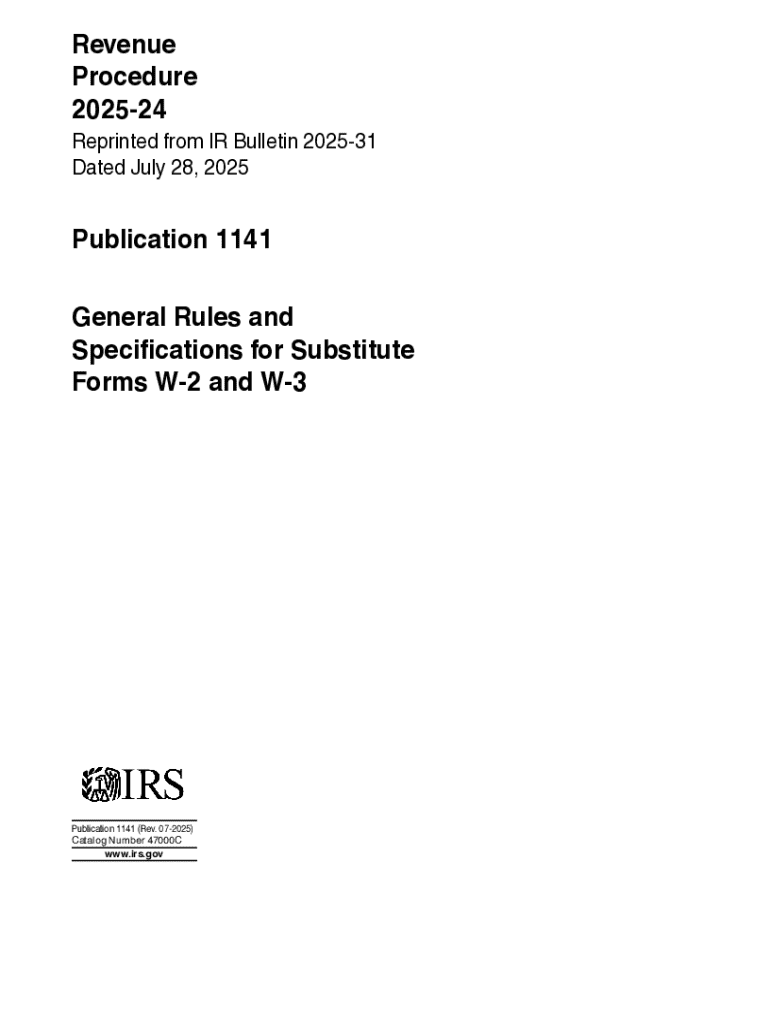
Publication 1141 (Rev July 2025) serves as an instructional guide for creating substitute Forms W-2 and W-3. It outlines the general rules and specifications essential for these substitute forms, ensuring they meet IRS standards. This publication is crucial for employers and tax professionals who wish to electronically file wage and tax statements, maintaining compliance with the Social Security Administration (SSA). It provides the necessary guidelines to ensure any substitute forms are processed correctly, helping to avoid potential filing errors and penalties.
Key Elements of Publication 1141
- Form Specifications: Details on required formats for red-ink and black-and-white versions of Forms W-2 and W-3 are covered.
- Filing Procedures: Instructions for both paper and electronic submissions ensure clarity for filers.
- Electronic Standards: Guidelines to meet electronic filing standards required by the IRS.
- Printing Specifications: Technical requirements for those opting to print forms, covering paper quality and size standards.
Publication 1141 is structured to facilitate a smoother filing process, aiding contributors in meeting all necessary tax document requirements efficiently.
Steps to Use Publication 1141
- Obtain the Guidelines: Access Publication 1141 through IRS resources, ensuring you have the most recent version with updated revisions.
- Review Specifications: Carefully read the printing and formatting specifications to understand the compliance requirements.
- Prepare Substitute Forms: Based on your understanding, design substitute Forms W-2/W-3 following the outlined guidelines.
- Check for Completeness: Ensure all critical fields are included and accurately formatted to avoid processing delays.
- Submit Forms: Choose the submission method (electronically or via mail) and comply with specific deadline instructions.
By adhering to these steps, you can successfully utilize Publication 1141 to prepare compliant substitute forms.
Legal Use of Publication 1141
The legal framework surrounding Publication 1141 emphasizes its role in ensuring substitute forms match official standards. It is legally mandated that any substitute form replicate the exact content and layout specified by the IRS to qualify as a valid document. Compliance with IRS standards as specified in Publication 1141 helps avoid penalties associated with improper form submissions.
Penalties for Non-Compliance
Non-compliance with Publication 1141 can lead to penalties which may involve monetary fines or rejected filings by the IRS. The publication is designed to prevent such issues by providing a comprehensive guide to proper document preparation. Any deviations from the specified format could be deemed non-compliant, leading to potential IRS actions against the filer.
Who Typically Uses Publication 1141
Common users of Publication 1141 include:
- Employers: When generating wage statements for employees using substitute forms.
- Tax Professionals: Accountants who prepare documents for corporate clients seeking streamlining in processing tax forms.
- Payroll Departments: Those handling large volumes of tax documents benefit directly from the clarity the publication provides.
These users rely on Publication 1141 to prepare accurate and compliant tax documentation efficiently.
Key IRS Guidelines in Publication 1141
- Compatibility: Substitute forms should enable compatibility with IRS processing systems.
- Content Match: Ensure that substitute forms carry identical information to the officially sanctioned Forms W-2 and W-3.
- Layout Consistency: Maintain the layout structure, as precise arrangements facilitate efficient IRS scanning and processing.
Following these guidelines helps avoid errors and ensures a seamless interaction with IRS systems.
Important Dates and Filing Deadlines
- Annual Deadline: Typically, Forms W-2 and W-3 must be filed by January 31 of the respective tax year.
- Electronic Filing Deadline: Similar deadlines apply to electronic submissions, emphasizing the urgency for real-time data availability.
Staying informed about these deadlines is essential to prevent late filing issues and ensure compliance with IRS filing requirements.
Software Compatibility for Documentation
Ensuring that your substitute forms are compatible with popular tax software such as TurboTax or QuickBooks can significantly streamline the filing process. These platforms generally accommodate IRS specifications outlined in Publication 1141, allowing for smoother digital filings. Validating compatibility helps avoid technical glitches and future compliance concerns.
Business Types Benefiting from Publication 1141
Publication 1141 proves particularly beneficial for:
- Small to Medium Businesses: Those needing reliable substitute forms for employee tax documentation.
- Corporations with Large Employee Pools: Where high-volume processing of Forms W-2/W-3 is required.
- Outsourced Payroll Service Providers: Those handling diverse client needs require clear and precise guidelines for form preparation.
These businesses benefit by ensuring compliance, reducing errors, and maintaining smooth operational workflows while preparing tax documentation.
Digital vs. Paper Versions
Choosing between digital and paper forms depends on organizational needs. Digital versions offer rapid processing and reduced physical document management, while paper versions may be preferred for traditional filing methods or where digital access is limited. Publication 1141 sets the standard for both, ensuring their equivalency in content and compliance.
This comprehensive understanding of Publication 1141 ensures that you are equipped with the knowledge needed to prepare substitute tax forms efficiently and in full compliance with IRS requirements.