




01. Edit your form online
Type text, add images, blackout confidential details, add comments, highlights and more.

Type text, add images, blackout confidential details, add comments, highlights and more.

Draw your signature, type it, upload its image, or use your mobile device as a signature pad.

Send it via email, link, or fax. You can also download it, export it or print it out.
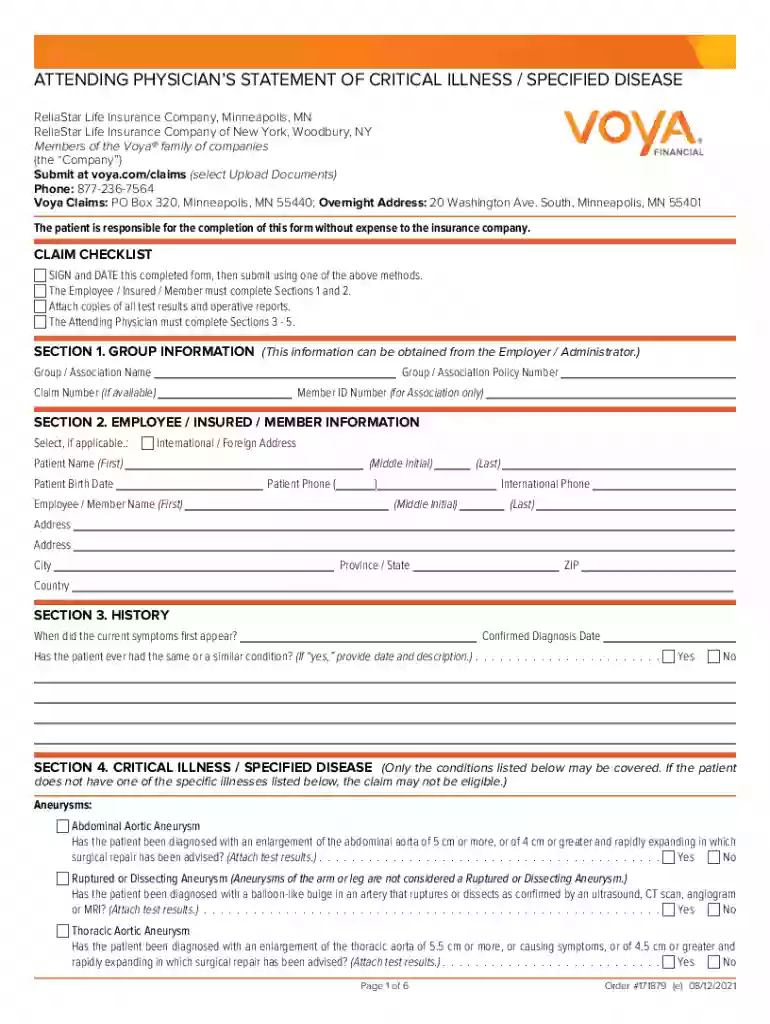
The Attending Physician's Statement of Critical Illness Specified Disease is a document utilized in the insurance claim process for individuals diagnosed with a critical illness or specified disease. Its primary purpose is to provide the insurance company with detailed medical information about the insured's condition, ensuring all necessary documentation is in place for claim evaluation. This statement generally contains sections for group information, patient details, medical history, and specific critical illnesses covered by the insurance policy.
To effectively use the Attending Physician's Statement, collaboration between the insured and their attending physician is crucial. The form must be completed comprehensively to facilitate a smooth claims process. Here's how you can utilize the form:
Completing this statement involves several key steps, which, if followed meticulously, ensure the document's accuracy and completeness:
Understanding the form's essential elements ensures nothing is overlooked during completion:
This form is primarily used by:


The legal significance of the Attending Physician's Statement cannot be overstated, as it acts as a formal and legal document in the insurance claims process. Both the physician and the insured must provide truthful, comprehensive information as inaccuracies or fraudulent declarations can lead to claim denials and possible legal consequences. The form ensures compliance with national health and insurance regulations.
Alongside the Attending Physician's Statement, certain documents are necessary to support the claim. These may include:
Timely submission of the Attending Physician's Statement is critical. Insurers typically have specific deadlines for receiving claim forms:
By understanding and applying detailed knowledge about the Attending Physician's Statement of Critical Illness Specified Disease, insured individuals and their medical teams can work together to ensure seamless claim processing and reduce the risk of delays or disputes with insurance providers.
At DocHub, your data security is our priority. We follow HIPAA, SOC2, GDPR, and other standards, so you can work on your documents with confidence.




CRITICAL CARE: Represents extraordinary care by the attending physician in personal A critical illness or injury acutely impairs one or more vital organ.
ATTENDING PHYSICIANS SIGNATURE I HEREBY docHub THAT THE ABOVE DESCRIBED INFORMATION IS BASED UPON REASONABLE MEDICAL PROBABILITY AND IS TRUE AND CORRECT TO
Claim Form for Physician. Attending Physicians Statement of Critical Illness/Specified Disease (Form #171879). Wellness Benefit Claim Reimbursement Forms. For


