






Definition & Meaning
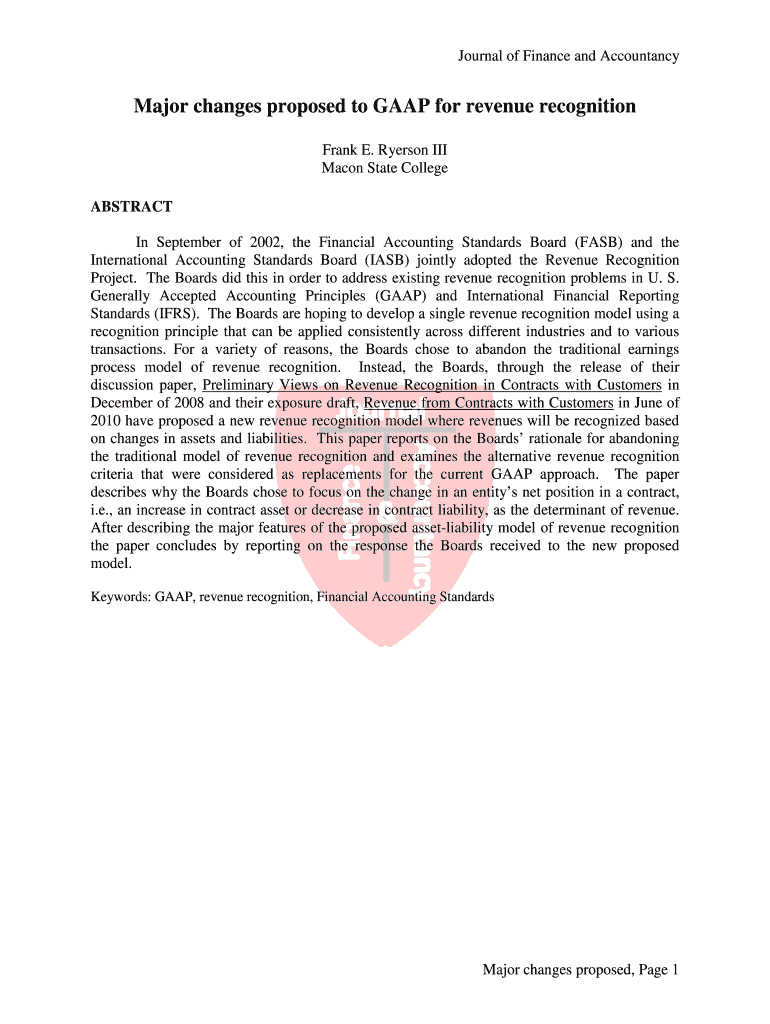
The "Major changes proposed to GAAP for revenue recognition" refer to modifications initiated by the Financial Accounting Standards Board (FASB) and the International Accounting Standards Board (IASB) concerning how companies recognize revenue in financial statements. These changes propose shifting from the traditional earnings process model to an asset-liability approach. Under the new model, revenue is recognized based on variations in contract assets and liabilities, aligning more closely with economic realities and providing more relevant financial information to stakeholders.
Key Elements of the GAAP Revenue Recognition Changes
The proposed changes to GAAP for revenue recognition introduce several key elements that companies need to consider. The focus is on the asset-liability framework, which necessitates recognizing revenue when performance obligations in a contract are fulfilled. This involves:
- Identifying contracts with customers.
- Determining performance obligations in the contracts.
- Allocating transaction prices to these obligations.
- Recognizing revenue as obligations are satisfied over time or at a point in time, depending on the nature of the performance.
Steps to Implement the New GAAP Standards
Implementing the new revenue recognition standards requires a systematic approach:
- Review current contracts to understand the implications of new standards.
- Revise internal accounting policies to comply with new requirements.
- Train staff responsible for contract management and financial reporting.
- Update financial systems and software to support new tracking and reporting needs.
- Perform regular audits to ensure ongoing compliance and adjustment to the new process.
Who Typically Uses These Changes
These changes primarily concern accountants, auditors, and financial executives within companies bound by U.S. GAAP and IFRS. They are also significant for investors and analysts who rely on financial statements to make informed decisions, as improved revenue recognition standards enhance the comparability and transparency of financial reporting across industries and regions.

Important Terms Related to GAAP Revenue Recognition
Understanding the proposal involves familiarizing with several key terms:
- Performance Obligations: The specific tasks or services a company promises to deliver in a contract.
- Transaction Price: The total amount of consideration a company expects to obtain in exchange for fulfilling performance obligations.
- Contract Asset: An entity’s right to consideration in exchange for goods or services that it has transferred to a customer.
- Contract Liability: An entity’s obligation to transfer goods or services to a customer for which the entity has received consideration.
Legal Use and Compliance
The proposed changes must be adhered to legally once adopted by regulators. Compliance involves not only altering accounting practices but also ensuring that these changes are documented and justified in financial statements. Legal implications may arise for non-compliance, including potential audits and penalties from regulatory bodies like the Securities and Exchange Commission (SEC).
Examples of Using the New Standards
Consider a software company that enters a service agreement with deferred performance obligations. Under the new standards:
- The company will allocate the transaction price across each distinct service obligation identified.
- Revenue will be recognized based on progress towards fulfilling each obligation, using methods such as input or output measures, depending on the obligation type.
State-Specific Rules for GAAP Revenue Recognition
While GAAP standards are national, state-specific regulatory bodies may have additional compliance requirements. These could involve supplementary reporting or disclosure mandates. Companies should consult with state boards of accountancy to understand any additional regional requirements or variances that might apply to their operations.
Business Types That Benefit Most
The changes are particularly beneficial to multi-national corporations and industries with complex contracts and multiple deliverables, such as technology, media, construction, and telecommunications. By aligning revenue recognition with contract terms and economic realities, these industries can provide more transparent and comparable financial information.
Software Compatibility and Implementation
Implementing the new revenue recognition standards will likely require updates to accounting software. Major software providers like QuickBooks or SAP are expected to support these changes, allowing companies to integrate new methods into their existing systems. Ensuring compatibility will require liaison with software vendors to adopt necessary updates or patches.
Disclosure Requirements for GAAP Changes
The implementation of these changes demands new disclosure requirements in financial statements, including:
- Details of significant judgments and changes in contract assets and liabilities.
- A disaggregated view of revenue recognized and future expected revenues.
- Explanation of methods used to allocate transaction prices to performance obligations.
In-depth understanding and strategic planning around these rules are essential for the successful adoption of the new GAAP revenue recognition standards.