






Definition & Meaning of Employment Verification
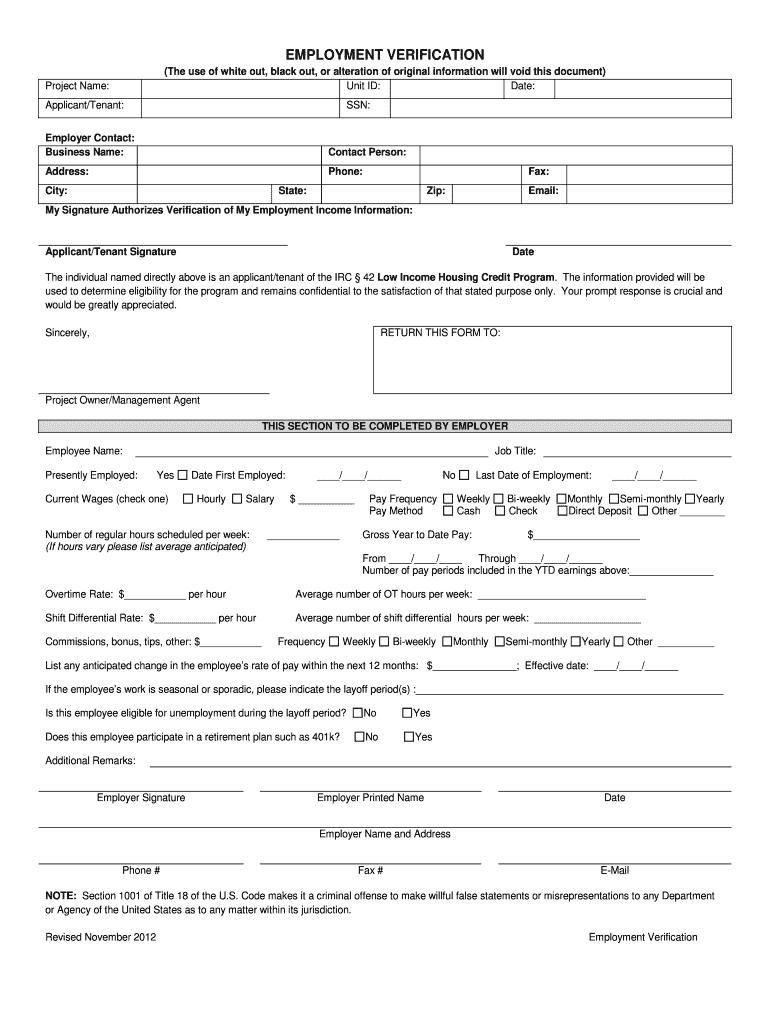
Employment verification is a process used to confirm an individual's employment history and income details. Primarily, this information is collected to establish eligibility for various programs, like the IRC § 42 Low Income Housing Credit Program, which aims to provide affordable housing options. Employers provide details such as job title, salary, and work duration. This verification ensures that individuals meet specific program requirements based on their current and past employment data.
Essential Components of Employment Verification
- Applicant Information: Includes the name, address, and contact details of the employee.
- Employer Details: Contains the employer's name, address, and contact information.
- Employment Data: Lists the job title, duration of employment, and current wage details.
- Confidentiality Clause: Ensures that the information is used solely for the intended verification purpose.
- Signatures: Requires signatures from both the applicant and the employer to validate the document.
How to Use the Employment Verification Form
Using the employment verification form is straightforward when you follow structured steps that ensure accurate data collection.
- Obtain the Form: Secure the latest version of the employment verification form, which may be available from housing authorities, employers, or relevant program administrators.
- Fill Applicant Details: Enter personal information, ensuring accuracy in the spelling of names and addresses to prevent discrepancies.
- Provide Employer Information: Fill out the section that asks for the employer's contact information and business details, ensuring all fields are complete.
- Detail Employment History: Accurate and current employment data should be provided, detailing job roles, tenure, salary, and any bonuses.
- Review and Sign: Both the applicant and employer should review the form for any errors and sign it to authenticate the information provided.
Practical Examples
- Mortgage Approval: Lenders often require employment verification to assess the borrower's ability to repay a mortgage.
- Tenant Screening: Landlords may use this verification to ensure a potential tenant has the steady income necessary to cover rent.
Why Employment Verification is Important
Employment verification serves multiple critical roles across different sectors, enhancing transparency and trust.
- Credit Applications: Verification helps lenders assess an applicant's financial reliability before approving credit cards or loans.
- Program Eligibility: Public and private programs that have income or employment-based criteria rely on verification to confirm participant qualifications.
- Fraud Prevention: By accurately validating employment, verification helps prevent fraudulent claims and misuse of funds.
Scenarios Highlighting Importance
- Scholarship Applications: Many education grants require proof of income and employment status to determine financial need.
- Government Assistance: Social welfare programs assess eligibility based on accurate employment information supplied in these verifications.
Key Elements of the Employment Verification Form
Applicant and Employer Details
- Identification Information: Includes taxpayer ID or social security numbers for precise identification.
- Accurate Contact Details: Ensures follow-up and verification can be efficiently conducted by relevant authorities.
Employment History
- Start and End Dates: Verifies the continuity and duration of the applicant's employment, critical for establishing consistent income flow.
- Compensation Details: Annual salary, bonuses, or hourly wage rates that determine financial standing for various eligibility evaluations.
Legal and Confidentiality Notices
- Clear stipulation of the private and confidential nature of the gathered data, necessitating signed agreement from both applicant and employer for legal compliance.
Legal Use of the Employment Verification
Employment verification needs to adhere to strict legal standards to protect both employee and employer rights.
- ESIGN Act Compliance: Legally binding electronic signatures ensure digital submissions are equivalent to traditional paper signings.
- Data Protection Regulations: Uphold confidentiality agreements as per regulatory standards to protect sensitive employment information.
Examples of Legal Applications
- Background Checks: During recruitment processes, whereby employment verification is used legally to confirm a candidate’s suitability for a position.
- Compliance Audits: Companies may need to present employment verification records during audits to comply with labor laws.
State-Specific Rules for Employment Verification
While employment verification has standardized components, state-specific laws might affect its format and use.
- California: Employers must comply with more stringent data protection laws, potentially impacting how verification data is shared.
- New York: Requires additional employee consent for certain employment information disclosures beyond standard practices.
Unique State-Level Requirements
- Responsiveness: Some states impose specific timelines within which employers need to respond to verification requests, affecting processing times.
Steps to Complete the Employment Verification
Effective completion of the employment verification form ensures accurate representation of employment data and facilitates timely processing.
- Collect Necessary Information: Gather all personal, employer, and employment details beforehand to avoid mistakes.
- Fill Form Accurately: Use legible writing or digital input methods for clarity.
- Review for Errors: Double-check all entries against available records to ensure they reflect the applicant's true employment situation.
- Obtain Signatures: Secure signatures from all necessary parties before submission.
- Submit through Authorized Channels: Use predefined channels, whether online, mail, or in-person, to submit the completed form to the requesting agency.
Required Documents for Employment Verification
Specific documents accompany the employment verification form to support the provided details.
- Pay Stubs: Recent pay stubs offer precise proof of income and employment consistency.
- Tax Documents: Tax returns may be requested for long-term employment verification.
- Employment Letter: An official letter from the employer confirming employment status can supplement the verification form.
Through these comprehensively detailed sections, users can understand the intricacies, importance, and correct usage of the employment verification process, aligning with relevant legal standards and procedural necessities.