






Definition and Meaning
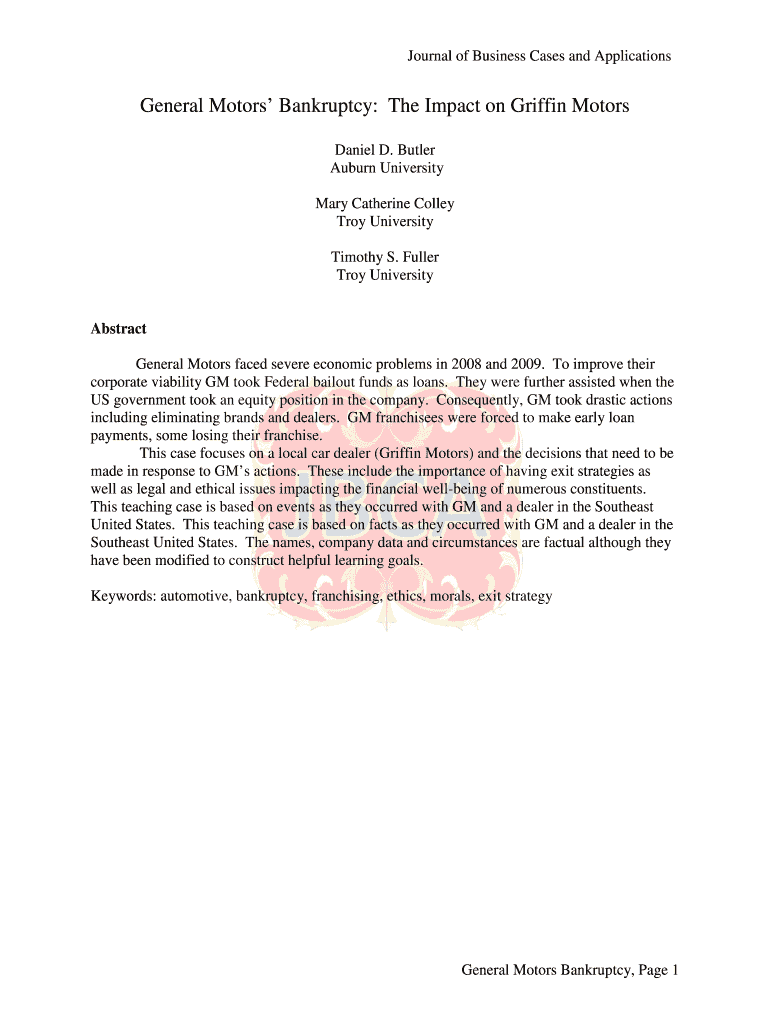
The term "General Motors Bankruptcy: The Impact on Griffin Motors" refers to the financial crisis General Motors (GM) faced during the 2 recession and its subsequent effects on smaller franchises, exemplified by Griffin Motors. This event underscores the ethical and operational challenges faced by franchisees like Tom Griffin, who were pressured to either accept GM’s buyout offers or continue operations amidst declining sales and increased financial burdens. It represents a significant case study in understanding the ripple effects of large corporate bankruptcies on smaller businesses.
Key Elements of the General Motors Bankruptcy Impact
The impact of GM's bankruptcy on Griffin Motors includes several critical elements that illustrate the broader implications for similar small businesses:
- Dealer Terminations: GM's restructuring plan led to the termination of many dealership agreements as part of its efforts to streamline operations.
- Buyout Offers: Franchisees, including Griffin Motors, faced the decision of accepting buyouts that may provide short-term financial relief but come at the cost of future business opportunities.
- Operational Pressures: Franchisees experienced intensified pressure from declining vehicle sales and increased compliance costs imposed by GM during its recovery process.
These elements are crucial for analyzing how large-scale corporate decisions can impact smaller entities under their umbrella.
Legal Use of the Form
The legal application of "General Motors Bankruptcy: The Impact on Griffin Motors" comes into play as franchises navigate their contractual rights and obligations:
- Contractual Obligations: Franchises must evaluate their legal standing in the face of GM’s strategic decisions, determining how existing contracts protect or limit their options.
- Exit Strategies: Legal agreements may outline specific exit strategy provisions, such as buyout clauses or arbitration options, which franchisees need to consider.
Understanding the legal framework is essential for decision-making during corporate restructuring events like GM's bankruptcy.
Business Types Benefiting from the Impact Analysis
Certain business types can gain insights from understanding the impact of GM's bankruptcy on Griffin Motors:
- Automobile Dealerships: Direct competitors and other dealerships can learn about the potential risks and mitigation strategies during industry downturns.
- Franchise-based Operations: Businesses relying on parent company stability can explore contingency measures and alternative revenue streams.
- Small, Family-owned Enterprises: These entities can draw parallels to their own operations in terms of resilience and adaptability in turbulent markets.
These business types benefit from analyzing this case to bolster their strategic planning and crisis management approaches.
Important Terms Related to General Motors Bankruptcy
Understanding the impact of GM's bankruptcy involves several key terms:
- Franchisee: An individual or company authorized to sell a company's goods or services in a particular location.
- Buyout Offer: An offer made to buy the business or terminate a contract, usually during restructuring.
- Bankruptcy: A legal proceeding involving a person or business unable to repay outstanding debts, applicable to GM in this context.
These terms help in comprehending the core components of the case study.
Steps to Analyze the Impact on Franchise Operations
To assess the impact on operations like Griffin Motors, one can follow these steps:
- Evaluate Financial Health: Conduct an in-depth analysis of the current financial standing and historical performance.
- Review Contractual Agreements: Examine existing contracts to identify potential legal vulnerabilities and protective provisions.
- Assess Market Conditions: Consider industry trends and competitive pressures that may influence operational decisions.
- Explore Strategic Options: Evaluate potential strategic responses, including potential partnerships, diversification, or exits.
- Implement Mitigations: Develop and implement mitigation strategies to address identified risks and capitalize on new opportunities.
This structured analysis can aid businesses in preparing for and responding to large-scale corporate disruptions.
Examples of Using the Impact Analysis
The General Motors bankruptcy provides critical lessons for similar situations:
- Real-World Application: Auto industry franchises that underwent similar turbulence can relate to Griffin Motors’ experience in evaluating buyouts versus staying operational.
- Case Studies: Business schools use this example to teach ethical decision-making and management strategies during corporate restructuring.
- Policy Development: Policymakers assessing the impact of large corporate bankruptcies on local economies may find this analysis useful in formulating supportive measures.
These examples underscore the broader applications of the lessons learned from Griffin Motors’ experience.
State-Specific Rules for Franchises
Different U.S. states may have specific laws governing franchise operations and bankruptcy proceedings:
- State Franchise Laws: Variations in state laws can affect the enforceability of franchise agreements and the rights of franchisees during bankruptcy.
- Bankruptcy Proceedings: State-specific rules may influence the timeline and processes of bankruptcy, affecting the resolution of dealership terminations.
Understanding state-specific regulations is vital for comprehensively addressing the implications of corporate bankruptcy on franchisees like Griffin Motors.
Who Typically Uses This Information
This impact analysis is particularly useful for:
- Franchise Owners: Seeking insights on coping strategies and legal considerations during parent company financial turmoil.
- Legal Advisors: Assisting clients in navigating contractual obligations and preparing for potential disputes.
- Business Analysts: Evaluating industry trends and the effects of major bankruptcies on smaller market players.
These users rely on the detailed examination of the GM bankruptcy’s repercussions to make informed decisions and recommendations.