







Definition & Meaning
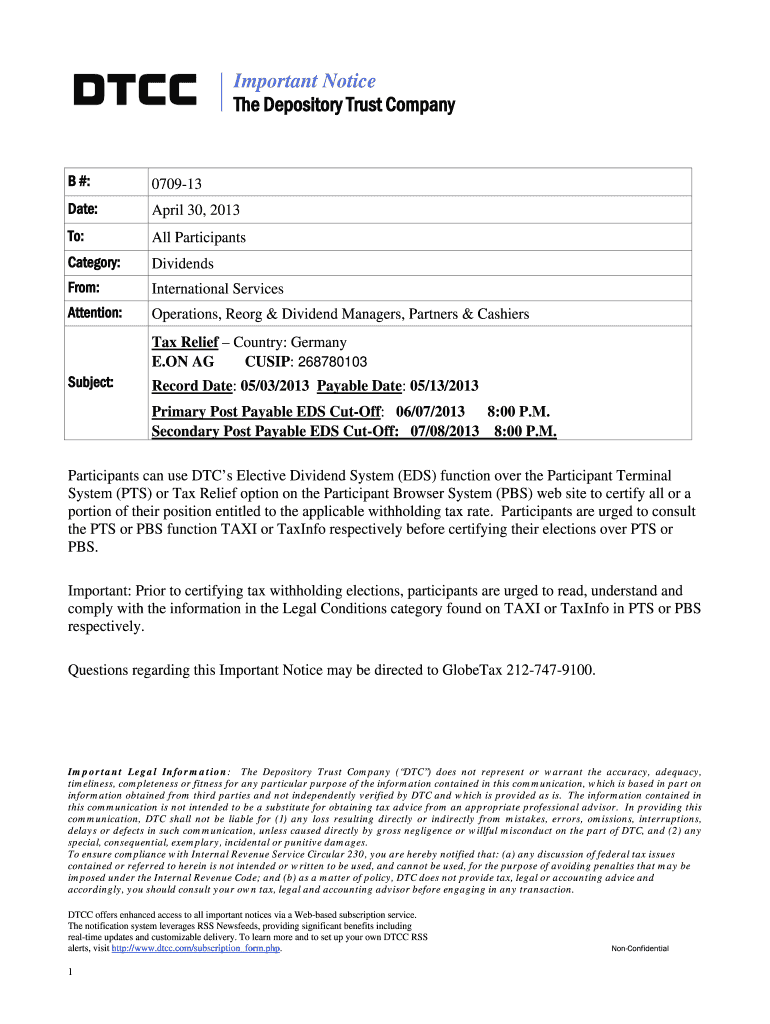
An "Important Notice" serves as a critical communication document typically used to convey essential information between entities such as businesses, financial institutions, or government bodies and their stakeholders. In the context of financial transactions or corporate communications, these notices can detail changes in procedures, deadlines for compliance, or updates that require prompt attention from recipients. Understanding the content and purpose of such notices ensures stakeholders are well-informed about necessary actions and responsibilities.
Examples of Common Important Notices
- Corporate Announcements: Vital updates about company policy changes, new regulations, or alterations in service terms.
- Financial Statements: Notifications regarding dividends, tax implications, or account modifications that affect shareholders or clients.
- Government Advisories: Changes in local, state, or federal mandates that may impact compliance or legal requirements.
Real-World Scenario: E.ON AG Dividends
For instance, a notice from The Depository Trust Company concerning E.ON AG's cash dividends would contain critical deadlines, tax relief options, and processing requirements. Such documents are vital for American Depositary Receipt holders in managing their tax obligations and reclaiming excess withholding tax efficiently.
Steps to Complete the Important Notice
Completing an Important Notice typically involves understanding its directives thoroughly and following a sequential process to ensure compliance. Below is a structured approach:
Important Steps for Form Completion
- Read the Document Carefully: Understand all terms and conditions outlined in the notice.
- Gather Necessary Information: Collect any documents or data required to fulfill the notice's requirements.
- Follow Instructions Precisely: Adhere to stipulated processes, such as certifying election options or signing documents.
- Verify Details: Double-check entries for accuracy, especially regarding dates, amounts, and recipient information.
- Submit by Deadline: Ensure timely submission to avoid penalties or missed opportunities.
Common Challenges and Solutions
- Incorrect Information: Double-check all data entries and references to prevent delays or invalid responses.
- Missing Documentation: Prepare a checklist to ensure all supplementary materials accompany your submission.
Key Elements of the Important Notice
Understanding the fundamental components of an Important Notice is vital for accurate comprehension and action. These elements often include:
Core Components
- Header and Title: Clearly indicates the document as an Important Notice, often with a specific subject or intent.
- Purpose Statement: Summarizes the notice's objective and relevance to the recipient.
- Key Dates: Lists critical deadlines for any necessary actions or submissions.
- Actionable Items: Details steps that the recipient must take in response to the notice.
- Contact Information: Provides resources for inquiries or additional support.
Detailed Breakdown
- Record and Payable Dates: Specific to financial notices; these dates guide dividend claims or tax obligations.
- Tax Relief Information: Outlines opportunities or requirements for tax relief and documentation needed for claims.
Legal Use of the Important Notice
An Important Notice can serve legally binding purposes in regulatory, financial, or corporate contexts. It is essential that recipients understand the legal implications of such documents.
Legal Considerations
- Compliance Obligations: Notices may dictate conditions that must be fulfilled to maintain compliance with legal or contractual terms.
- Document Integrity: Ensure the notice remains unaltered, preserving its original legal validity.
- Proof of Receipt: Maintain records of receipt and acknowledgment if the notice serves as a legal requirement for action.
Digital vs. Paper Version
In today's digital age, Important Notices may be delivered and processed in either digital or paper formats, each with unique advantages.
Digital Version Benefits
- Accessibility: Easily distributed via email or cloud services, offering instant access.
- Efficiency: Faster processing and archiving with digital tools.
- Environmentally Friendly: Reduces paper usage and physical storage needs.
Paper Version Considerations
- Tangible Confirmation: Provides a physical document which might be necessary for certain legal or traditional scenarios.
- Perception: In some cases, a paper document may offer a greater sense of formality.
Required Documents
Responding to an Important Notice may require submitting various supporting documents, especially when dealing with financial, tax, or legal matters.
Typical Document Requirements
- Proof of Identity: Personal identification or business registration documents.
- Financial Records: Statements or reports relevant to the notice subject matter.
- Previous Correspondences: Any prior communications or documentation that might impact the current notice.
Filing Deadlines / Important Dates
Meeting deadlines is critical when handling notices to ensure compliance and avoid penalties.
Important Date Management
- Utilize calendar tools and reminders to stay on track with filing dates.
- Understand the consequences of missed deadlines to prioritize timely action.
- Coordinate with involved parties to streamline submission processes and ensure collective adherence to timeframes.
Examples of Using the Important Notice
Examining real-world applications of Important Notices helps in understanding their versatility and necessity across various contexts.
Case Studies
- Corporate Policy Updates: Companies issue notices on changes to employee benefits or operational hours.
- Financial Adjustments: Banks or financial institutions announce interest rate changes impacting account holders.
- Legal Mandates: Governing bodies communicate new laws or regulations requiring adherence.
Through these sections, users are guided comprehensively on effectively understanding, completing, and responding to Important Notices in any context, especially in the U.S. regulatory and business environment.




