



Definition and Meaning of the New Customer Profile
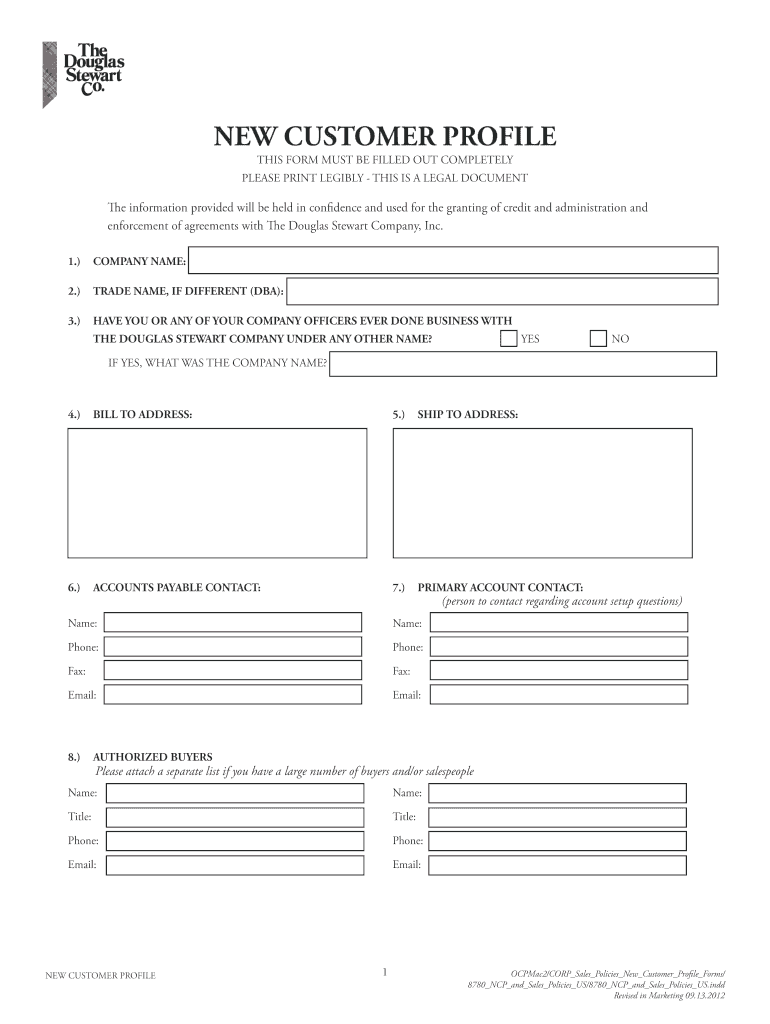
A New Customer Profile refers to a form or set of information that businesses require from new customers to establish a business relationship. It typically includes critical data such as contact details, business identification numbers, and relevant financial documentation. This form is essential for companies to assess potential clients' needs, ensure compliance with regulations, and facilitate smoother transactions.
Key Elements Typically Included
- Contact Information: Full name, address, phone number, and email address of the customer or their business entity.
- Business Information: Business name, type, industry, and registration details.
- Financial Documents: Tax identification number, credit references, or financial statements that provide insight into the customer’s financial stability.
- Legal Agreements: Terms of service, confidentiality agreements, or contracts that need acknowledgment from the customer.
How to Use the New Customer Profile
The New Customer Profile is used by businesses to collect essential information from prospective clients. This ensures they understand the client's needs and can tailor their services accordingly.
Steps to Utilizing the Form
- Collect Information: Use the form to gather accurate and detailed information from the customer.
- Verify Details: Check the authenticity of the data provided to ensure compliance with legal and internal policies.
- Approval Process: Review the information to approve the new client account or suggest modifications.
- Practical Example: A distributor uses the New Customer Profile to verify the business credentials of a new retailer before allowing purchases on credit.
Steps to Complete the New Customer Profile
Filling out the New Customer Profile accurately is crucial for establishing a seamless business partnership. Here’s a step-by-step guide:
- Gather Necessary Documentation: Ensure you have all required documents before starting to fill out the form.
- Fill in Basic Information: Input your personal or business name, address, and contact details.
- Provide Financial Data: Enter financial information such as tax identification numbers.
- Acknowledge Legal Terms: Review and consent to any terms, conditions, or agreements included in the form.
- Verify and Submit: Double-check the information for accuracy and submit the form via the designated method (email, online portal, or mail).
Edge Cases to Consider
- Incomplete Submissions: Submissions lacking complete data may be rejected or delayed.
- Outdated Information: Ensure details like addresses or contact numbers are current to avoid communication issues.
Importance of the New Customer Profile
The New Customer Profile plays a fundamental role in a business's customer onboarding process by providing a structured approach to gathering information.
Benefits of Implementing the Form
- Risk Mitigation: Identifies potential risks by assessing financial and legal standing upfront.
- Customized Service: Enables personalized services tailored to the specific needs and circumstances of the customer.
- Regulatory Compliance: Assists companies in adhering to necessary legal standards.
Who Typically Uses the New Customer Profile
The New Customer Profile is predominantly used by businesses across various sectors to streamline their customer intake process.

Common Business Types Utilizing the Form
- Distributors: To qualify new resellers or retailers.
- Financial Institutions: To validate new clients for bank accounts or credit lines.
- Service Providers: Such as utilities and telecommunications companies requiring customer profiles to set up accounts.
Key Elements of the New Customer Profile
Successfully capturing the following components can help ensure a comprehensive New Customer Profile:
Contact and Identification Details
- Address and Phone Number: To maintain communication.
- Business Identification: Tax numbers or registration IDs necessary for legal and financial engagements.
Financial Stability Indicators
- Credit History: If applicable, provides insight into the financial reliability of the customer.
- Payment Terms: Pre-arranged terms help prevent late payments and related disputes.
Legal Use of the New Customer Profile
The form ensures legal compliance and protects parties involved through indemnity clauses and privacy agreements. Having these legal aspects documented reinforces the trust and security critical to business transactions.
Compliance Considerations
- Data Protection: Adherence to data privacy laws such as GDPR or CCPA ensures the protection of personal information collected.
- Terms and Conditions: Clearly outlines the rights and obligations of both parties involved.
State-Specific Rules for the New Customer Profile
Different states may impose varying requirements and regulations impacting how New Customer Profiles are structured and used.
Examples of State Variations
- Tax Regulations: State-specific tax forms that might be integrated into the profile.
- Licensing Requirements: Additional documentation required in certain jurisdictions.
Understanding these nuances can help businesses remain compliant while effectively managing customer relationships.
The above sections provide a comprehensive guide to understanding and utilizing the New Customer Profile for effective business operations. The information ensures a balanced mix of practical steps, detailed explanations, and relevant examples tailored to the U.S.-centric context.