
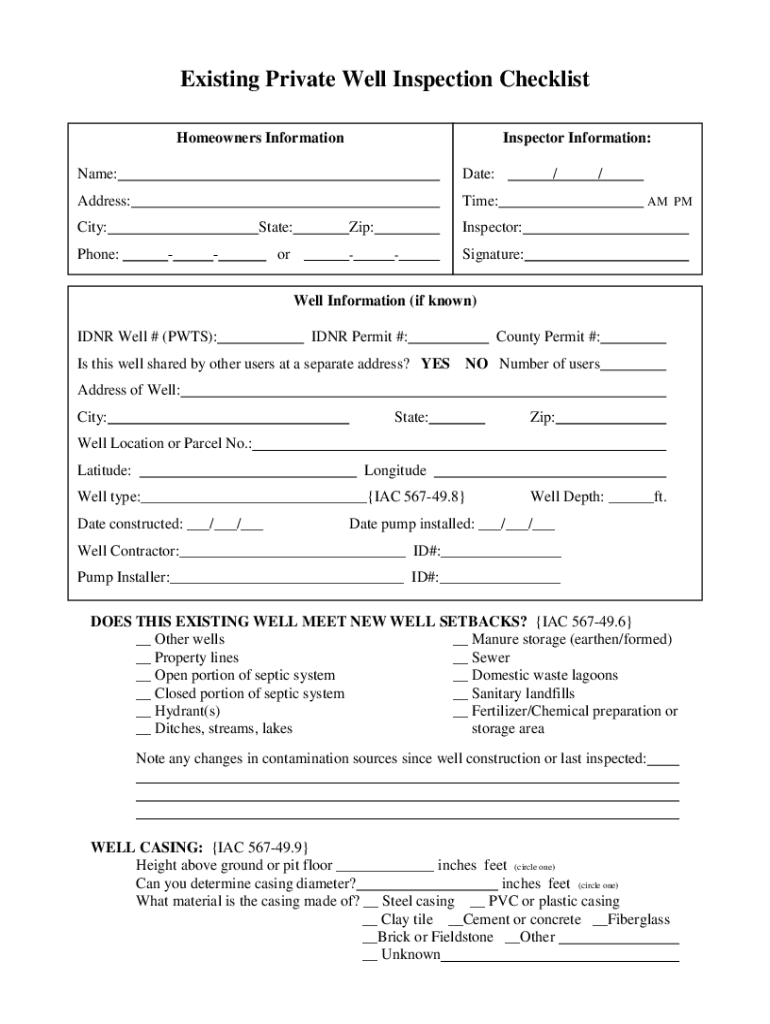







Definition and Purpose of the Existing Private Well Inspection Checklist
The "Existing Private Well Inspection Checklist" serves as a systematic guideline for evaluating the condition and safety of private wells. This document is essential for both homeowners and inspectors to ensure the well's compliance with health and safety regulations. It encompasses a variety of inspection criteria ranging from well casing and cap integrity to water treatment systems and flood risk assessments. By meticulously examining these components, the checklist helps maintain water quality and prevent potential contamination, ensuring the well remains a reliable water source.
How to Use the Existing Private Well Inspection Checklist
Using the "Existing Private Well Inspection Checklist" involves a detailed examination of the different aspects of a private well. Inspectors and homeowners can collaborate to methodically work through the checklist, ensuring each item is thoroughly addressed:
-
Initial Preparation:
- Gather necessary tools and personal protective equipment.
- Review the checklist thoroughly to understand each inspection criterion.
-
Well Casing and Cap Inspection:
- Inspect the well casing for any signs of damage, cracks, or corrosion.
- Ensure the well cap is properly sealed to prevent contaminants from entering.
-
Pump Operation and Pressure System:
- Test the pump for efficient operation, listening for unusual noises or vibrations.
- Check the pressure system for leaks or fluctuations.
-
Water Treatment and Interior Plumbing:
- Assess the condition and functionality of any water treatment devices.
- Examine interior plumbing for leaks, corrosion, or blockages.
Key Elements of the Existing Private Well Inspection Checklist
The checklist consists of several critical components that are crucial for a comprehensive well inspection:
- Well Specifications: Details about the well's location, depth, and construction features.
- Casing and Cap Analysis: Examination of the protective covering surrounding the well.
- Pump and Water System: Evaluation of the mechanics ensuring water delivery.
Important Terminology Related to Private Well Inspections
Understanding specific terms related to well inspections is necessary for accurate assessments:
- Aquifer: A geological formation that can store and transmit water to wells and springs.
- Contaminants: Undesirable substances that could potentially pollute the well water.
- Static Water Level: The level of water in a well when the pump is not operating.
Legal Use of the Existing Private Well Inspection Checklist
The checklist's legal use is typically governed by state and local regulations focused on maintaining water safety standards:
- State Requirements: Different states may have unique mandates for what must be included in a well inspection.
- Regulatory Compliance: Ensure that the inspection meets all local and federal health guidelines.
How to Obtain the Existing Private Well Inspection Checklist
Acquiring the checklist usually involves the following steps:
- Contact Local Authorities: Reach out to local health or environmental agencies for guidance on obtaining the checklist.
- Online Resources: Check official websites for downloadable forms and instructions.
- Professional Services: Consider hiring a certified well inspector who can provide the necessary documents.
Steps to Complete the Existing Private Well Inspection Checklist
Completing the inspection requires a structured approach:
- Pre-Inspection Setup: Familiarize yourself with the layout of the site and gather all necessary tools and equipment.
- Conduct the Inspection: Follow the checklist systematically, addressing each requirement in turn.
- Post-Inspection Review: Analyze the findings and prepare a detailed report indicating any issues that need addressing.
Examples of Using the Existing Private Well Inspection Checklist
Real-world application scenarios highlight the checklist's relevance:
- Routine Maintenance: Homeowners use the checklist annually to maintain their well systems.
- Property Transactions: Buyers and sellers employ the checklist during property inspections to verify water quality.
State-Specific Rules and Variations for the Checklist
Different states might have unique protocols and checklist elements, which could include:
- Inspection Frequency: Certain states may require more frequent inspections for wells in agricultural areas due to higher contamination risks.
- Additional Testing Requirements: Some regions may mandate specific water tests for toxins or specific contaminants commonly found in the area.




