
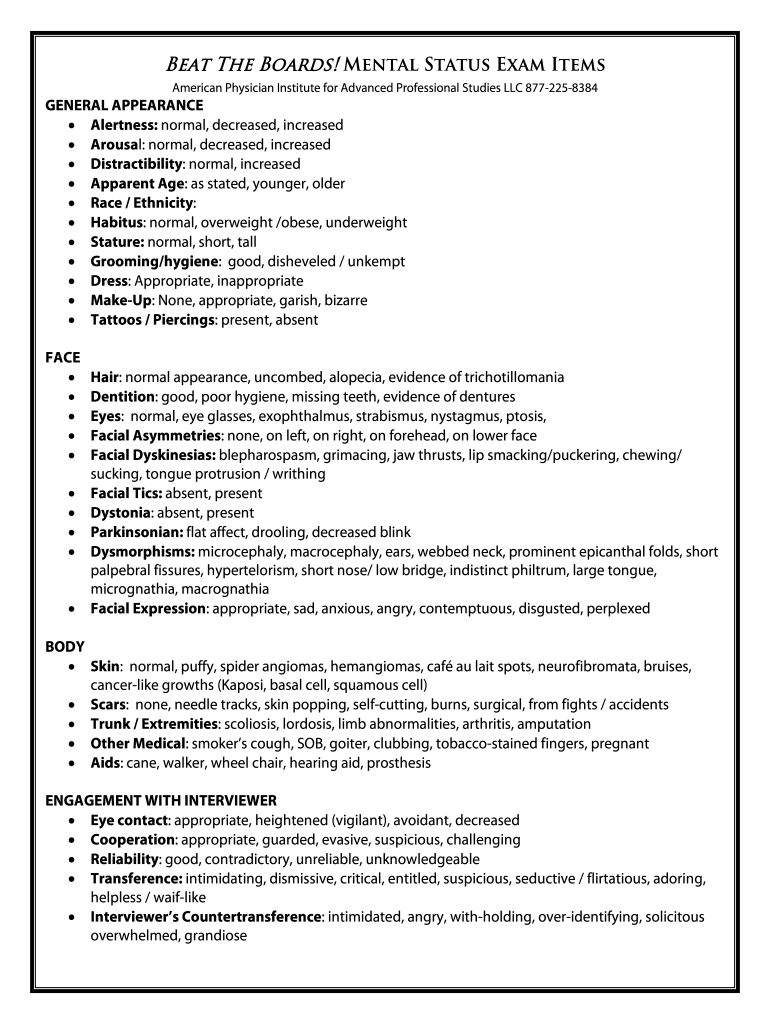







Definition and Overview of the Mental Status Exam Cheat Sheet
The mental status exam (MSE) is a structured assessment that provides a comprehensive overview of a person's psychological functioning at a given time. It is a critical tool used by healthcare professionals, particularly in mental health settings, to evaluate a patient's cognitive, emotional, and behavioral status. The mental status exam cheat sheet condenses essential elements and descriptors of the MSE into a user-friendly format, facilitating quicker and more efficient assessments.
Key Components of the Mental Status Exam
- Appearance: Observations about the patient’s physical look, including grooming, dress, and hygiene.
- Behavior: Noting general activity level and behaviors, including any signs of agitation or psychomotor retardation.
- Speech: Evaluating the rate, volume, and amount of speech—indicating potential issues like poverty of speech or pressured speech.
- Mood and Affect: Assessment of the patient’s emotional state—whether they appear cheerful, anxious, sad, or flat.
- Thought Process: Analysis of the organization and logic of the patient’s thoughts, including any signs of derailment or tangentiality.
- Cognition: Evaluating orientation to time, place, and person, as well as memory and attention capacity.
- Insight and Judgment: Assessing the patient’s awareness of their condition and ability to make decisions.
How to Use the Mental Status Exam Cheat Sheet
The cheat sheet serves as a practical guide during clinical evaluations or training sessions. It can streamline the examination process by providing a structured format to follow while assessing a patient.
Steps to Effectively Utilize the Cheat Sheet
- Preparation: Familiarize yourself with the components of the cheat sheet before conducting the exam.
- Initial Observations: Begin your assessment with general observations about the patient’s appearance and demeanor.
- Engagement: Engage the patient in conversation, using the cheat sheet to prompt questions regarding their mood, thoughts, and cognition.
- Documentation: As you gather information, document your findings directly on the cheat sheet, allowing for quick reference.
- Analysis: After the examination, review the collected data to develop a complete understanding of the patient's mental status.
Important Terms Related to the Mental Status Exam
Understanding the vocabulary associated with the mental status exam is crucial for proper documentation and communication. Some key terms include:
- Affect: The observable expression of emotion.
- Cognitive Functions: The mental processes related to knowledge and understanding, including memory and attention.
- Insight: The patient's awareness and understanding of their own condition.
- Thought Process Descriptors: Terms like logical, coherent, or disorganized, used to evaluate how thoughts are organized and expressed.
Steps to Complete the Mental Status Exam Cheat Sheet
To conduct a thorough MSE, follow these defined steps to maximize assessment accuracy:
- Begin with Symptoms: Ask open-ended questions about the patient's current symptoms, which could include feelings of sadness, anxiety, or delusions.
- Document Initial Impressions: Note first observations regarding the patient's appearance and behavior.
- Evaluate Speech Patterns: Listen carefully to the patient's speech for rate, tone, and coherence. Document any abnormalities.
- Assess Cognition: Test orientation and memory through direct inquiries and brief tasks, guiding them to reflect their cognitive capabilities.
- Conclude with Impression Summary: After identifying key findings, summarize them concisely, helping formulate a diagnosis or treatment plan.
Legal Use of the Mental Status Exam Cheat Sheet
The mental status exam is often utilized in legal settings, such as competency evaluations or assessments related to criminal responsibility. It is essential to understand how to document findings accurately to protect the confidentiality and integrity of the patient’s information while ensuring compliance with legal standards.
Considerations for Legal Context
- Confidentiality: Safeguarding patient information during the examination and documentation processes.
- Accuracy: Ensuring that observations and conclusions are based on evidence and free from bias.
- Documentation Standards: Following proper documentation practices to create records that can withstand legal scrutiny.
By adhering to these guidelines, healthcare professionals can leverage the cheat sheet effectively in both clinical and legal environments, ensuring accurate assessments that inform diagnosis and treatment.




