01. Edit your wellness provider screening form online
Type text, add images, blackout confidential details, add comments, highlights and more.

02. Sign it in a few clicks
Draw your signature, type it, upload its image, or use your mobile device as a signature pad.

03. Share your form with others
Send it via email, link, or fax. You can also download it, export it or print it out.

How to use or fill out VOLUNTARY HEALTH SCREENING with our platform
Ease of Setup
DocHub User Ratings on G2
Ease of Use
DocHub User Ratings on G2
Click ‘Get Form’ to open the VOLUNTARY HEALTH SCREENING in the editor.
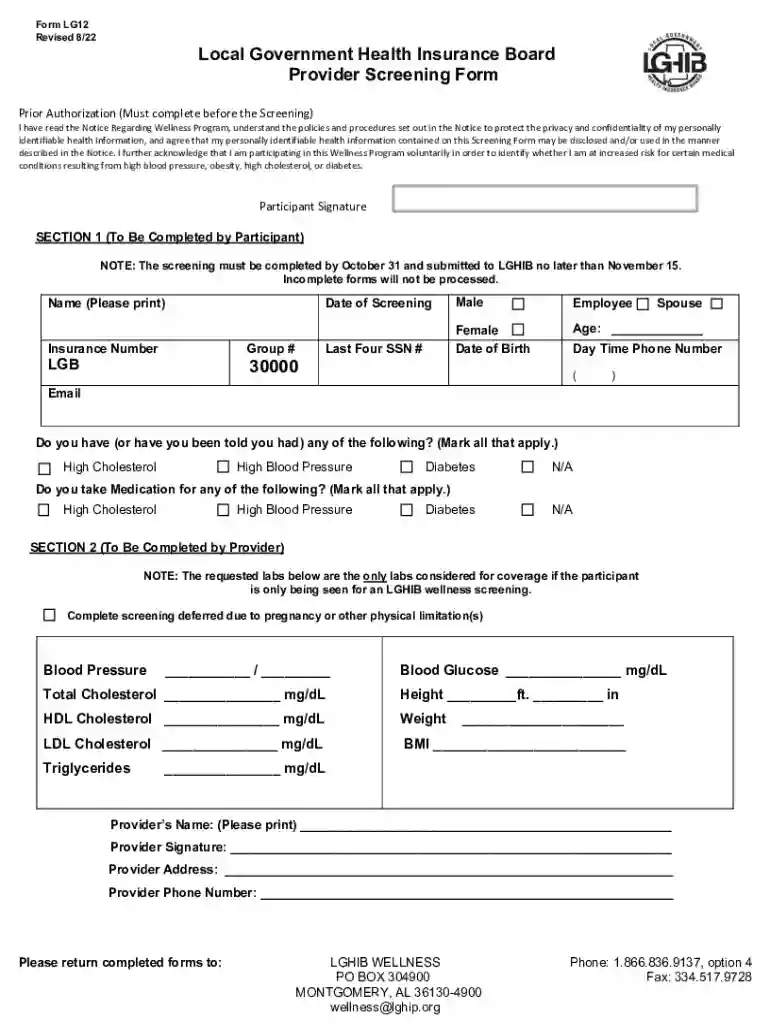
Begin by completing SECTION 1. Fill in your name, insurance number, group number, and date of screening. Indicate your gender and age, and provide your last four digits of your Social Security Number along with your date of birth.
Next, provide your daytime phone number and email address. Mark any medical conditions you have been diagnosed with from the list provided, including high cholesterol, high blood pressure, or diabetes.
Indicate if you take medication for any of these conditions by marking the appropriate boxes.
Once SECTION 1 is complete, ensure that all information is accurate before moving on to SECTION 2, which will be filled out by your provider during the screening.
After the screening is completed by your provider, review their entries for accuracy before submitting the form to LGHIB by the specified deadline.
Start filling out your VOLUNTARY HEALTH SCREENING today for free using our platform!
Fill out VOLUNTARY HEALTH SCREENING online It's free
We've got more versions of the VOLUNTARY HEALTH SCREENING form. Select the right VOLUNTARY HEALTH SCREENING version from the list and start editing it straight away!
Schoolwide screenings can be conducted to identify students that would benefit the most from SBHC programs. Some examples include obesity, sexually transmitted infections, asthma, oral health, and mental health. Screenings can also be used as a means to register new students.
What is a health screening consist of?
Health professionals often think of screening for early diagnosis of cancer (such as Pap smears for cervical cancer or colonoscopy for colon cancer), but there are many other screening tests commonly used, for example, thyroid-stimulating hormone (TSH) for congenital hypothyroidism in newborns, cholesterol level for
What is a screening test for school?
A screening test is done to find possible disorders or diseases in children who dont have any symptoms. The goal is to find a disease early so that changes can be made and your child can be watched more closely to lower their chance for the disease.
What do they test for in a wellness screening?
A wellness screening generally consists of routine blood work and biometrics (body measurements). These results can inform you of your current state of well-being so that you can assess any necessary lifestyle adjustments or conversations with your primary care provider.
Are health screenings worth it?
Thats what screening tests are designed to do. Some screenings can reduce your risk of dying from the disease. But sometimes, experts say, a test may cause more harm than good. Before you get a test, talk with your doctor about the possible benefits and harms to help you decide whats best for your health.
Related Searches
Pre employment health screening for healthcare workersBanner health Volunteer for high school studentsBanner health Volunteer ApplicationBanner health volunteer opportunitiesBanner Health Teen volunteerMini health screeningHospital volunteer opportunities near meNational Kidney Foundation of Arizona
Security and compliance
At DocHub, your data security is our priority. We follow HIPAA, SOC2, GDPR, and other standards, so you can work on your documents with confidence.
A school health assessment helps to identify strengths and weaknesses of school health policies and programs and provide direction for school health improvement efforts.
Related links
The importance of regular health screenings | Cardinal at Work
Apr 7, 2025 Key health measurements like blood pressure, cholesterol, and blood sugar can help you understand your risk for chronic disease.
Cookie consent notice
This site uses cookies to enhance site navigation and personalize your experience.
By using this site you agree to our use of cookies as described in our Privacy Notice.
You can modify your selections by visiting our Cookie and Advertising Notice.