
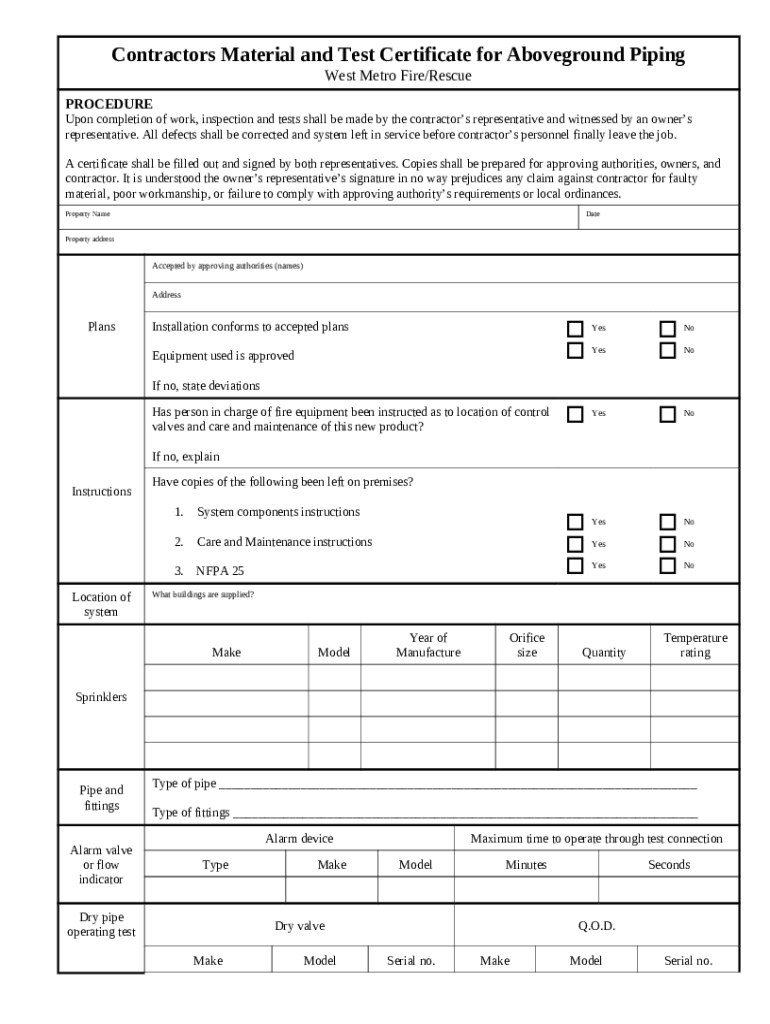







Definition and Meaning
The NFPA 13 Above Ground Piping Certificate is a crucial document for confirming the correct installation and certification of fire protection piping systems. These systems are typically found in buildings to ensure fire safety, following guidelines set by the National Fire Protection Association (NFPA). The certificate provides verification that a specific piping system adheres to established safety standards, protecting both property and lives. It also signifies compliance with local fire protection ordinances. This certificate is typically associated with commercial buildings, residential complexes, and other structures where fire safety systems are necessary.
How to Use the NFPA 13 Above Ground Piping Certificate
This certificate is used as part of the compliance documentation for fire safety systems. Building owners, contractors, and fire safety inspectors rely on it to validate that the piping systems have been installed and tested according to NFPA 13 standards. The certificate should be stored with other important building safety documents and produced during inspections by fire safety authorities or when selling the property. Depending on state-specific regulations, this document may be required to obtain business licenses or occupancy permits.
Steps to Complete the NFPA 13 Above Ground Piping Certificate
- Install the Piping System: Ensure the piping system is installed following the specifications outlined in NFPA 13.
- Perform Initial Testing: Conduct pressure testing and inspections to verify the system’s integrity and proper function.
- Gather Required Documents: Collect all necessary documentation, including system drawings, test results, and installation certificates.
- Complete the Certification Form: Fill out the NFPA 13 Above Ground Piping Certificate with details such as the project location, installation date, and contractor details.
- Submit for Review: Present the completed certificate and supporting documents to relevant authorities for review.
Additional Considerations
- Verify the latest updates and amendments to NFPA 13 standards.
- Ensure all personnel involved in the installation and testing are certified and knowledgeable about NFPA standards.
- Maintain records of all inspections and testing results related to the certificate.
Key Elements of the NFPA 13 Above Ground Piping Certificate
- Project Information: Includes project name, location, and a detailed description of the piping system.
- Contractor Details: Name, address, and qualifications of the contractor responsible for the installation.
- Inspection and Testing Results: Data from pressure tests, flow tests, and visual inspections used to verify compliance.
- Certification Statement: An authorized signature affirming that the installation complies with NFPA 13 standards.
Who Typically Uses the NFPA 13 Above Ground Piping Certificate
The NFPA 13 certificate is commonly used by contractors specializing in fire protection systems, building owners, and facilities managers. It serves as proof of compliance for insurance companies, local fire departments, and building code officials.


Related Professionals
- Fire Safety Engineers: Review and guide the proper installation of piping systems.
- Building Inspectors: Ensure compliance with local regulations and verify safety provisions.
- Insurance Adjusters: Evaluate risk and compliance when underwriting policies for properties.
State-Specific Rules for the NFPA 13 Above Ground Piping Certificate
Fire safety regulations and the requirements for using the NFPA 13 certificate can vary significantly by state. Building codes often incorporate local amendments that dictate specific testing and documentation needs. For example, some states may require additional third-party verification of test results or higher levels of redundancy in system design. It is crucial for contractors and building owners to consult local building and fire codes before installation.
Legal Use of the NFPA 13 Above Ground Piping Certificate
Legally, this certificate is used to demonstrate compliance with national and local fire safety regulations. It is instrumental in verifying that the building's fire protection systems adhere to the NFPA 13 standard, reducing liability in the event of a fire. Property owners must retain this certificate along with other compliance records to avoid legal repercussions such as fines or restrictions imposed by fire safety authorities.
Examples of Using the NFPA 13 Above Ground Piping Certificate
One practical scenario is in the construction of a new commercial office building. The construction company installs the fire protection piping, completes all necessary tests, and fills out the NFPA 13 certificate as part of the building's final inspection process. The certificate is then used to facilitate occupancy permits and insurance documentation. Similarly, for a residential high-rise, the certificate is essential in maintaining compliance for each floor's fire safety systems.




