







Definition & Meaning
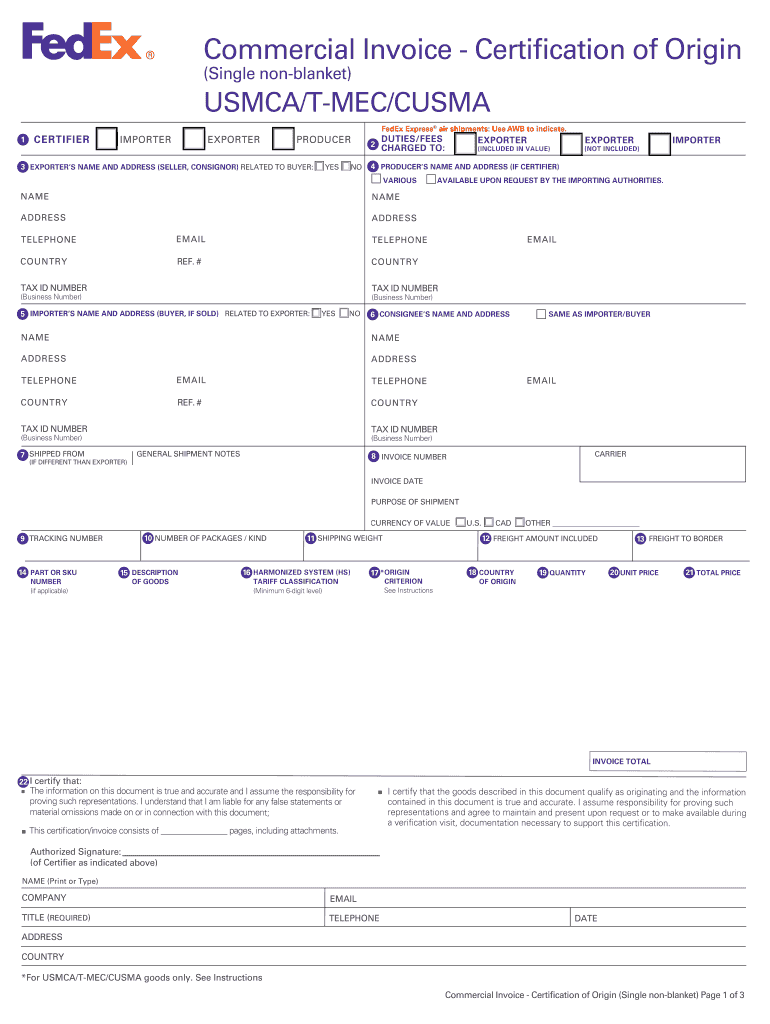
The "Commercial Invoice - Certification of Origin USMCA T-MEC CUSMA" is a crucial document for businesses engaged in international trade within North America. It serves a dual purpose: acting as a commercial invoice for goods being shipped and certifying the origin of these goods to qualify for preferential tariff treatments under the USMCA, T-MEC, and CUSMA agreements. This form verifies that the products meet specific criteria, allowing them to benefit from reduced or eliminated duties.
- Commercial Invoice Role: Provides details of the transaction, including descriptions, quantities, and pricing of shipped goods.
- Certification of Origin Role: Confirms that the goods comply with the rules of origin set forth by the USMCA, ensuring they qualify for duty-free or reduced-rate tariffs.
How to Use the Commercial Invoice - Certification of Origin USMCA T-MEC CUSMA
Businesses can enhance their trade operations by integrating this form into their export documentation workflow. Here's how to effectively use it:
- Prepare a Detailed Commercial Invoice: Include all required transaction details such as product names, quantities, and pricing.
- Certify the Origin: Ensure products meet the agreed rules of origin before completing the certification section.
- Verify Compliance: Cross-check compliance guidelines under USMCA to avoid errors that could lead to penalties or denied tariff benefits.
Steps to Complete the Commercial Invoice - Certification of Origin USMCA T-MEC CUSMA
To ensure accuracy and compliance, follow these step-by-step instructions:
- Fill Out Exporter Information: Start with the complete name, address, and contact details of the exporter.
- Detail the Importer: Provide the importer's information to maintain clear communication and documentation trails.
- List Product Details: Clearly describe each product, including HS codes, quantities, and values.
- Certify the Origin: Complete the certification statements attesting to the origin criteria set by the USMCA.
- Signature and Date: The authorized signatory should sign and date the form, confirming the information's validity.
Key Elements of the Commercial Invoice - Certification of Origin USMCA T-MEC CUSMA
Several key components make this form essential for trade compliance:
- Exporter and Importer Details: Ensures clarity in trade transactions.
- Product Descriptions: Accurate representation of goods ensures straightforward customs processes.
- Certification Statements: Confirms products adhere to USMCA rules of origin.
- Signatures: Legally binds the information contained within the document.
Legal Use of the Commercial Invoice - Certification of Origin USMCA T-MEC CUSMA
Under international trade laws, this form must comply with established protocols to be legally binding:
- Adheres to USMCA Guidelines: The document should meet all requirements of the USMCA agreement to be considered legitimate.
- Ensures Duty Benefits: Legal use of the form grants access to preferential tariffs.
- Prevents Trade Disputes: Proper documentation helps mitigate legal risks associated with inaccurate declarations.
Examples of Using the Commercial Invoice - Certification of Origin USMCA T-MEC CUSMA
Practical scenarios demonstrate its usage in real-world contexts:
- Automotive Exports: A car manufacturer shipping parts from the U.S. to Canada uses the form to validate origin and gain tariff reductions.
- Agro-commodity Trade: Agricultural producers export crops to Mexico, certifying the produce meets origin criteria for duty-free entry.
- Textile Industry: Clothing companies leverage the form when exporting to ensure tariff compliance and competitive pricing.
Required Documents
To effectively complete this form, gather the following documents:
- Product Inventory Lists: Details required for accurate product descriptions and values.
- Proof of Origin: Supporting documents proving goods meet USMCA requirements.
- Previous Trade Records: Past invoices and certifications can aid in filling out data accurately.
Penalties for Non-Compliance
Businesses failing to accurately complete or submit the form may face severe consequences:
- Monetary Fines: Incorrect submissions can result in significant financial penalties.
- Loss of Tariff Benefits: Inaccuracies may lead to refused preferential treatments, increasing costs.
- Legal Repercussions: Severe cases might involve legal action due to non-compliance with international trade regulations.
By providing comprehensive insights into the Commercial Invoice - Certification of Origin USMCA T-MEC CUSMA, businesses can better navigate its complexities, ensuring compliance and maximizing trade benefits.




