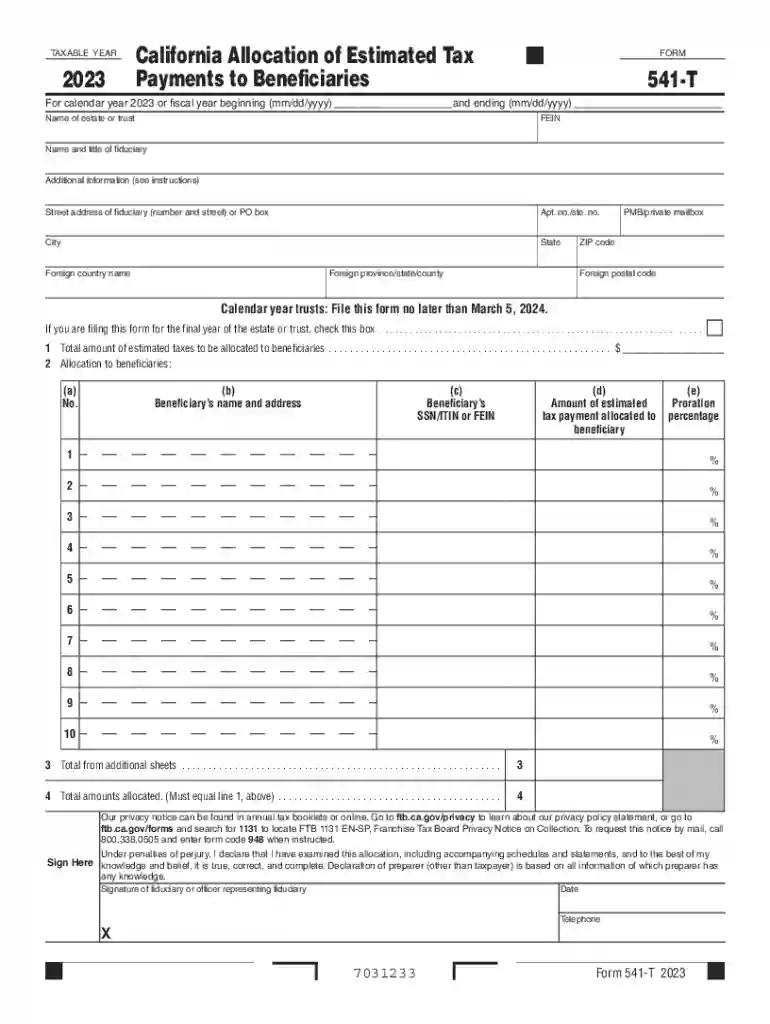
01. Edit your 2023 ca 541 online
Type text, add images, blackout confidential details, add comments, highlights and more.

Type text, add images, blackout confidential details, add comments, highlights and more.

Draw your signature, type it, upload its image, or use your mobile device as a signature pad.

Send ca 541 t via email, link, or fax. You can also download it, export it or print it out.
Form 1041ME is specifically designed for fiduciaries tasked with reporting income generated by an estate or trust in the state of Maine. This document captures the financial activities related to such entities, ensuring compliance with both state and federal tax obligations. Unlike individual income tax returns, Form 1041ME focuses on the income that accrues to the estate or trust, not to the beneficiaries directly. The completion of this form is essential for maintaining legal accountability and facilitating accurate tax reporting.
Fiduciaries can access Form 1041ME through several means. The most direct approach is downloading it from the Maine Revenue Services website, which offers the latest version along with guidance documents. Through online platforms like DocHub, additional tools are available for importing the form from cloud services such as Google Drive or Dropbox. These platforms provide features such as direct editing and e-signature capabilities, streamlining the preparation and submission process.
Form 1041ME is primarily used by fiduciaries, including trustees and executors, responsible for managing estates or trusts in Maine. These individuals must possess a clear understanding of the relationship between the financial activities of the estate or trust and the corresponding tax liabilities. Additionally, professionals assisting with estate planning or managing complex financial portfolios often collaborate in the completion of this form to ensure compliance.
Consider a trust receiving diverse income types: interest, dividends, and rental income. Each source must be separately accounted for on the form. Deductions might apply to maintenance expenses on properties generating rental income or applicable fees charged by financial advisors managing the trust’s assets.
Filing deadlines typically align with federal timelines, requiring submission by the fifteenth day of the fourth month following the end of the trust’s tax year. Timely submissions prevent penalties and ensure compliance with Maine Revenue Services. Extensions may be requested if necessary but must conform to statutory limits.
Failure to comply with Form 1041ME requirements can lead to significant penalties. It is paramount that fiduciaries understand their legal obligations concerning tax liabilities of estates and trusts. Regular updates from the IRS and Maine Revenue Services provide necessary guidance and changes in legislation that may impact form completion and submission.
Maine has specific regulations affecting how estates and trusts report income compared to federal requirements. These can include distinct deduction limits or income reporting thresholds that necessitate accurate adherence to ensure full compliance. Understanding these nuances is essential for fiduciaries operating within the state to effectively manage estate or trust tax affairs.
Platforms like DocHub facilitate the digital handling of Form 1041ME, supporting online editing and submission. Compatibility with tax software such as TurboTax and QuickBooks enhances the process by offering integrations that allow for seamless data import and export, reducing manual data entry and potential errors.
This comprehensive coverage provides fiduciaries the necessary insight into handling Form 1041ME, ensuring they can effectively execute their responsibilities and meet all regulatory obligations.
We've got more versions of the 2023 ca 541 form. Select the right 2023 ca 541 version from the list and start editing it straight away!
At DocHub, your data security is our priority. We follow HIPAA, SOC2, GDPR, and other standards, so you can work on your documents with confidence.