
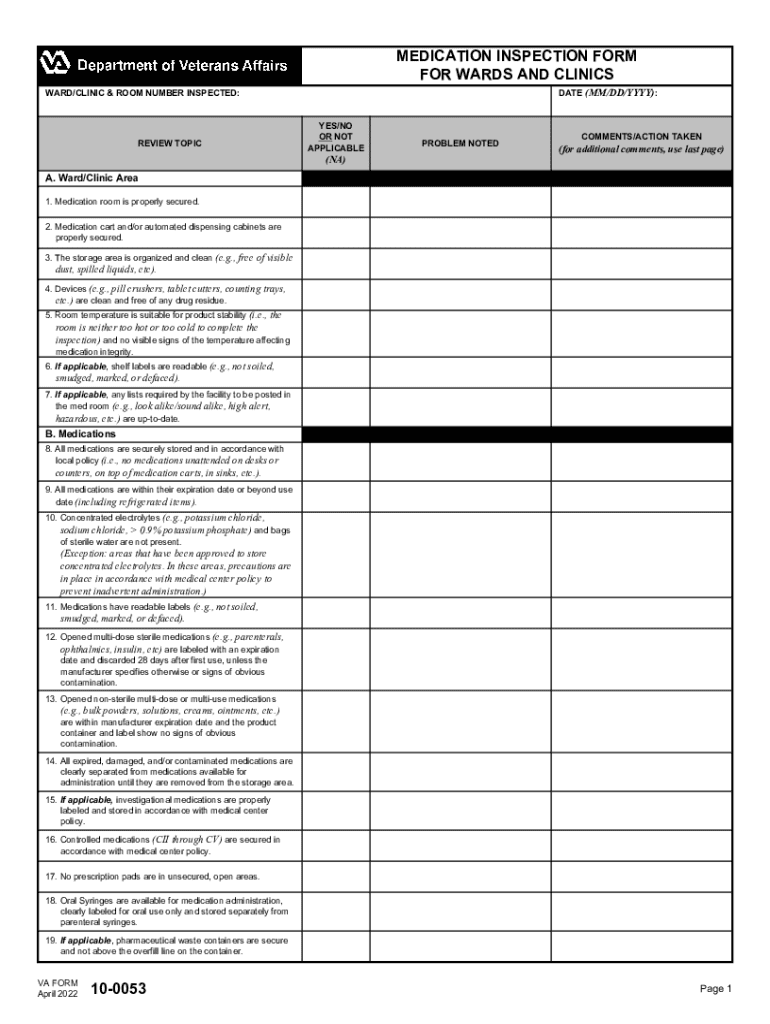







Definition and Meaning of the Medication Inspection Form
The Medication Inspection Form serves as a vital tool in the healthcare sector, specifically designed for wards and clinics. It provides a structured checklist that ensures the proper management of medications within medical facilities. This document encompasses a wide range of criteria, including security measures, organizational standards, labeling practices, and adherence to medical center policies. Its primary aim is to facilitate safe and compliant medication management by regular inspection of storage areas, medications, intravenous fluids, refrigerators, crash carts, and facility-specific requirements. The form supports healthcare practitioners in maintaining high standards of patient safety and operational efficiency.
How to Use the Medication Inspection Form
Utilizing the Medication Inspection Form involves a systematic approach to examining the various components of medication storage and management. Users should first familiarize themselves with the criteria listed in the form, which include security checks, cleanliness standards, and expiry date monitoring.
-
Begin with Security: Conduct a thorough inspection of the security measures in place for medication storage areas, ensuring all access points are secure.
-
Organize and Label: Verify that all medications and fluids are properly labeled, shelved, and organized according to facility guidelines.
-
Check Expiry Dates: Regularly inspect expiration dates to prevent the administration of outdated medications which can pose health risks to patients.
-
Document findings: Throughout the inspection process, meticulously document your findings on the form to ensure a detailed record is maintained.
Healthcare staff should ensure all these processes are covered to maintain compliance and ensure the safety of all medication practices within the facility.
Steps to Complete the Medication Inspection Form
Filling out the Medication Inspection Form requires attention to detail and a methodical approach. Here are the steps to effectively complete the form:
-
Initiate with General Information: Start by providing the basic details such as the name of the facility, date of inspection, and the names of the inspectors.
-
Inspect Security Protocols: Record observations regarding the security protocols in place for medication areas; note any areas where security might be lacking.
-
Evaluate Organization and Cleanliness: Assess the tidiness and organization of storage areas, noting whether items are stored properly and in a clean environment.
-
Review Labels and Expiry Dates: Carefully inspect medication labels and expiration dates; document any discrepancies or outdated items.
-
Complete Checklist: Ensure all sections of the form are addressed, providing comprehensive comments when necessary for clarity.
-
Finalize with Sign-offs: Conclude the form by getting the necessary sign-offs from supervisors or inspection coordinators, ensuring acknowledgment of completed inspections.
Each step in completing the form is crucial for maintaining safety and compliance with medical standards.
Who Typically Uses the Medication Inspection Form
The primary users of the Medication Inspection Form are healthcare professionals involved in the management of medication within clinical settings. These include:
- Pharmacists: Responsible for ensuring the accuracy of medication management and storage.
- Nurses: Often use the form to verify that medications are stored correctly and are not expired.
- Healthcare Administrators: Utilize the form to ensure that policies and procedures are adhered to during medication inspections.
By employing this form, these professionals play a key role in upholding patient safety and ensuring that medical environments remain compliant with legal and organizational standards.


Key Elements of the Medication Inspection Form
The Medication Inspection Form comprises several key elements that guide users in conducting a comprehensive inspection:
- Security Compliance: Guidelines to assess the safety and security of medication storage areas.
- Organization Standards: Criteria for evaluating the organization and labeling of medications.
- Cleanliness and Hygiene: Standards for maintaining a clean storage environment.
- Expiry Date Monitoring: Processes for checking and documenting expiration dates on medications.
- Policy Adherence: Ensures compliance with facility-specific and broader healthcare policies.
Each element contributes towards building an effective and reliable inspection framework that enhances medication safety within healthcare facilities.
Examples of Using the Medication Inspection Form
Utilizing the Medication Inspection Form can vary based on specific scenarios within a healthcare setting:
- Weekly Inspections: Conducted in high-traffic hospital pharmacies or wards to maintain medication safety.
- After Supplies Restocking: Used to verify that newly delivered medications meet all labeling and organization standards.
- Incident Response: Applied when certain issues, such as mislabeled medications, need immediate addressing.
These examples highlight the flexible application of the form in different situations, ensuring that it supports dynamic needs within the healthcare environment.
Legal Use of the Medication Inspection Form
In the United States, the Medication Inspection Form is utilized within legal and regulatory frameworks to ensure compliance with healthcare standards. It aligns with various state healthcare regulations and federal guidelines, including those stipulated by agencies like the Food and Drug Administration (FDA). Facilities use this form as part of their standard operating procedures to demonstrate compliance during audits and inspections. Proper usage of this form supports legal accountability and risk management strategies within healthcare operations.
Important Terms Related to Medication Inspection Form
Understanding specialized terminology related to the Medication Inspection Form enhances its effective use:
- Pharmaceutical Compliance: Adherence to legal, regulatory, and facility policies concerning medication management.
- Controlled Substances: Medications that require strict regulation due to their potential for abuse.
- Antimicrobial Stewardship: Programs actually focused on optimizing the use of antibiotics to prevent resistance.
Familiarity with these terms aids healthcare professionals in accurately completing the Medication Inspection Form and enhances their overall understanding of the medication inspection process.




