






Key Elements of the Accident, Evacuation, and Emergency Plan
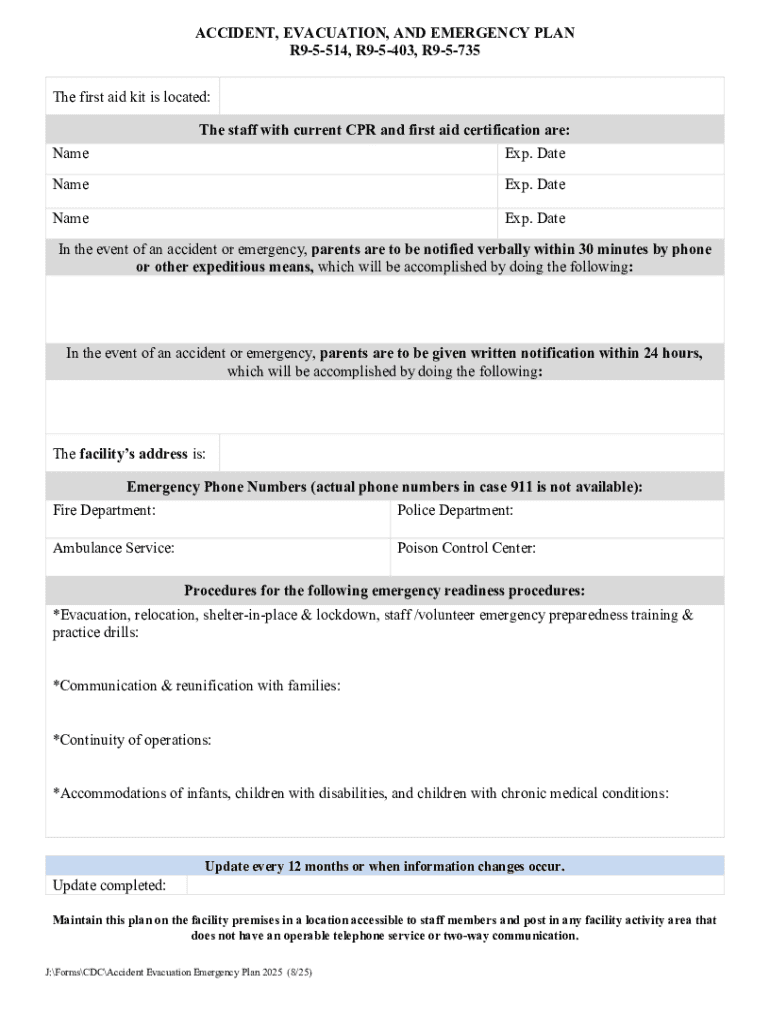
An Accident, Evacuation, and Emergency Plan is an essential framework designed to ensure the safety and well-being of individuals during unforeseen events. This plan includes several vital components:
-
Notification Procedures: Establishes methods for quickly notifying parents, staff, and emergency services about an incident. This ensures that everyone who needs to know is promptly informed and prepared to act.
-
First Aid Resources: Details the availability and maintenance of first aid kits. Staff should be trained to use these resources effectively, ensuring immediate care for minor injuries.
-
Readiness Procedures: Outlines preparations for a variety of potential emergency scenarios. These procedures are adapted to accommodate children, especially those with special needs, ensuring their safety under all circumstances.
-
Emergency Contact Information: Maintains up-to-date contact information for all relevant parties, including emergency services and parents, to facilitate quick communication.
-
Annual Updates: The plan should be reviewed and updated annually or as necessary to accommodate any changes in protocol or personnel.
Steps to Complete the Accident, Evacuation, and Emergency Plan
Completing an Accident, Evacuation, and Emergency Plan involves a series of well-defined steps aimed at ensuring comprehensive coverage of all potential risks:
-
Assess the Facility: Begin with a thorough evaluation of the facility to identify potential hazards and vulnerabilities that could lead to accidents or emergencies.
-
Develop a Communication Strategy: Outline methods and channels for communicating urgent information to staff, parents, and emergency services, ensuring redundancy to account for communication failures.
-
Compile Emergency Contacts: Gather and centralize contact information for all key personnel, parents, and emergency responders, regularly verifying details for accuracy.
-
Establish Evacuation Routes: Design clear and accessible evacuation routes, including specific provisions for individuals with special needs, and ensure all staff are familiar with these paths.
-
Designate Safe Areas: Identify safe locations within or near the facility for use during an emergency, verifying they can accommodate the relevant number of individuals.
-
Train Staff and Conduct Drills: Perform regular training sessions and drills with staff to ensure they are familiar with the plan and confident in executing their roles during an emergency.
Who Typically Uses the Accident, Evacuation, and Emergency Plan
This plan is utilized across various contexts where people congregate and require safeguarding:
-
Educational Institutions: Schools and daycare centers rely on these plans to protect students and staff during emergencies such as fires, severe weather, or threats of violence.
-
Healthcare Facilities: Hospitals and clinics use these plans to ensure patient safety and continuity of care when normal operations are disrupted.
-
Corporate Environments: Businesses implement emergency plans to protect their employees and clients, maintaining order and ensuring quick evacuations when necessary.
-
Public Venues: Museums, stadiums, and other public venues employ these plans to manage large crowds and facilitate safe evacuations in case of an incident.


Important Terms Related to the Accident, Evacuation, and Emergency Plan
Understanding key terminology enhances the effective implementation of the plan:
-
Evacuation: The organized and immediate movement of people away from a threat or hazard.
-
Lockdown: A protocol to secure occupants within a facility to protect them from an external or internal threat.
-
Shelter-in-Place: A precautionary measure involving staying indoors and sealing the environment from external hazards.
-
First Responder: Emergency service personnel trained to arrive first at the scene to provide immediate assistance.
Legal Use of the Accident, Evacuation, and Emergency Plan
The legal framework surrounding these plans ensures compliance and protection for facilities:
-
Compliance Obligations: Many jurisdictions require facilities to maintain a documented emergency plan, regularly updated to comply with state and federal regulations.
-
Liability Reduction: Proper implementation and adherence to these plans can mitigate legal liabilities in the event of an accident or emergency.
-
Regulatory Inspections: Facilities may be subject to inspections to verify the presence and adequacy of their emergency plans.
State-Specific Rules for the Accident, Evacuation, and Emergency Plan
While general principles for these plans apply universally, specific requirements can vary by state:
-
California: Emphasizes seismic safety and requires comprehensive earthquake response procedures.
-
Florida: Focuses on hurricane preparedness, mandating detailed evacuation routes and plans for post-storm recovery.
-
New York: Prioritizes terrorism response and requires coordination with local law enforcement for threat assessments.
Understanding and complying with state-specific regulations is crucial for ensuring the plan meets all legal requirements.
Examples of Using the Accident, Evacuation, and Emergency Plan
Real-world scenarios illustrate the importance and effectiveness of these plans:
-
Fire Drill Success: A school safely evacuated all students and staff during a fire drill, reinforcing the importance of regular practice.
-
Weather Emergency Response: A healthcare facility successfully sheltered in place during a severe storm, using pre-identified safe zones and maintaining communication with emergency services.
-
Effective Communication: During a chemical spill, a manufacturing plant's clear emergency communication strategy prevented injuries and facilitated a controlled evacuation.
Digital vs. Paper Version of the Accident, Evacuation, and Emergency Plan
Considerations for maintaining and utilizing the plan in digital and physical formats:
-
Digital Advantages: Offers easy updates, rapid dissemination, and integration with communication systems. It supports real-time updates during an unfolding event.
-
Paper Advantages: Provides reliability when digital devices or networks fail, ensuring access to crucial information without electronic dependencies.
-
Hybrid Approach: Utilizing both formats can maximize readiness, leveraging digital efficiency while maintaining the reliability of paper documents in all scenarios.
By selecting the optimal combination of digital and paper versions, facilities can ensure robust access and adaptability to the plan's information.