
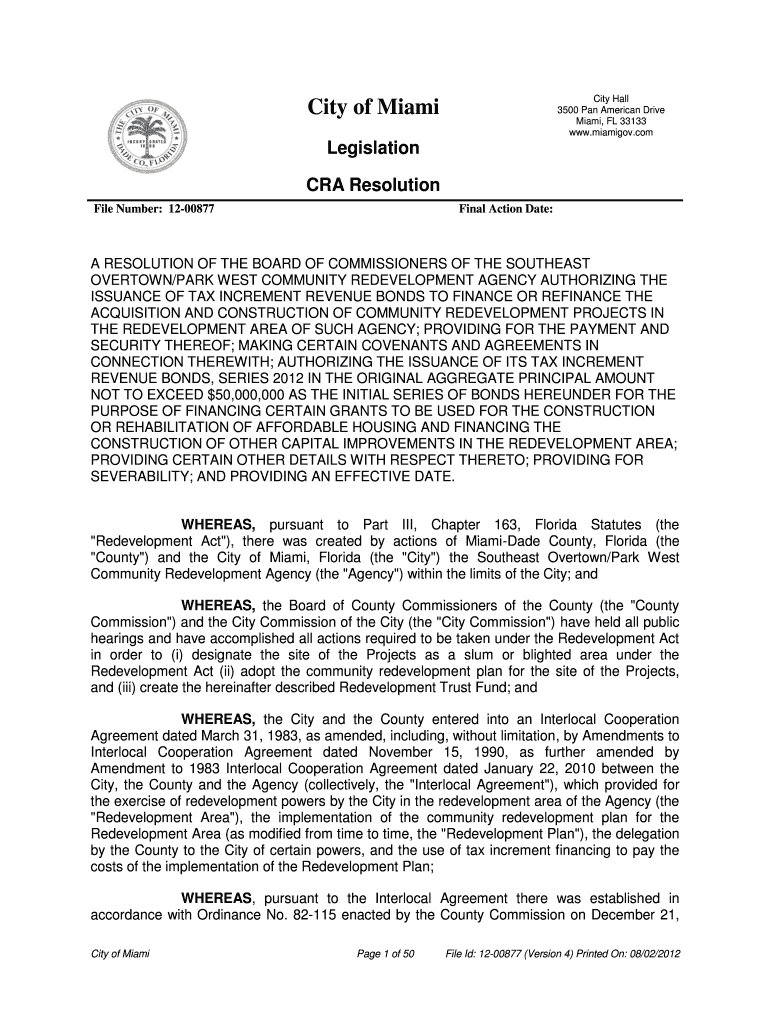







Definition & Meaning
Municipal Community Redevelopment Agencies (CRAs) in Miami-Dade County refer to public entities that are established to work on redeveloping areas identified as needing economic improvement. These areas are often characterized by blight or underperformance, necessitating intervention through structured planning and investment. CRAs are tasked with improving infrastructure, promoting business development, and facilitating affordable housing projects. In Miami-Dade County, these agencies play a critical role in revitalizing communities while ensuring sustainable economic growth.
How to Use Municipal Community Redevelopment Agencies in Miami-Dade County
To effectively utilize CRAs in Miami-Dade County, stakeholders—such as developers, business owners, or community leaders—must engage with the agencies' strategic plans. These plans often include opportunities for public-private partnerships, grants, and funding for specific community projects. Users can participate by attending public meetings, proposing projects that align with CRA objectives, or applying for available financial assistance programs aimed at enhancing neighborhood conditions. Understanding the CRA’s framework and aligning proposals with its goals can significantly impact project success.
Key Elements of Municipal Community Redevelopment Agencies
CRAs typically consist of several critical components designed to facilitate redevelopment:
- Tax Increment Financing (TIF): A major funding mechanism that captures the future increase in property tax revenues within a defined area to fund current projects.
- Blight Determination: Identification of areas requiring redevelopment, often due to economic stagnation or infrastructural challenges.
- Community Engagement: Active involvement of local stakeholders in the decision-making process to ensure projects meet community needs.
- Strategic Planning: Detailed plans outlining goals, timelines, and assessment metrics for development activities.
These elements are integral to the framework and operations of CRAs in Miami-Dade County.
Legal Use of Municipal Community Redevelopment Agencies
The legal framework governing CRAs in Miami-Dade County is established under state statutes, specifically allowing CRAs to issue bonds, enter into contracts, and acquire property for development activities. CRAs must operate within legal limits, ensuring transparency and accountability in their actions. This includes adherence to public expenditure laws, maintaining proper documentation of projects, and operating within the ethical guidelines set forth by government agencies.
Steps to Complete Projects with CRAs
- Identify Development Goals: Establish clear objectives aligned with the community’s needs and CRA’s mission.
- Submit a Proposal: Draft and submit a detailed project proposal to the CRA, outlining scope, budget, and expected outcomes.
- Engage with the Community: Consult with local residents and businesses to garner support and feedback.
- Secure Funding: Apply for available CRA grants or financial assistance programs.
- Implementation: Execute the project plan, ensuring compliance with all regulatory requirements and timelines.
- Evaluation: Conduct post-project assessments to measure impact and success.
Important Terms Related to Municipal Community Redevelopment Agencies
- Blighted Area: A region requiring redevelopment due to underutilization, disrepair, or economic stagnation.
- Increment Revenue Bonds: Bonds supported by TIF, used to finance CRA projects.
- Public-Private Partnership: A collaborative agreement between government entities and private sector participants to achieve redevelopment goals.
- Affordable Housing: Housing that meets the needs of low-income residents, a common focus area for CRAs.
Understanding these terms is critical for effectively navigating CRA processes in Miami-Dade County.
Examples of Using Municipal Community Redevelopment Agencies
In Miami-Dade County, CRAs have successfully facilitated various transformational projects:
- The Beacon Council's Technology Growth Initiative: Utilized CRA support to spur economic development in technology sectors.
- Affordable Housing Projects: Multiple CRAs have developed residences to accommodate low-income families, reducing poverty levels.
- Community Infrastructure Improvements: Projects improving roads, parks, and public facilities have enhanced living conditions.
These examples demonstrate the diverse impact CRAs have in fostering community development.
Eligibility Criteria for Projects
Projects eligible for CRA support typically need to:
- Address housing needs or economic development within blighted areas.
- Demonstrate financial feasibility and sustainability.
- Align with the CRA’s strategic goals and community priorities.
- Include community engagement and support.
Meeting these criteria ensures that projects contribute positively to the designated redevelopment areas.


Application Process & Approval Time
The application process to collaborate with Miami-Dade County CRAs involves several key steps:
- Proposal Development: Create a comprehensive project proposal.
- Public Review Process: Submit the proposal for public and CRA board review.
- Approval: Once reviewed, the proposal is approved or denied based on alignment with CRA goals.
- Implementation Timeline: Approved projects can expect to begin within a time frame determined in consultations, which varies based on project complexity but aims for efficiency.
These defined steps ensure an organized route from proposal to implementation, with transparency at each stage.
State-Specific Rules for Miami-Dade County
CRAs in Miami-Dade County must comply with state and local rules that dictate their operations and project implementations:
- Adherence to State Statutes: Compliance with Chapter 163 of the Florida Statutes, detailing powers and operations of CRAs.
- Local Regulations: Miami-Dade ordinances that affect how CRAs interact with other government bodies and private partners.
- Public Fund Management: Strict guidelines on how TIF and other funding mechanisms are utilized and reported.
These rules ensure that all CRA activities are conducted with accountability and transparency.




