
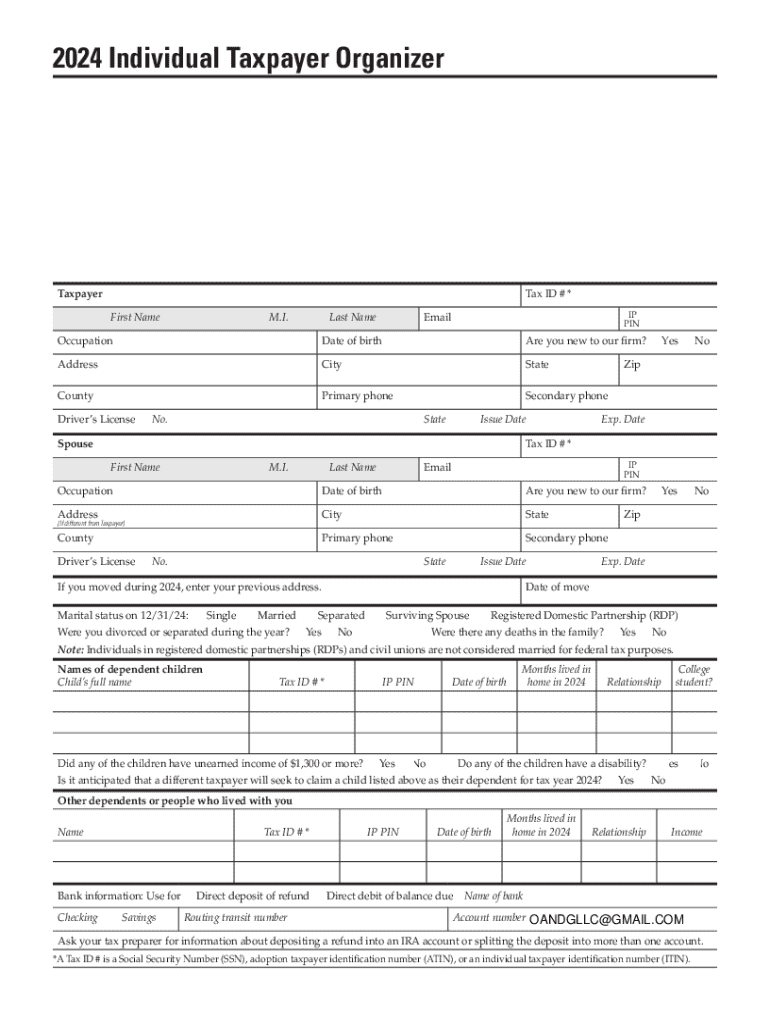







Definition & Meaning
The 2024 Individual Taxpayer Organizer is a comprehensive tool designed to assist individuals in gathering personal, financial, and tax-related information necessary for accurate tax return preparation. This organizer is essential for taxpayers and their spouses, as it streamlines the process of documenting income sources, dependents, deductions, and other relevant tax details. By systematically collecting this data, individuals can ensure compliance with IRS regulations and facilitate a smoother tax filing experience.
How to Use the 2024 Individual Taxpayer Organizer
-
Collect Personal Information: Begin by filling out basic personal details for yourself and your spouse, such as names, social security numbers, and contact information.
-
Document Income Sources: Enter all income sources, including wages, interest, dividends, and rental income. This ensures all earnings are accounted for in the tax calculations.
-
Itemize Deductions: List any eligible deductions like mortgage interest, charitable contributions, and medical expenses. This can potentially lower the taxable income.
-
Review Dependents: Include information about any dependents, such as children or relatives, to qualify for applicable credits and deductions.
-
Answer Tax-Related Questions: Complete various tax-related queries to provide additional context or clarification, aiding in thorough tax return preparation.
This step-by-step approach helps individuals organize their tax information methodically, reducing errors and enhancing efficiency.
Steps to Complete the 2024 Individual Taxpayer Organizer
-
Download the Organizer: Obtain a digital or paper copy to ensure you have the latest version.
-
Gather Documents: Collect necessary documents like W-2s, 1099s, and previous year's tax returns for reference.
-
Fill in the Details: Use the organizer to methodically enter information, ensuring all sections are completed accurately.
-
Consult a Tax Professional: If uncertain about any part of the organizer, seeking advice from a tax professional can provide clarity and ensure compliance.
-
Review and Submit: Double-check all entries for accuracy before submitting the information to your tax preparer or using it to prepare your tax return.
This detailed process ensures accuracy and completeness in compiling necessary tax data.
Key Elements of the 2024 Individual Taxpayer Organizer
-
Personal Information Section: Captures essential details such as names, addresses, birthdates, and social security numbers.
-
Income Sources Section: Documents all forms of income, including employment, self-employment, investments, and other gains.
-
Deductions and Credits Section: Details out deductions and credits, like student loan interest, retirement contributions, and energy-efficient home upgrades.
-
Dependents Section: Records information about dependents, necessary for claiming child tax credits and other benefits.
-
Tax-Related Questions: Offers a series of questions to address unique tax situations and ensure all aspects are covered.
These components are vital for painting an accurate picture of the taxpayer's financial situation and can directly influence the tax filing outcomes.
IRS Guidelines
The IRS provides detailed guidelines for the preparation and submission of tax returns, which are integral to completing the 2024 Individual Taxpayer Organizer. These guidelines cover:
-
Thresholds for Reporting Income: Understanding what income needs to be reported is crucial for compliance.
-
Allowed Deductions: The IRS specifies which deductions can be claimed, directly impacting the organizer's deductions section.
-
Due Dates and Extensions: Guidance on filing deadlines ensures taxpayers avoid penalties for late submissions.
Adhering to these guidelines is essential for accurate tax reporting and avoiding potential issues with the IRS.
Filing Deadlines / Important Dates
-
April 15, 2024: Primary deadline for submitting individual tax returns for the 2023 tax year. Extensions can be filed before this date if needed.
-
Estimated Tax Payments: Quarterly dates throughout the year for those required to pay estimated taxes.
-
Contribution Deadlines: Certain deductions, such as IRA contributions, have deadlines aligning with the tax year filing deadline.
By marking these dates, taxpayers can avoid late fees and penalties, ensuring a smooth filing process.
Required Documents
-
W-2 Forms: From employers, detailing earnings and tax withholdings.
-
1099 Forms: For reporting various types of income other than wages, salaries, and tips.
-
Previous Year’s Tax Return: Used for reference and to ensure continuity of information.
-
Receipts for Deductions: Proof of deductible expenses, like charitable donations and medical payments.
Having these documents ready simplifies the completion of the organizer and accelerates the filing process.
Form Submission Methods (Online / Mail / In-Person)
-
Online Filing: Using tax preparation software compatible with DocHub, like TurboTax or QuickBooks, for a streamlined digital submission.
-
Mail: Traditional method, sending the complete tax return package via certified mail for proof of submission.
-
In-Person: Working directly with a tax preparer who can submit on behalf of the taxpayer.
Each method has its benefits, and the choice depends on the individual's preference for convenience, security, or personal assistance.




