
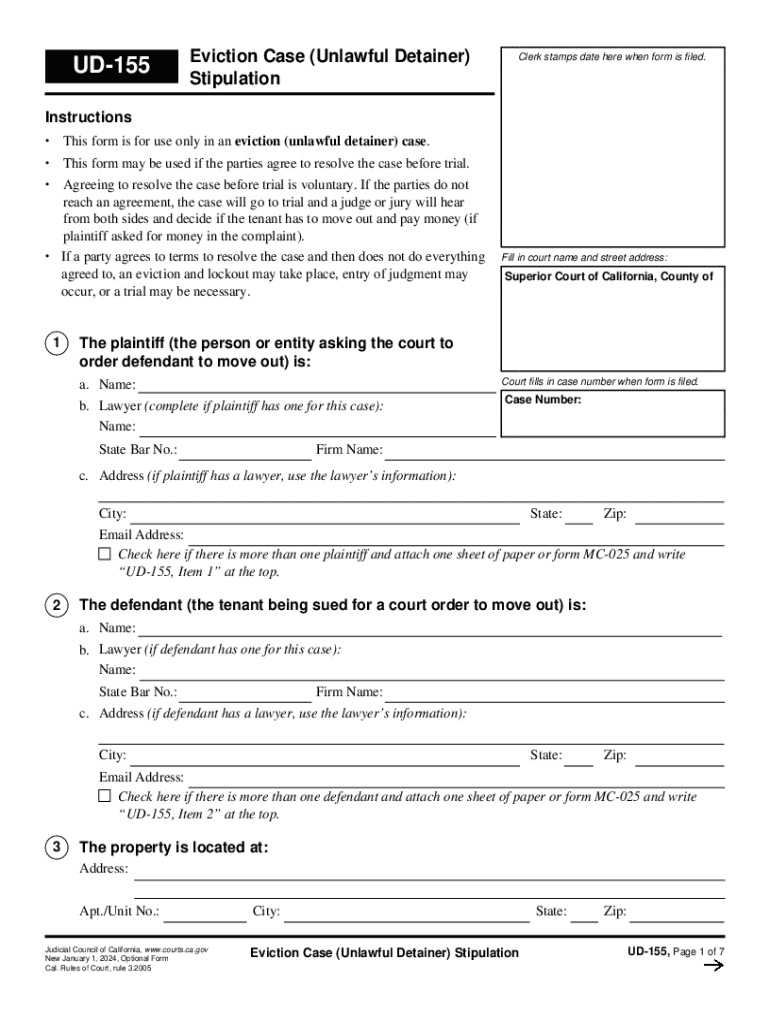







Definition and Purpose of UD-155
The UD-155 form is a pivotal legal document used in eviction cases, specifically known as unlawful detainer actions, within the state of California. This form facilitates an agreement between the parties involved, allowing them to agree on terms to resolve the case before it proceeds to trial. Typically, the form outlines the stipulation process, which includes a Stipulation and Order or a Stipulated Judgment. These documents detail each party's obligations, such as payment arrangements, timelines for vacating a property, and adherence to agreed-upon terms. Understanding the UD-155 is essential as it provides a structured framework for settling disputes outside of court, thereby potentially saving time and resources.
How to Use the UD-155
The use of the UD-155 form is primarily straightforward but requires careful attention to detail. The document serves to formalize any agreement between the plaintiff and the defendant, who are often a landlord and tenant, respectively. When using the form, parties should ensure all terms are clearly outlined, including the responsibilities and expectations of each party. The form can be used to document the settlement terms, covering areas such as rent repayment schedules, move-out dates, and any other stipulations agreed upon. Once filled out appropriately, the form must be signed by both parties and, when necessary, submitted to the appropriate court for validation.
How to Obtain the UD-155
Obtaining the UD-155 form is a relatively easy process. It is available through various legal resources in California, including the Judicial Council of California's website, which often provides downloadable versions. Additionally, legal aid societies and law libraries might offer free access to the document. It's crucial for parties involved in an eviction case to obtain the latest version of the form to ensure compliance with any updates to its structure or legal requirements.
Steps to Complete the UD-155
- Identify Parties Involved: Clearly denote the plaintiff and defendant at the beginning of the form.
- Outline Terms: Define the specific terms and stipulations agreed upon, focusing on the obligations of each party.
- Compliance Clauses: Incorporate clauses detailing consequences of non-compliance.
- Signatures: Both parties, and potentially their legal representatives, must sign the document.
- Court Submission: Submit the completed form to the relevant court, if required, to make the agreement legally binding.
Who Typically Uses the UD-155
The primary users of the UD-155 are tenants and landlords involved in eviction proceedings. In addition, legal representatives often utilize this form to mediate disputes without requiring a full court hearing. This form is especially useful for individuals looking to resolve eviction matters amicably through a mutually agreed-upon settlement.


Important Terms Related to UD-155
- Stipulation: An agreement between parties to certain facts or procedures.
- Order: A directive issued by a court or judge.
- Stipulated Judgment: A judgment agreed upon by both parties before trial.
- Plaintiff: The party that initiates the lawsuit.
- Defendant: The party against whom the lawsuit is filed.
Legal Use of the UD-155
The UD-155 is used legally to document agreements in eviction scenarios. For a stipulation to be binding, the terms must be clear and just, with no duress or manipulation from either party. The document should be completed accurately, ensuring that all legal obligations and rights are detailed and acknowledged by both parties.
Key Elements of the UD-155
- Identification of Parties: The form must begin with the proper identification of the plaintiff and defendant.
- Stipulation Details: The agreement terms should be specific, encompassing all aspects from monetary settlements to personal property removal.
- Enforcement: The form includes a section on the penalties for failing to adhere to the agreed terms.
Examples of Using the UD-155
A typical example of UD-155 usage might involve a tenant unable to pay rent due to financial hardship. Through this form, the landlord and tenant might agree on a gradual repayment plan while the tenant continues to occupy the property. Another scenario could be an agreement where the tenant consents to vacate the premises by a specific date to avoid eviction records. These agreements help prevent lengthy court cases and afford both parties a degree of flexibility to settle their dispute amicably.




