







Definition and Purpose
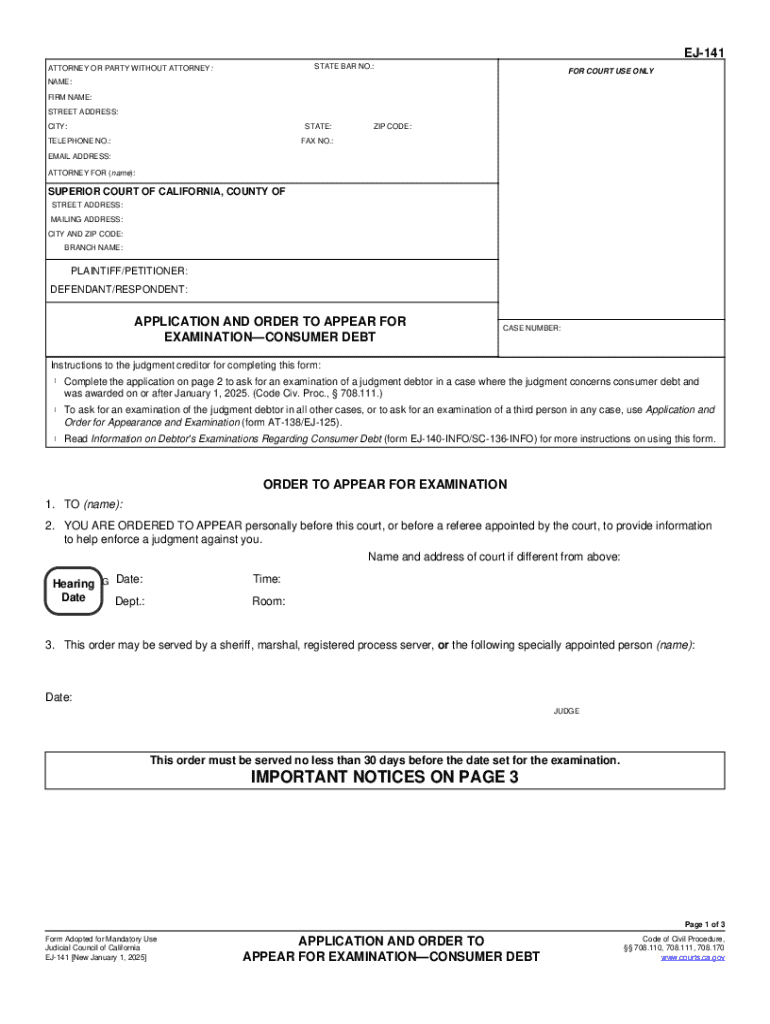
The EJ-141 form, known as the Application and Order to Appear for Examination, is a legal tool used within the Superior Court of California. The form allows judgment creditors to request an examination of judgment debtors concerning consumer debts. This process primarily helps creditors gather information about a debtor's assets and financial status, enabling more effective debt recovery efforts. The form applies to judgments awarded from January 1, 2025, onward.
How to Use the EJ-141 Form
The EJ-141 form is applied to request the court's assistance in compelling a debtor to disclose financial information. Typically, once a creditor obtains a judgment, they can use this form to initiate a debtor's examination. The process requires filing the form with the relevant court, after which a judge may order the debtor to appear for examination. The examination provides insights into the debtor’s ability to satisfy the judgment through disclosed assets.
How to Obtain the EJ-141 Form
To acquire the EJ-141 form, visit the website of the Judicial Council of California or request it directly from the court clerk’s office in your jurisdiction. The form is publicly accessible and designed for ease of access by both legal professionals and individuals representing themselves in court. Always ensure you are using the most recent version of the form to comply with current legal standards.
Steps to Complete the EJ-141 Form
- Fill in the Applicant's Details: Enter information about the judgment creditor, including name and contact details.
- Provide Judgment Information: Include the judgment date, case number, and specifics of the court order.
- Debtor’s Information: Clearly state the debtor's name and address to ensure accurate processing.
- Specify the Examination Details: Indicate the date and location where the examination should occur, allowing ample time for court approval and service.
- Sign and Submit: Have the appropriate party sign the document and submit it as per local court protocols.
Who Typically Uses the EJ-141 Form
Judgment creditors are the primary users of the EJ-141 form. These individuals or entities have received a court judgment against a debtor but require further action to collect the owed amount. Legal representatives acting on behalf of creditors also frequently utilize this form to facilitate the examination process.


Key Elements of the EJ-141 Form
- Creditor Information: Essential for verification and record-keeping.
- Judgment Details: Information that ties the form to a specific court case and judgment.
- Debtor Details: Accurate debtor identification ensures proper notification and examination.
- Examination Scheduling: Dates and locations for the planned examination to coordinate with court calendars.
Legal Use of the EJ-141 Form
The EJ-141 form is utilized under California law to facilitate post-judgment procedures. Its legal backing ensures debtors comply with examination orders, providing a lawful pathway for creditors to assess potential assets. Misuse of the form can lead to legal penalties; hence, adherence to guidelines is essential.
Importance of Using the EJ-141 Form
Using the EJ-141 form is crucial for creditors as it represents a vital step in debt recovery. It ensures a formal process is followed for debtor examination, increasing the likelihood of asset identification and subsequent debt satisfaction. Furthermore, it provides legal protection for creditors by involving court oversight in the examination process.
Important Terms Related to EJ-141
- Judgment Creditor: The party holding the court-ordered claim against the debtor.
- Judgment Debtor: The individual or business entity required to satisfy the judgment.
- Examination Order: A court mandate requiring debtor attendance for financial disclosure.
- Consumer Debt: Debts incurred for personal, family, or household purposes.
State-Specific Rules for the EJ-141 Form
While the EJ-141 form pertains to the Superior Court of California, local rules may impact its completion and submission. California’s counties might have variations in procedural rules, including specific filing requirements and timelines. Always consult local court guidelines to ensure compliance with jurisdictional nuances.




