Key Elements of the Farm Food Safety Plan Template
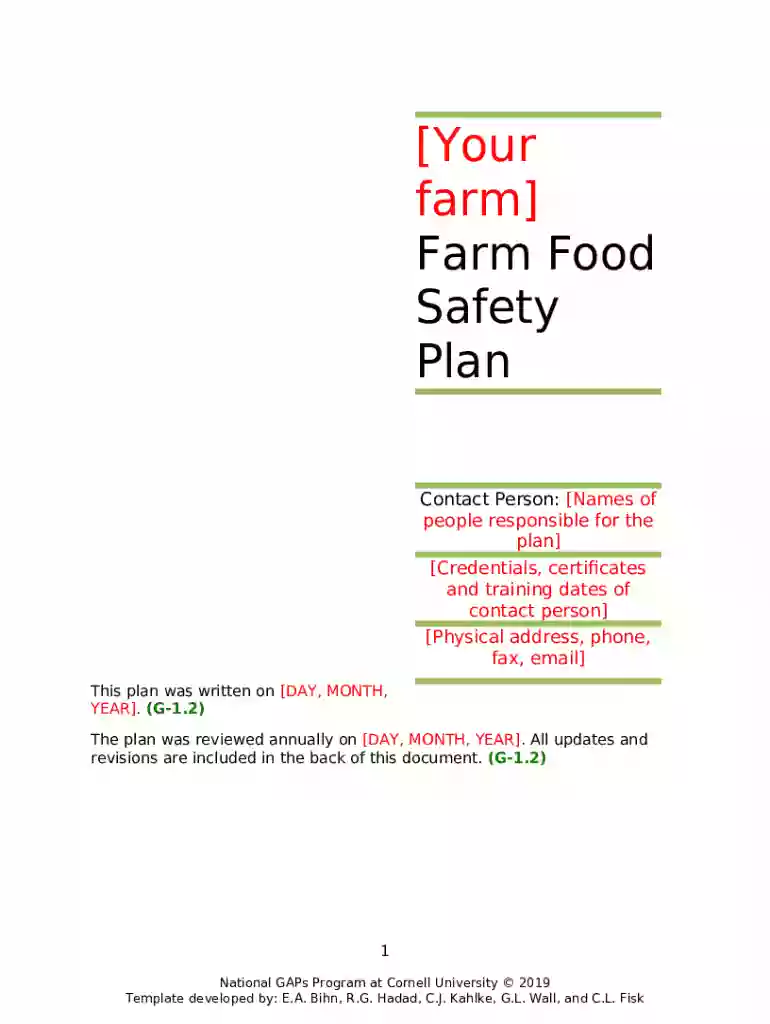
The Farm Food Safety Plan template is a comprehensive document that covers essential practices to ensure food safety and compliance with regulations. It is primarily designed for fruit and vegetable growers and includes several key elements vital for developing a robust safety strategy.
- Management Responsibilities: Details responsibilities for overseeing food safety operations, including delegating tasks and ensuring compliance with safety protocols.
- Self-Audits: Guidance on conducting regular self-assessments to identify and rectify potential food safety issues.
- Corrective Actions: Steps to take when a food safety problem is identified, including immediate responses and long-term prevention plans.
- Documentation and Record-Keeping: Emphasizes the importance of maintaining accurate records for audits and regulatory compliance.
- Traceability Procedures: Sets out procedures for tracing products back to their source to ensure efficient recall and safety management.
Steps to Complete the Farm Food Safety Plan Template
Creating a detailed Farm Food Safety Plan involves several critical steps to ensure the document is comprehensive and effective.
- Assess Risks: Evaluate potential food safety hazards specific to your farming operations.
- Establish Protocols: Develop procedures and protocols for managing identified risks.
- Delegate Roles: Assign specific tasks and responsibilities to team members for managing food safety.
- Implement Training: Ensure all employees understand and adhere to food safety practices.
- Conduct Regular Reviews: Regularly review and update the plan to ensure continuing compliance with regulations and standards.
Subsections
- Detailed Risk Assessment: Provide a more detailed analysis of potential risks, including environmental and operational factors.
- Employee Training Programs: Outline effective training sessions for staff on hygiene and safety practices.
Why You Should Use a Farm Food Safety Plan Template
Implementing a Farm Food Safety Plan template is crucial for several reasons, ensuring not only legal compliance but also consumer trust and safety.
- Regulatory Compliance: Helps ensure adherence to local and federal regulations, minimizing legal risks.
- Enhanced Consumer Confidence: Demonstrating commitment to food safety increases customer trust and satisfaction.
- Efficient Operations: Streamlines processes and reduces potential for contamination, leading to more reliable operations.
- Crisis Management: A well-documented plan aids in effectively handling emergencies and potential recalls.
Practical Scenarios
- Contamination Event: How a structured plan facilitates rapid response and mitigation.
- Regulatory Inspection: Ensures you are prepared and organized when faced with an audit.
Examples of Using the Farm Food Safety Plan Template
Examples highlight the practical application of the template in real-world scenarios, demonstrating how it aids in compliance and food safety.
- Small Family Farms: Apply the plan to ensure compliance with local safety standards while managing limited resources.
- Large Commercial Growers: Utilize advanced versions of the template to manage more complex operations involving multiple products.
State-Specific Rules for the Farm Food Safety Plan Template
Different states may have specific requirements and rules regarding farm food safety, impacting how the plan is implemented.
- California: Additional regulations concerning water usage and organic produce.
- Florida: Specific protocols for pest management due to its climate.
- New York: Emphasis on traceability and detailed record-keeping practices.
Legal Use of the Farm Food Safety Plan Template
Ensuring the Farm Food Safety Plan is legally binding requires conforming to local, state, and federal guidelines.
- ESIGN Act Compliance: Electronic signatures on safety documents must adhere to ESIGN Act regulations.
- Audit Trails: Maintain a thorough record of document revisions and approvals.
- State and Federal Standards: Align the plan with both state-specific and federal food safety standards to ensure its legality.
Versions or Alternatives to the Farm Food Safety Plan Template
While the Farm Food Safety Plan template provides a solid foundation, alternative versions exist to cater to different needs and crops.
- Customized Templates: Tailored to specific crop types or farm sizes, providing more relevant procedures and protocols.
- Third-Party Services: Some farms may opt for consultancy services that offer custom-developed plans specific to their operations.
How to Use the Farm Food Safety Plan Template
Using the Farm Food Safety Plan template effectively involves several steps to leverage its full potential.
- Initial Setup: Gather all necessary baseline data about current safety practices and protocols.
- Customization: Modify the template to fit your farm's unique operations and risks.
- Implementation: Roll out the plan with full staff training and system integration.
- Monitoring: Keep track of its effectiveness through regular reviews and updates.
Usage Tips
- Leverage Technology: Use document management software to streamline plan modification and access.
- Regular Feedback: Encourage staff to provide feedback on the plan for continuous improvement.
By thoroughly addressing these sections, the Farm Food Safety Plan template not only becomes a tool for maintaining compliance but also an integral part of the farm's operational framework, ensuring safety, efficiency, and trustworthiness.