
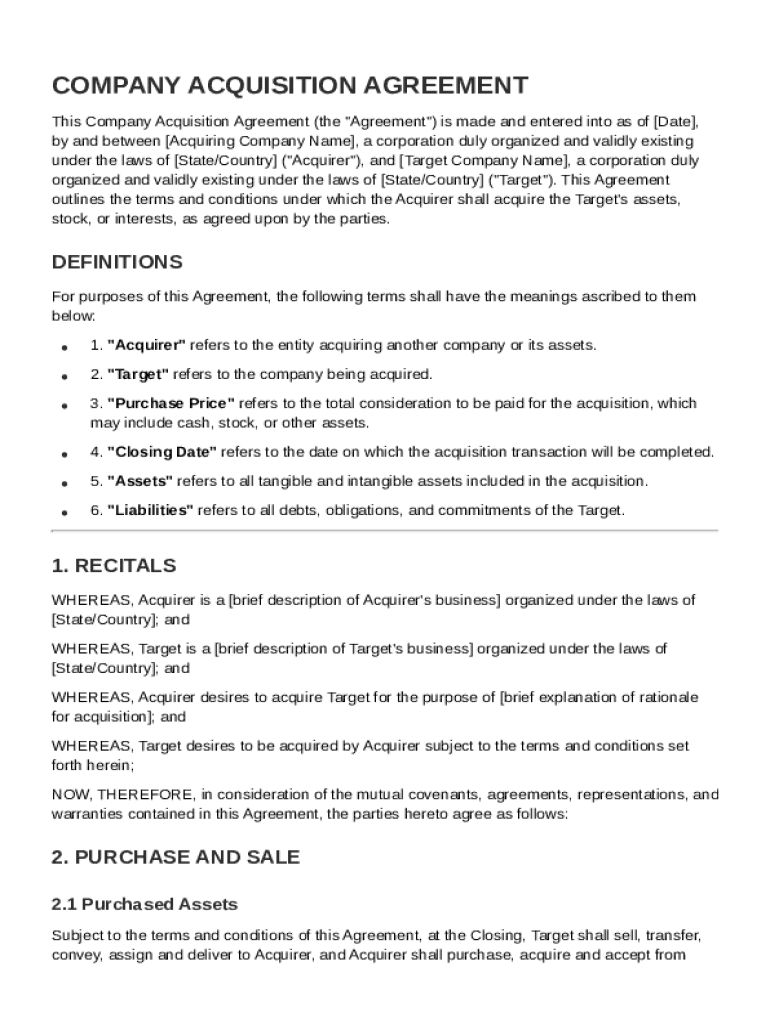







Definition and Purpose of the Company Acquisition Contract Template
The Company Acquisition Contract Template serves as a foundational document in mergers and acquisitions. It outlines the terms, conditions, and legal responsibilities surrounding the transfer of assets, stocks, or interests from a target company (Target) to an acquiring company (Acquirer). This template provides a structured framework that captures the essential elements of an acquisition agreement, ensuring clarity and reducing legal ambiguities. It typically includes details such as the purchase price, payment terms, representations and warranties, covenants, indemnification clauses, and dispute resolution mechanisms. Understanding the template's purpose is crucial for businesses looking to streamline the acquisition process while ensuring all necessary legal and financial considerations are accurately documented.
How to Use the Company Acquisition Contract Template
Using a Company Acquisition Contract Template involves several critical steps to tailor the document to specific transaction needs. Begin by reviewing the template to understand its components. Then customize the sections to reflect the unique details of the acquisition, such as the identities of the Acquirer and Target, the purchase consideration, and any specific representations or warranties required. It's essential to consult with legal and financial advisors during this process to ensure all necessary clauses are appropriately modified and comply with applicable laws. Finally, both parties should thoroughly review the customized contract before execution, ensuring mutual understanding and agreement on all terms.
Customization Tips
- Identify Parties: Clearly define who the Acquirer and Target are in the transaction.
- Specific Terms: Adjust purchase price and payment terms as negotiated.
- Regulatory Compliance: Ensure that all regulatory approvals and consents are accounted for.
- Legal Advice: Consult with legal experts to verify that all contractual clauses are suitable and legally binding.
Steps to Complete the Company Acquisition Contract Template
Completing the template involves systematic steps to ensure all aspects of the agreement are thoroughly addressed. Here's a typical process:
- Initial Review: Examine the template's structure and components.
- Data Collection: Gather all relevant data, including corporate information, financial details, and specific transaction terms.
- Customization: Adapt each section to the specific acquisition scenario, ensuring accurate and comprehensive representation.
- Review and Revise: Conduct multiple reviews to resolve any discrepancies or incomplete sections.
- Legal Consultation: Engage legal advisors for final review and revisions.
- Final Approvals: Obtain formal approval and sign-off from both parties involved.
- Execution: Execute the contract and initiate the acquisition process.
Key Elements of the Company Acquisition Contract Template
A comprehensive Company Acquisition Contract Template should contain several vital elements that cover different aspects of the acquisition:
- Purchase and Sale: Detailed terms on assets or stock being transferred.
- Representations and Warranties: Assurances from both parties about their circumstances and the business being acquired.
- Covenants: Obligations regarding business conduct prior to and post-acquisition.
- Conditions Precedent: Requirements that must be met before completion.
- Indemnification: Provisions detailing compensation for breaches or inaccuracies.
- Governing Law and Dispute Resolution: Jurisdiction and methods for resolving conflicts.
Legal Use and Compliance
In the United States, the legal use of a Company Acquisition Contract Template requires adherence to certain federal and state laws. Parties must ensure the contract complies with antitrust regulations, securities laws, and other pertinent legal frameworks. Due diligence is crucial to confirm that all disclosures and representations are accurate and complete. Employing the services of a legal professional can aid in navigating the complexities of compliance and ensure that the contract aligns with legal standards, minimizing the risks of future disputes or regulatory issues.
Who Typically Uses the Company Acquisition Contract Template
The primary users of a Company Acquisition Contract Template are businesses and organizations engaged in mergers and acquisitions activities. This includes corporate entities, private equity firms, and investment groups looking to purchase or merge with other businesses. Legal professionals and consultants also use this template as a foundational tool in structuring and negotiating terms for corporate transactions. It serves organizations of various sizes that need a reliable framework for documenting acquisitions efficiently and effectively.


Considerations for State-Specific Rules
State-specific regulations may impact the content and enforceability of a Company Acquisition Contract Template in the United States. Each state may have distinct laws regarding corporate transactions, taxes, and filing requirements. For instance, some states might impose specific notice requirements, while others could have unique tax obligations tied to corporate acquisitions. It is essential for the parties involved to research or engage experts familiar with state laws to modify the template accordingly to ensure that it addresses all applicable legal considerations specific to the jurisdiction where the transaction occurs.
Examples of Using the Company Acquisition Contract Template
Practical examples highlight the versatility of the Company Acquisition Contract Template:
- Small Business Acquisition: A local business owner uses the template to acquire a competitor, ensuring all assets and liabilities are clearly documented.
- Tech Startup Merger: A tech company utilizes the template to merge with another startup, outlining intellectual property transfer and employee retention clauses.
- Private Equity Investment: An investment firm employs the template for purchasing a significant stake in a retail franchise, focusing on financial representations and performance metrics.
Each case illustrates the template's adaptability to various scenarios, emphasizing its importance in facilitating structured and secure business transactions.




