
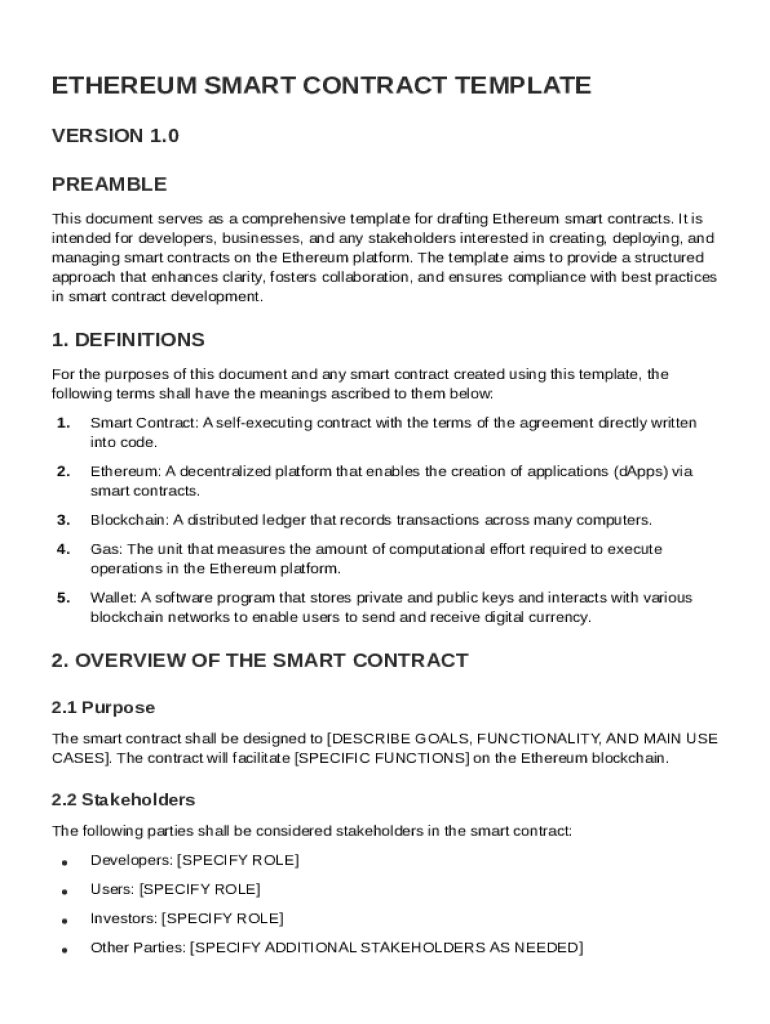





Definition and Meaning of Ethereum Smart Contract Template
An Ethereum smart contract template is a pre-designed, reusable coding framework that helps developers and stakeholders create Ethereum-based contracts efficiently. This template captures the essential components required for conducting decentralized operations on the Ethereum blockchain. Key aspects include variable definitions, initialization processes, and function designs, which serve as foundational elements for developers creating customized smart contracts tailored to specific business needs.
Core Components
- State Variables: These define the contract's basic data structure needed to maintain persistent state information across transactions.
- Functions and Events: Essential for transaction execution and system communication, allowing smart contracts to respond to blockchain events.
Purpose and Use
Smart contract templates help maintain consistency, improve security, and allow for scalable development practices by offering a structured approach to creating contracts.
How to Use the Ethereum Smart Contract Template
Using the Ethereum smart contract template involves several methodical steps that ensure the contract is tailored to specific requirements while adhering to best development practices.
Steps to Efficient Utilization
-
Initialization: Begin by defining the contract's purpose and specifying all state variables and their types, ensuring they align with the intended contract functionality.
-
Customization: Modify predefined functions and variables to fit your specific contract needs. This process may include adding unique operational methods or security measures.
-
Testing: Perform rigorous testing using Ethereum's test networks like Ropsten or Rinkeby to ensure that the contract operates as expected without incurring costs or facing security vulnerabilities.
By following these steps, developers can create robust and secure smart contracts while leveraging the template's foundational structures.
Key Elements of the Ethereum Smart Contract Template
An Ethereum smart contract template comprises several critical components that dictate its functionality and effectiveness. Understanding these elements is essential for developing purposeful and resilient contracts.
Basic Elements
- Contract Definitions: Establish the fundamental code structure, including data storage formats and accessibility options.
- Operational Functions: Execute specific procedures, such as token transfers or balance updates, within the blockchain network.
- Security Protocols: Built-in measures to protect transactional integrity, prevent unauthorized access, and manage error handling effectively.
These key elements form the backbone of any Ethereum smart contract, ensuring it functions smoothly and securely within the blockchain environment.
Legal Use of Ethereum Smart Contract Template
Legal adherence is critical when deploying smart contracts on Ethereum, as these contracts must comply with recognized standards and regulations.
Compliance and Legitimacy
- Adherence to ESIGN Act: The template should include features that comply with electronic signature laws, ensuring legally binding agreements.
- Data Protection Measures: Incorporate SSL encryption and OAuth 2.0 authentication to safeguard user data against unauthorized access or breaches.
Adhering to legal standards not only enhances reliability but also ensures that contracts operate within regulatory frameworks, protecting both developers and users.
Who Typically Uses the Ethereum Smart Contract Template
Ethereum smart contract templates are primarily tailored to cater to the needs of various entities and individuals engaged in blockchain technology.

Typical Users
- Software Developers: Seeking efficient, reusable frameworks to create and deploy decentralized applications (dApps).
- Businesses: Interested in automating processes such as financial transactions or supply chain management within a decentralized network.
- Researchers: Testing and innovating blockchain solutions for academic or industrial exploration.
By leveraging these templates, users can streamline development efforts while enhancing smart contract functionality and security.
Important Terms Related to Ethereum Smart Contract Template
Familiarity with key terms related to Ethereum smart contracts is essential for maximizing the template's utility during development.
Glossary of Terms
- Gas Fees: Costs incurred for computational operations on the Ethereum network, which users must account for in contract execution.
- ABI (Application Binary Interface): Interface standard used to encode and decode smart contract interactions for efficiency.
- ERC Standards: Ethereum Request for Comments, which provide guidelines and standards for smart contract functionalities like ERC-20 tokens.
Understanding these terms helps users navigate the Ethereum environment effectively, ensuring smart contract templates are employed optimally.
Steps to Complete the Ethereum Smart Contract Template
Completing a smart contract using the Ethereum template requires diligence and attention to detail to ensure it operates flawlessly in the network.
Comprehensive Guide
- Define Objectives: Clearly outline what the smart contract will achieve and identify necessary functionality.
- Template Customization: Adjust the template to accommodate unique operational elements, such as specific rules and workflows.
- Security Implementation: Incorporate security provisions to protect against vulnerabilities and ensure transactional integrity.
- Testing and Review: Conduct comprehensive tests and code reviews to confirm the contract's accuracy and alignment with its objectives.
Following these detailed steps ensures that the finished smart contract is both practical and secure within the blockchain sphere.
Software Compatibility and Integration
Ensuring compatibility across various platforms enhances the utility of Ethereum smart contract templates.
Integrated Platforms
- Development Environments: Platforms like Remix or Truffle offer compatibility for writing, compiling, and deploying contracts.
- Version Control: Tools such as Git allow tracking changes and collaborating efficiently on template modifications.
- Blockchain Networks: Interoperability with mainnet and testnet environments ensures seamless transition from development to deployment.
Compatibility across these tools and platforms enhances the development process, allowing for efficient and streamlined smart contract creation.