




Definition and Meaning
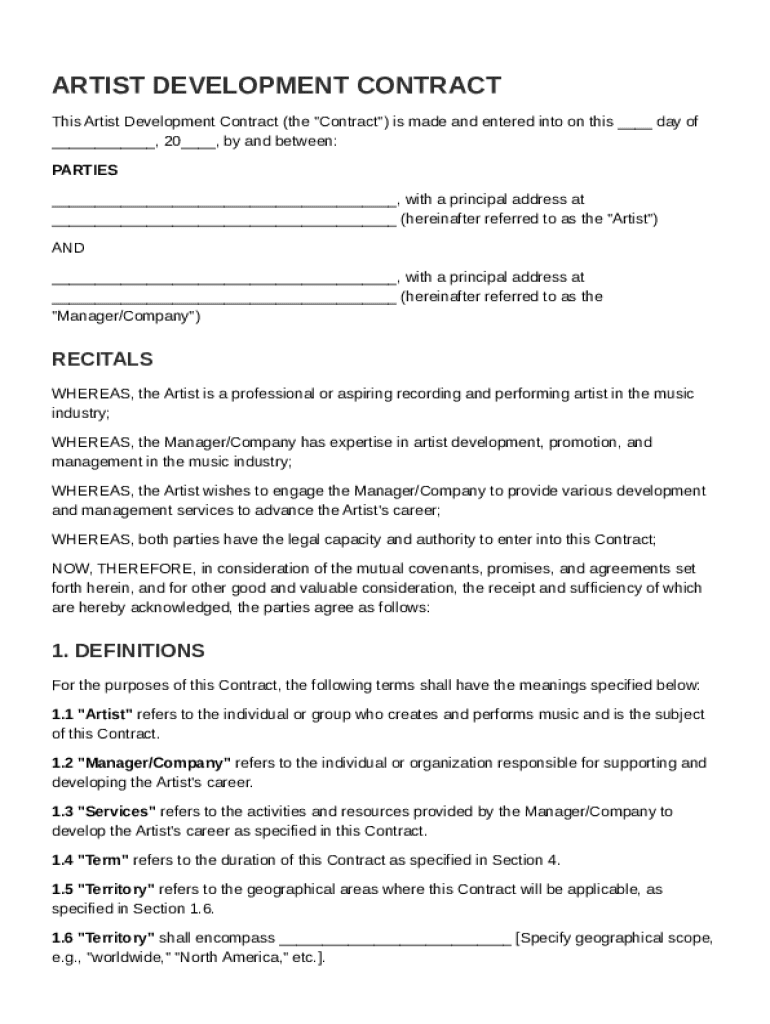
The Artist Development Contract Template is a formal agreement between an artist and a management company or manager. This document outlines the terms under which managerial, promotional, and developmental services are provided to support the artist's career in the music industry. Key components include the services' scope, compensation structures, and intellectual property rights. The contract aims to establish a clear framework for the professional relationship, detailing obligations and benefits for both parties involved. With this structure, it supports the artist's growth while protecting each party's interests.
Key Elements of the Artist Development Contract Template
Services Provided
- Artist Management: Details the specific managerial services offered, such as career planning and advice.
- Promotion Activities: Outlines how the artist will be marketed and promoted, including media appearances and social media strategies.
- Development Support: Specifies resources available for skill development, such as training or mentorship programs.
Compensation and Payment Terms
- Revenue Sharing: Defines how income from performances, sales, and other sources is divided.
- Advance Payments: Specifies any upfront payments made to the artist for specific projects or goals.
- Expense Reimbursements: Lists what costs the management will cover and the reimbursement process.
Important Terms Related to Artist Development Contract Template
- Intellectual Property Rights: Defines ownership and rights over created music and related materials.
- Exclusivity Clause: Specifies whether the artist is restricted to working exclusively with the management company.
- Term of Agreement: Outlines the duration of the contract and conditions for renewal or termination.
Steps to Complete the Artist Development Contract Template
- Review Parties’ Information: Ensure both the artist's and manager's details are accurately included.
- Define Service Scope: Clearly outline the services the manager will provide.
- Set Financial Terms: Detail how revenue will be shared and any initial payments.
- Include Rights and Obligations: Document the rights of both parties regarding intellectual property and confidentiality.
- Agree on Term Length: Establish the contract's duration and any extension possibilities.
- Finalize and Sign: Ensure both parties agree with the terms and formally sign the document.
Legal Use of the Artist Development Contract Template
Protection of Both Parties
- Artist Protection: Ensures that artists receive proper guidance and support, enhancing their career prospects.
- Management Protection: Offers security for the management company regarding financial arrangements and service provisions.
Dispute Resolution
- Negotiation Methods: Includes clauses for resolving disputes through arbitration or mediation.
- Governing Laws: Identifies the state laws applicable to the contract, ensuring legal compliance and enforceability.
Who Typically Uses the Artist Development Contract Template
- Independent Artists: Emerging musicians who seek professional guidance and support.
- Music Managers: Individuals or companies looking to formalize their relationship with an artist to professionally enhance their careers.
- Record Labels: Companies aiming to streamline artist commitments and development efforts.

Examples of Using the Artist Development Contract Template
Consider a scenario where a rising singer partners with a manager to boost their career through media exposure and concert bookings. The contract would define how income from events and album sales is divided. Another instance could involve a band contracting with a manager for branding and public relations services, specifying exclusivity terms and marketing plans.
State-Specific Rules for the Artist Development Contract Template
Variations by Jurisdiction
- California: Includes special considerations for talent agencies, adhering to the state's Talent Agencies Act.
- New York: May require compliance with specific entertainment and labor regulations, particularly where unions are involved.
Digital vs. Paper Version
- Digital Version Benefits: Allows for easy distribution and modifications, facilitating collaborations across locations.
- Paper Version Considerations: May be preferred for official records where digital signatures are not accepted or for face-to-face signings.