




Definition & Meaning
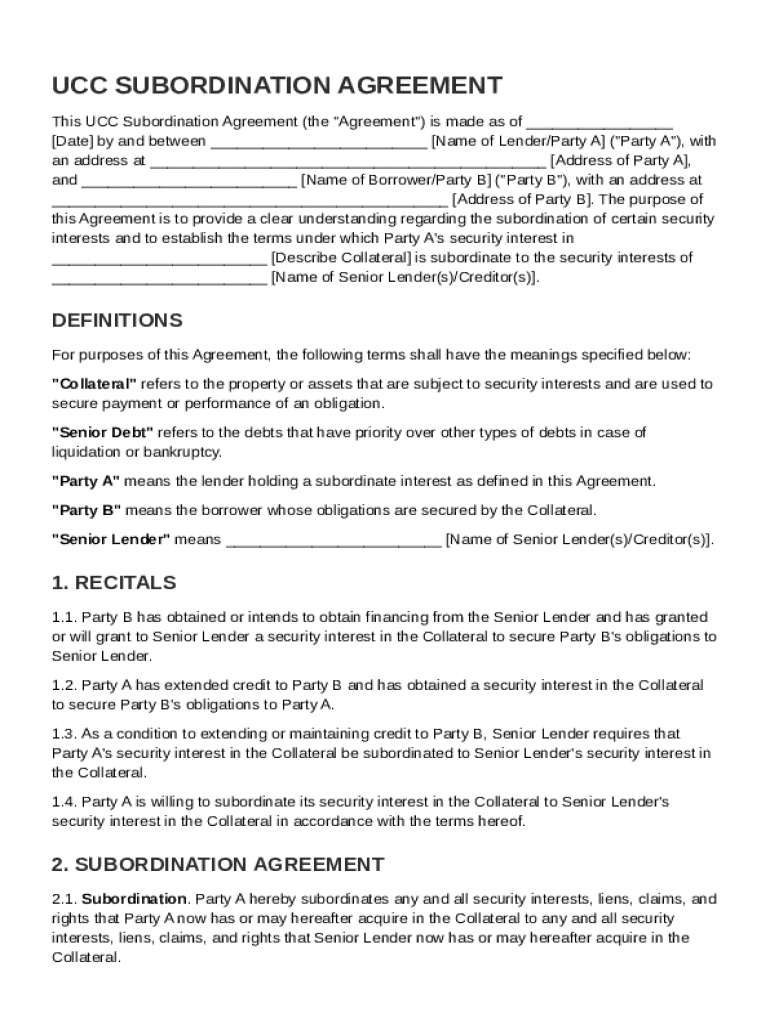
The UCC Subordination Agreement Template is a legal document that outlines how Party A's security interest in specific collateral is subordinated to the interests of Senior Lenders under the Uniform Commercial Code (UCC). This structuring is commonly used when multiple parties have security claims on the same collateral, and it establishes the priority of these claims. The agreement provides a framework for the rights and responsibilities of each party, including representations, warranties, and covenants. Understanding the core function and structure of this template is essential for lenders and borrowers navigating complex financial arrangements.
Key Elements Included
- Priority of Claims: Specifies which creditors have priority and the conditions under which these priorities change.
- Obligations Satisfaction: Details the status under which the agreement remains effective, such as the fulfillment of all obligations to the Senior Lender.
- Representations and Warranties: Outlines statements of fact both parties declare to be true.
- Covenants: Lists obligations each party must fulfill.
- Legal Provisions: Includes clauses for governing law, amendments, and required notices.
How to Use the UCC Subordination Agreement Template
To effectively utilize the UCC Subordination Agreement Template, one must follow a structured approach:
- Identify Parties Involved: Clearly define who Party A and the Senior Lenders are, including their roles and obligations.
- Determine Collateral: Specify the collateral covered by the agreement.
- Outline Terms and Conditions: Clearly set out the terms under which subordination will occur, including time frames and any conditional terms.
- Review Representations, Warranties, and Covenants: Ensure both parties agree with these statements and obligations before proceeding.
Step-by-Step Usage
- Step 1: Read through the template thoroughly to understand each segment.
- Step 2: Customize inputs to reflect the specific agreement details—such as party names and collateral.
- Step 3: Review the finalized draft with legal counsel to ensure compliance with state laws.
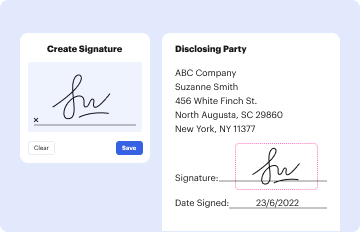
- Step 4: Sign the document electronically or on paper, ensuring all parties have signed and acknowledged it.
Key Elements of the UCC Subordination Agreement Template
The template includes several critical components designed to ensure clarity and enforceability:
Primary Components
- Security Interests: Specific language clarifies the priority of security interests among parties.
- Provisions for Amendments: Outlines the process for modifying the agreement.
- Default Clauses: Defines what constitutes a default and the consequences thereof.
- Termination Conditions: Identifies circumstances under which the agreement may terminate prior to the fulfillment of obligations.
Additional Considerations
- State Law Compliance: Ensure content aligns with specific state regulations influencing the agreement.
- Notices: Provides guidance on how notices should be given to ensure they are legally recognized.
Who Typically Uses the UCC Subordination Agreement Template
This template serves as a critical tool for a range of commercial and financial stakeholders:

Stakeholders Involved
- Lenders: Banks and financial institutions seeking priority over other creditors.
- Corporations: Businesses using collaterals for securing loans from multiple lenders.
- Legal Practitioners: Attorneys advising on complex financial transactions and security interests.
- Investors: Angel investors or venture capitalists requiring security over unsecured loans.
Industry Applications
- Real Estate: Used in projects involving multiple liens.
- Mergers and Acquisitions: Facilitates financing by establishing clear security hierarchies.
- Commercial Financing: Common in business loans needing clear delineation of claims on assets.
Legal Use of the UCC Subordination Agreement Template
The agreement ensures legal clarity in multi-party financial transactions:
Legal Protections Offered
- Contractual Clarity: Clearly defines roles, responsibilities, and priorities.
- Security Interest Hierarchies: Provides a legally enforceable framework for security interest priorities.
- Compliance with UCC Article 9: Aligns with established commercial transaction standards ensuring enforceability.
Best Practices
- Customization: Tailor each agreement to the specific financial context.
- Legal Review: Conduct thorough legal reviews to ensure full compliance with all applicable state laws and UCC requirements.
Steps to Complete the UCC Subordination Agreement Template
Completing this template requires careful attention to detail:
- Gather Necessary Information: Collect details about the collateral, parties involved, and basic agreement terms.
- Fill in the Template: Input the gathered information into the correct sections while ensuring accuracy.
- Legal Review: Have a legal professional review the completed agreement for compliance and completeness.
- Finalize and Sign: Once approved, ensure all parties sign the document electronically or in person.
Considerations for Completion
- Ensure Accuracy: Double-check all entries for accurate reflection of parties and terms.
- Record Keeping: Keep a copy of the signed document for reference and future use.
Important Terms Related to UCC Subordination Agreement Template
Familiarizing oneself with relevant terminology enhances understanding and execution:
Common Terms
- Security Interest: A legal claim on collateral offered by a borrower to a lender.
- Lien: A lender's right to possess and sell collateral if a borrower defaults on obligations.
- Senior Lender: The lender with top priority on claims against collateral.
- Collateral: Asset offered as security for a loan.
Conceptual Understanding
- Subordination: The process of ranking one party's claim on collateral below another's.
- Default: The failure to fulfill obligations under the agreement.
State-Specific Rules for the UCC Subordination Agreement Template
Each state may have unique modifications pertinent to the UCC guidelines:
Considerations by State
- Legal Variances: States might have specific statutes or interpretations affecting security interests.
- Filing Requirements: Requirements for filing a UCC form may differ from state to state, impacting execution timelines and costs.
- Jurisdictional Issues: Some amendments might be needed to reflect state-specific legal requirements accurately.
Necessary Adjustments
- Consult Local Counsel: Due to potential differences, working with a local attorney can be invaluable for tailoring the agreement to state laws.
- Continuous Updates: Stay aware of any changes in state regulations impacting UCC implementation.
This comprehensive coverage ensures a detailed understanding and application of the UCC Subordination Agreement Template, maximizing its utility and legal enforceability.