






Definition and Purpose of the Member Managed Operating Agreement Template
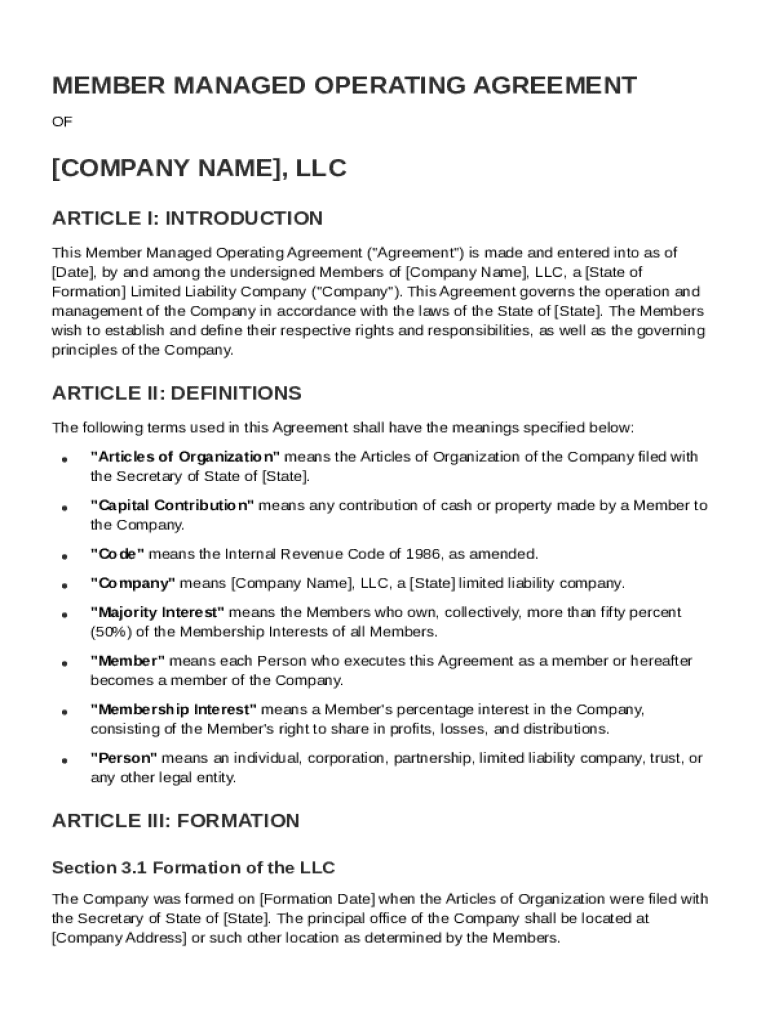
A Member Managed Operating Agreement is a legal document tailored for Limited Liability Companies (LLCs) where all members participate in the administration of the enterprise. This template provides a structured framework that outlines the governance, management roles, and operational protocols of the LLC. The document is crucial for establishing clear guidelines, including member rights, responsibilities, capital contributions, and profit sharing. All significant decisions typically require unanimous agreement among members, promoting an inclusive decision-making process.
Key Elements of the Member Managed Operating Agreement Template
The Member Managed Operating Agreement Template encompasses several critical components. These elements ensure that the LLC operates smoothly, and that all members are on the same page regarding business functions. Key sections include:
- Member Roles and Responsibilities: Details the leadership roles, decision-making authority, and obligations of each member.
- Capital Contributions: Specifies the financial or asset contributions made by each member and the terms associated with them.
- Allocation of Profits and Losses: Defines how profits and losses will be shared among members, usually in proportion to their contributions.
- Meeting Guidelines: Establishes rules for scheduling, conducting, and documenting meetings, ensuring transparency and record-keeping compliance.
- Dissolution Procedures: Outlines the process of dissolution, either voluntary or involuntary, including the distribution of remaining assets.
Steps to Complete the Member Managed Operating Agreement Template
Completing the Member Managed Operating Agreement Template involves a series of structured steps to ensure accuracy and compliance:
- Gather Essential Information: Collect information about each member, including names, addresses, and their respective capital contributions.
- Outline Management Structure: Clearly define how the LLC will be managed, detailing each member's role and voting rights.
- Establish Financial Arrangements: Set terms for profit distribution, financial reporting, and the accounting procedures that the LLC will follow.
- Draft Operating Rules: Develop rules for business operations, including meeting expectations, member withdrawal processes, and new member admission.
- Review State Laws: Ensure the agreement complies with state-specific LLC regulations and statutory requirements.
- Seek Legal Counsel: Consult with a legal professional to review the agreement for legal accuracy and sufficiency.
- Obtain Member Signatures: Finalize the document by obtaining signatures from all LLC members.
Legal Use of the Member Managed Operating Agreement Template
The Member Managed Operating Agreement Template serves as a legally binding document that provides the blueprint for an LLC's internal affairs and management. It is critical to ensure that the document complies with all applicable laws in the jurisdictions where the LLC operates. The agreement should specify how disputes among members are to be resolved and include indemnity provisions protecting members against liabilities connected to their management roles. Ensuring legal compliance from initial drafting through execution can prevent costly disputes and ensure the LLC's operational integrity.
Who Typically Uses the Member Managed Operating Agreement Template
The Member Managed Operating Agreement Template is predominantly utilized by small to medium-sized LLCs that prefer a decentralized management structure involving all members in critical decision-making processes. It is ideal for family businesses, professional groups, or partnerships where operational transparency and equal participation are valued. This type of agreement is favored by members who wish to retain a hands-on role in daily business management without appointing a separate management team.


State-Specific Rules for the Member Managed Operating Agreement Template
Operating agreements are subject to state regulations, which may influence various aspects of their content. While some states may require an operating agreement as part of the LLC formation process, others merely suggest it. Differences can also manifest in areas such as:
- Filing Requirements: Some states may need the agreement to be filed with state authorities, while others do not.
- Disclosure Obligations: Varying laws on what financial or operational information must be disclosed to state entities.
- Member Consent Standards: Differences in what constitutes unanimous consent for major decisions.
- Indemnification Clauses: Variances in how liability protection is structured and enforced.
Examples of Using the Member Managed Operating Agreement Template
Consider a tech startup with three co-founders who decide to form a member-managed LLC. They use the operating agreement template to outline the company's mission, designate financial responsibilities, and set voting procedures for company operations. In another instance, a family-run restaurant might rely on this template to clearly define roles, from managerial duties to kitchen operations, ensuring family members understand their business contributions and share profits accordingly. These practical uses emphasize the necessity of an operating agreement in fostering organizational clarity and cooperative governance.
Versions or Alternatives to the Member Managed Operating Agreement Template
While the basic version of a Member Managed Operating Agreement Template serves most LLC configurations, businesses can customize templates or explore alternatives. Variations such as an "Externally Managed Operating Agreement" suit LLCs preferring third-party managerial oversight. Companies may also use bespoke legal services for a highly tailored document that accommodates specific state regulations and unique business needs. The choice often hinges on the company's size, the complexity of its operations, and member preferences regarding organizational control.