Definition and Meaning
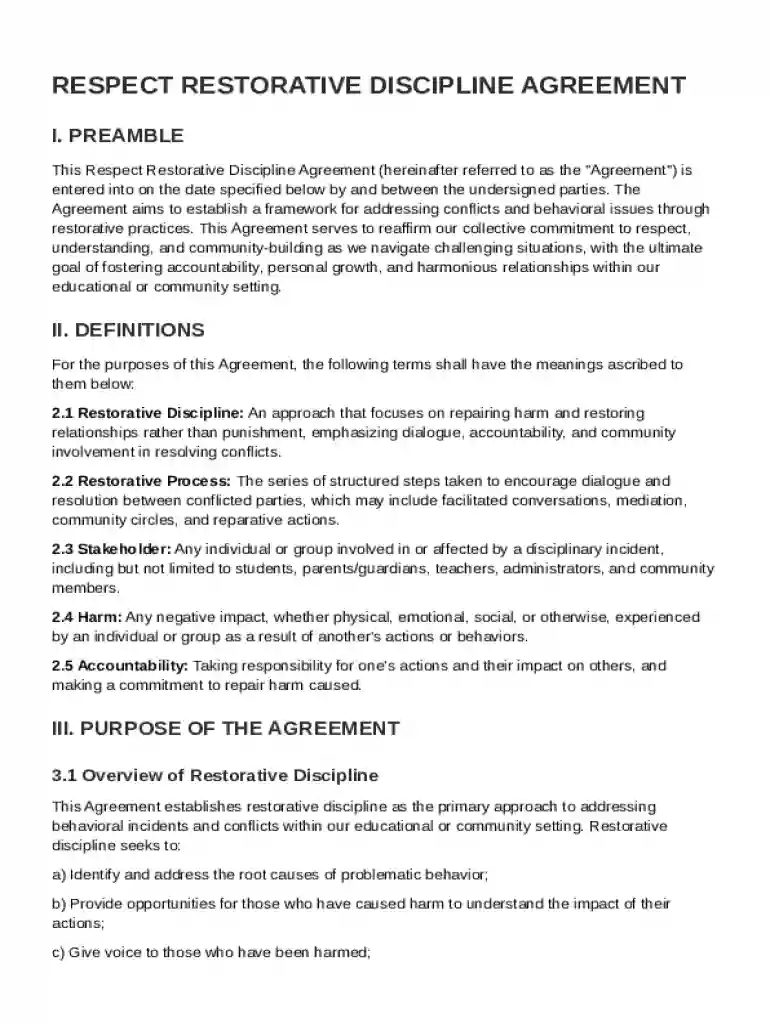
The Respect Restorative Discipline Agreement is a framework utilized primarily in educational and community settings to address conflicts and behavioral challenges through restorative practices. It focuses on the principles of repairing harm, fostering accountability, and building respectful and productive relationships among all stakeholders, including students, parents, and staff. This document outlines the essential commitments of each party involved, the restorative methods to be employed, and the procedures for review and potential revocation of the agreement.
How to Use the Respect Restorative Discipline Agreement Template
Preparation Steps
-
Identify Stakeholders:
- Determine the individuals and groups involved in the process, such as students, educators, parents, and community members.
- Clarify each party's role and contribution to the agreement.
-
Draft Initial Content:
- Use the template to draft the initial content by entering basic information about the stakeholders and the specific context where the agreement will be implemented.
-
Customize Sections:
- Tailor the template sections to fit the unique requirements of the involved parties. Emphasize elements such as definitions, conflict resolution strategies, and the processes for addressing issues.
Implementation
-
Facilitate Dialogue:
- Use the agreement as a tool to facilitate open dialogue among stakeholders, ensuring that everyone understands their roles and responsibilities.
-
Monitor and Review:
- Regularly revisit and review the agreement to ensure its continued relevance and effectiveness. Make adjustments as necessary based on feedback and outcomes.
Steps to Complete the Respect Restorative Discipline Agreement Template
Initial Assessment
-
Gather Relevant Data:
- Collect all necessary information about the conflict or behavioral issues that need to be addressed.
-
Outline Goals:
- Clearly outline the goals of the restorative discipline process, focusing on healing relationships and preventing further issues.
Completing the Template
-
Fill Mandatory Fields:
- Complete all required sections, ensuring accuracy and clarity. This includes defining restorative practices and detailing the steps for conflict resolution.
-
Review and Confirm:
- Have all stakeholders review the completed document to confirm agreement and understanding. Make necessary edits based on collective feedback.
Key Elements of the Respect Restorative Discipline Agreement Template
-
Commitment Statements:
- Each party's commitment to the process is clearly articulated, emphasizing their willingness to engage in restorative practices.
-
Restorative Practices:
- The document specifies the restorative practices to be employed, such as mediation sessions or community circles.
-
Conflict Resolution Processes:
- Detailed procedures for addressing conflicts are included, ensuring transparency and fairness throughout the process.
Legal Use of the Respect Restorative Discipline Agreement
Compliance Considerations
-
Adherence to Local Laws:
- Ensure that the agreement complies with relevant state laws and educational policies. This typically involves consulting legal experts to verify compatibility.
-
Confidentiality Provisions:
- Incorporate confidentiality provisions to safeguard all parties' privacy and protect sensitive information.
Important Terms Related to the Template
-
Restorative Justice:
- A principle focused on repairing harm caused by wrongdoing and reconciling affected parties.
-
Facilitation:
- The process of guiding discussions and interactions among stakeholders to foster productive outcomes.
-
Accountability:
- A commitment by stakeholders to acknowledge their actions and their impact on others.
Examples of Using the Respect Restorative Discipline Agreement Template
Case Studies
-
School Environment:
- A high school adopts the template to address recurring conflicts among students, resulting in improved communication and decreased incidents of misconduct.
-
Community Organizations:
- A community center uses the template to mediate between youth groups, fostering mutual respect and collaboration.
Who Typically Uses the Respect Restorative Discipline Agreement Template
Common Users
-
Educational Institutions:
- Schools utilize the agreement to manage student conflicts and promote a supportive learning environment.
-
Community Organizations:
- Community groups leverage the template to address and resolve disputes among members.
-
Parents and Guardians:
- Parents use the agreement to engage in proactive discussions with educators, aiming to address and prevent behavioral issues.
By incorporating these content blocks and providing comprehensive coverage of the Respect Restorative Discipline Agreement Template, users can effectively implement restorative practices within their communities, enhancing accountability and fostering positive relationships.