






Definition and Meaning
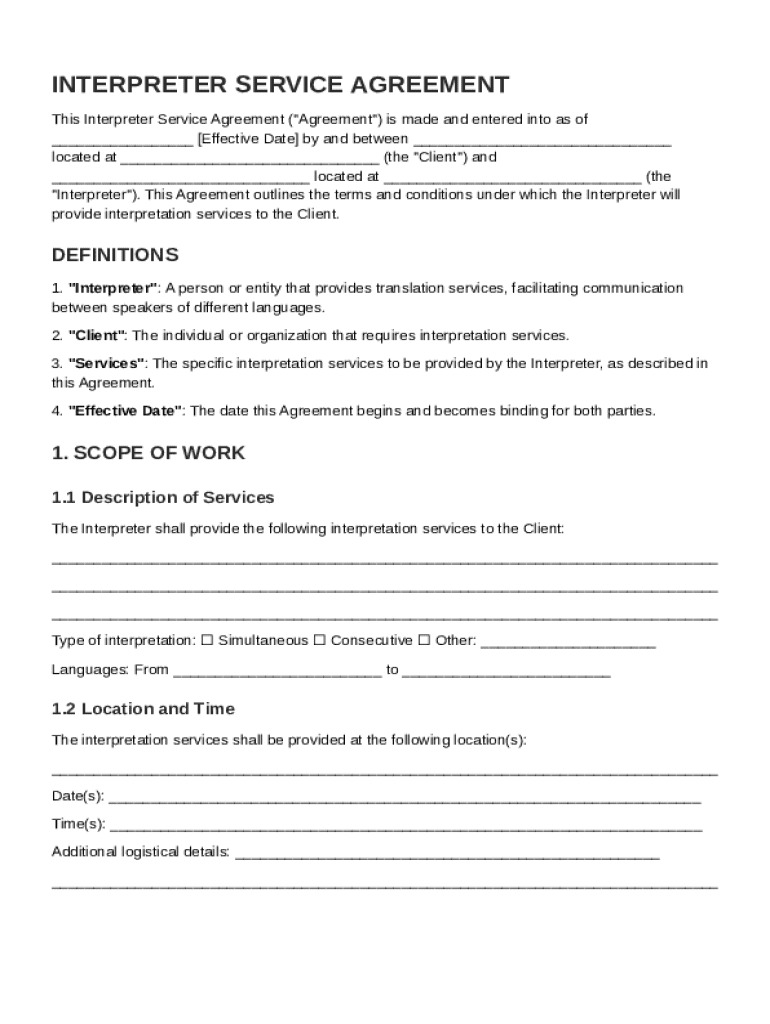
The "Interpreter Contract Template" is a pre-structured agreement used to formalize the terms of engagement between an interpreter and a client. This document serves as a mutual acknowledgment of responsibilities, expectations, and obligations of both parties. It generally covers aspects such as the scope of services, confidentiality, and compensation details. This contract aims to protect the interests of both parties by clearly outlining the terms of engagement and setting expectations for the services provided.
Structure of the Agreement
- Scope of Services: Defines the specific tasks and responsibilities of the interpreter, including the languages covered and the type of interpretation services to be provided, such as simultaneous or consecutive interpreting.
- Compensation and Payment Terms: Specifies the rates for interpretation services, payment methods, and invoicing schedules. This section may also address additional charges, such as travel expenses or overtime fees.
- Confidentiality Obligations: Covers the interpreter's duty to maintain the confidentiality of any sensitive information learned during the course of their work.
How to Use the Interpreter Contract Template
Using the Interpreter Contract Template effectively requires careful attention to detail to ensure all necessary elements are included and customized to the specific circumstances.
- Customize the Template: Begin by entering the names and contact information for both the interpreter and the client. Tailor the scope of services to reflect the particular needs of the agreement.
- Define Terms Clearly: Ensure all terms, such as rates and schedules, are clearly defined to avoid misunderstandings. If there are any special circumstances or requirements, these should be added into the document.
- Review and Confirm Legal Language: Although templates provide a basic structure, verifying that all legal terminology and clauses comply with current regulations and standards is essential. Consulting a legal professional may be advisable to ensure compliance and adequacy.
Ensuring Accuracy and Completeness
- Review for Completeness: Double-check that all sections are filled out and that there is no conflicting information.
- Final Verification: After customizing the template, conduct a thorough review process with all involved parties to ensure mutual understanding and agreement.
Key Elements of the Interpreter Contract Template
To maximize the effectiveness of the Interpreter Contract Template, certain key elements should be included. These ensure comprehensive coverage of the agreement's scope.
Essential Components
- Responsibilities of Both Parties: Outline the obligations and responsibilities of both the interpreter and the client, including any specific preparation or materials the client needs to provide.
- Dispute Resolution: Describe the procedures for handling any potential disagreements, such as mediation or arbitration, to avoid costly litigation.
- Termination Clause: Specify the conditions under which the agreement can be terminated by either party, including notice requirements and any applicable penalties.
Additional Considerations
- Amendments and Modifications: Include provisions for making changes to the contract. Define the process for amendments to prevent future discrepancies.
- Governing Law: State the jurisdiction under which the contract is governed to clarify legal responsibilities and rights.
Steps to Complete the Interpreter Contract Template
Completing the Interpreter Contract Template involves a series of strategic steps to ensure legal soundness and mutual agreement.
- Gather Required Information: Collect all relevant details, such as the interpreter's qualifications, client requirements, and event specifics.
- Fill in Contact Information and Dates: Enter the names, addresses, and contact information of both parties. Clearly define the start and end dates of the interpretation services.
- Set Payment Terms and Conditions: Specify the fee structure, billing cycle, and acceptable payment methods. Include any provisions for late payments or additional charges.
- Attach Necessary Addendums: If specific conditions or additional agreements are attached, ensure these documents are also reviewed and signed by all parties.
Verification and Signatures
- Ensure All Fields Are Completed: Double-check each section to confirm all necessary information has been included.
- Collect Signatures: Obtain signatures from all parties involved, ensuring that each party has a signed copy for their records.
Legal Use of the Interpreter Contract Template
Establishing a legally binding agreement requires a clear understanding of legal expectations and standards.
Compliance and Legality
- Review by a Legal Professional: To ensure the contract meets legal standards, have the template reviewed by a legal professional. This helps to confirm that the terms are fair and legally enforceable.
- Ensure All Parties Understand the Terms: Before finalizing the contract, all parties should be fully informed about the terms to prevent future disputes.
Importance of Legal Compliance
- Protecting Interests: A well-structured contract safeguards the interests of both the interpreter and the client.
- Avoiding Legal Issues: By ensuring all terms comply with current laws, both parties can avoid potential legal disputes or contractual breaches.
State-Specific Rules for the Interpreter Contract Template
Different states may have varying laws and regulations regarding service contracts, which can affect the Interpreter Contract Template.
Understanding State Differences
- Research Local Regulations: Verify if there are any state-specific requirements for contracts involving interpretation services, such as licensing or registration.
- Adapt the Template Accordingly: Modify the contractual terms to align with any state mandates. This might include adjusting termination policies or defining specific clauses relevant to the state's legal landscape.
Practical Application of State Laws
- Consult State Resources: State government websites and legal advisories can provide guidance on compliance with local contract laws.
- Legal Guidance: Seeking advice from a lawyer familiar with local regulations is crucial when dealing with complex or ambiguous situations.
Who Typically Uses the Interpreter Contract Template
Understanding who commonly uses this template helps clarify its purpose and application in different contexts.


Primary Users
- Freelance Interpreters: Independent contractors who provide interpretation services to various clients rely heavily on these contracts to formalize agreements and protect their interests.
- Agencies and Corporations: Businesses and agencies that frequently engage interpreters use these templates to ensure that all legal obligations are met and to streamline hiring processes.
Diverse Applications
- Legal and Medical Sectors: In fields like law and healthcare, precise interpretation is vital, making a formal agreement essential for maintaining professional standards and compliance.
- Educational and Corporate Events: For seminars, conferences, and workshops, having a set contract ensures clarity on service expectations and logistical details.
Examples of Using the Interpreter Contract Template
Illustrating real-world scenarios where the Interpreter Contract Template is effectively applied provides practical insights.
Scenarios
- International Conferences: When hosting events with attendees from various countries, interpreters are often contracted using this template to guarantee all parties’ understanding throughout the event.
- Legal Depositions: Law firms may engage interpreters for depositions involving non-English-speaking clients, using the contract template to ensure confidentiality and accurate communication.
- Medical Consultations: Hospitals might utilize this form to contract interpreters for patient consultations, ensuring sensitive medical information is communicated accurately and confidentially.
Practical Impact
- Enhanced Professionalism: Using a structured contract elevates the professionalism and reliability of interpretation services.
- Risk Mitigation: Clear agreements prevent misunderstandings and mitigate potential legal risks associated with verbal agreements.