




01. Edit your form online
Type text, add images, blackout confidential details, add comments, highlights and more.

Type text, add images, blackout confidential details, add comments, highlights and more.

Draw your signature, type it, upload its image, or use your mobile device as a signature pad.

Send it via email, link, or fax. You can also download it, export it or print it out.
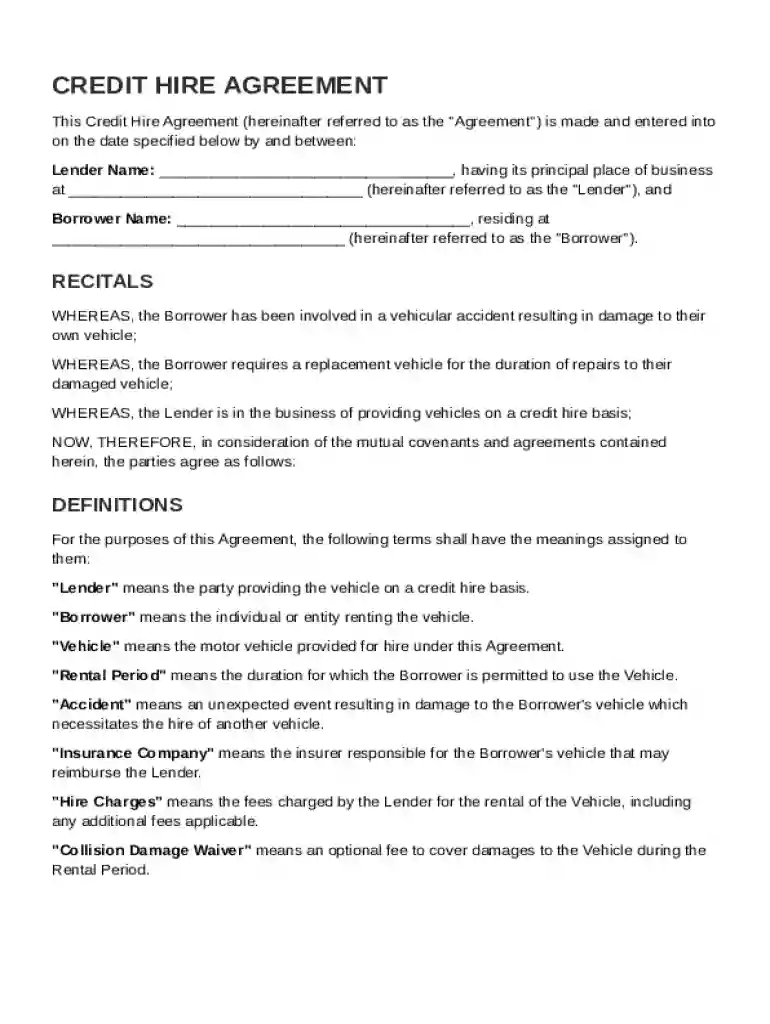
A Credit Hire Agreement is a legal contract between a lender and a borrower, allowing the borrower to use a replacement vehicle temporarily after their own vehicle has been damaged in an accident. This agreement outlines the responsibilities of both parties, including the terms and conditions for vehicle use, payment obligations, and stipulations for returning the vehicle. The primary goal is to safeguard both parties' interests throughout the vehicle rental period and ensure clarity on usage terms. Typically, such agreements involve detailed provisions about insurance coverage, liability, and conditions under which the borrower might forfeit their rights under the contract.
Every Credit Hire Agreement Template contains several crucial elements to ensure comprehensive coverage of all necessary terms:
Definitions: This section clarifies specific terms used throughout the agreement, such as "lender," "borrower," "replacement vehicle," and any legal jargon that might require explanation.
Responsibilities of the Borrower: Details on the borrower's obligations, including the care of the vehicle, agreed mileage restrictions, and rules for reporting any incidents while the car is hired.
Responsibilities of the Lender: Includes maintaining the vehicle in roadworthy condition, making sure all essential vehicle documents are current, and providing insurance support where necessary.
Payment Terms: Outlines how and when payments are to be made, including any deposit requirements, payment schedules, and penalties for late payments.
Insurance Provisions: Describes the insurance coverage provided, any excess payments due from the borrower in the case of damages, and procedures to follow if an insurance claim needs filing.
Termination Conditions: Details under which the agreement can be prematurely terminated by either party, including breach of contract events, vehicle damage, or end of the hire period.
Using a Credit Hire Agreement Template involves several steps to ensure all relevant details are appropriately filled and agreed upon:
Review the Template: Thoroughly examine the template to understand all the clauses and sections. Ensure it aligns with the specifics of the situation and any local legal requirements.
Customize the Template: Modify sections of the template to fit the precise details of the agreement, such as personal information, dates, and any specific terms agreed between the borrower and lender.
Discuss with Legal Counselors: Before finalization, it's important to consult with legal advisors to verify the agreement adheres to applicable laws and serves the best interests of the participating parties.
Obtain Necessary Signatures: Both the borrower and lender should sign the agreement to confirm acceptance. It's beneficial to have witnesses or a notary public oversee the signing process for added legal strength.
Store Securely: Once completed, retain copies of the signed agreement in secure yet easily accessible locations for future reference or if any dispute arises.
Completing this template requires careful attention to detail:
Fill Out Personal Details: Start by entering the lender and borrower's full legal names, addresses, and contact information to ensure clear identification of the parties involved.
Provide Vehicle Information: Include detailed descriptions of the replacement vehicle, such as make, model, registration number, and vehicle identification number (VIN).
Outline the Hire Terms: Specify the start and end dates of the hire period, specific mileage limits, and any restrictions related to the vehicle's use.
State Payment Arrangements: Detail the hire costs, payment method (e.g., direct deposit, credit card), and when payments are due.
Specify Insurance Details: Clearly identify who is responsible for various aspects of insurance and list any particular insurance requirements that must be met before the vehicle is released to the borrower.
Include Termination Clauses: List all scenarios that could result in the agreement's termination and the procedures following such an action.
Affix Signatures: Ensure both parties sign the document, with the date and location noted, to authenticate their agreement to the terms.
Credit Hire Agreements are often governed by state and federal regulations to ensure fairness and legality in transactions. It's critical to understand the legal aspects of these agreements to prevent disputes:
Compliance with Local Laws: Ensure the contract complies with the jurisdiction's legal requirements where the agreement is executed, which can affect terms such as consumer rights and insurance requirements.
Consumer Protection Act: This act protects borrowers, ensuring they are treated fairly and that the contract does not contain exploitative conditions.
Contract Enforcement: Understand that the violation of any terms can lead to legal action. Thus, it's essential to draft clear terms and provide remedies for potential breaches.
Electronic Signatures: With digital agreements, signatures must comply with the ESIGN Act to be considered legally binding and enforceable.
Credit Hire Agreements might be used in several real-world scenarios, reflecting common use cases:
Accident-Related Rentals: After a car accident, individuals often require a temporary replacement vehicle while waiting for repairs, making this template ideal for arranging those terms.
Commercial Fleet Replacement: Businesses can use this agreement when a company vehicle needs temporary replacing to continue operations without disruption.
Short-Term Special Needs: An individual may need a specific type of vehicle temporarily, such as a van for moving house, using this contract to arrange the hire terms properly.
In every instance, the clarity and detail provided by this template ensure that no party is left unprotected or uncertain about their responsibilities within the hire agreement.
At DocHub, your data security is our priority. We follow HIPAA, SOC2, GDPR, and other standards, so you can work on your documents with confidence.



by D BusinessCard Initiate and pay for the entire rental agreement/contract (tax, gasoline, and airport fees are not considered rental charges) with your MasterCard card. If a
Sharing this car rental agreement template is effortless! You can either create a shareable link using the editors share feature or share it via email


