



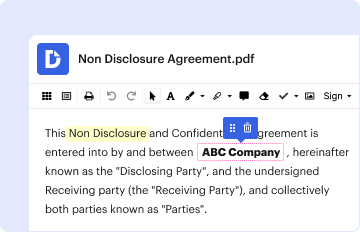
01. Edit your form online
Type text, add images, blackout confidential details, add comments, highlights and more.

Type text, add images, blackout confidential details, add comments, highlights and more.
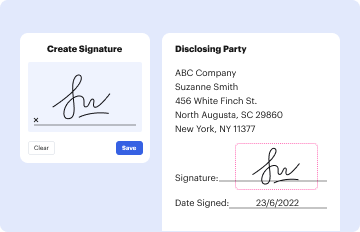
Draw your signature, type it, upload its image, or use your mobile device as a signature pad.
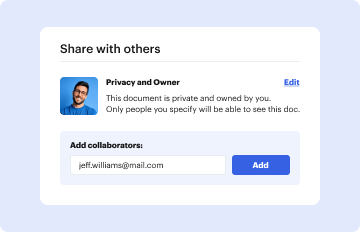
Send it via email, link, or fax. You can also download it, export it or print it out.
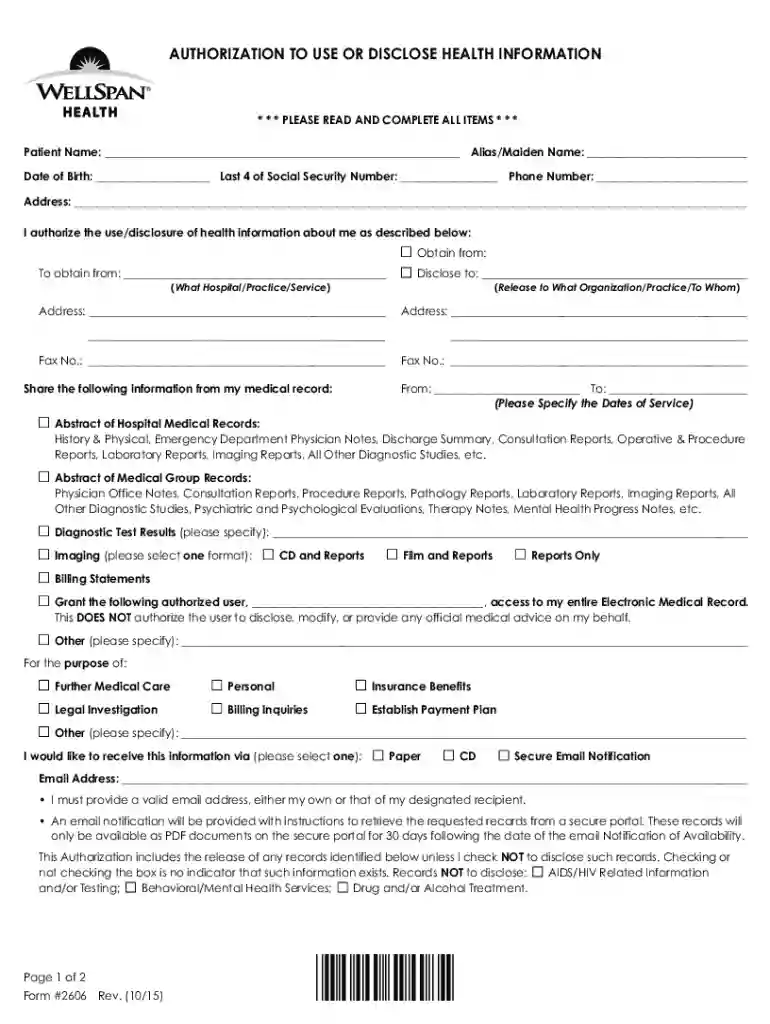
The Authorization to Use or Disclose Health Information form is a legal document that allows a patient to consent to the sharing of their health information. This information can be shared between healthcare providers, insurers, or other third parties as specified by the patient. The form ensures that the patient's rights and preferences regarding the confidentiality and sharing of their health data are respected.
Patient Information: The form requires patients to provide personal details such as name, date of birth, and contact information. This section identifies the individual whose health information is being disclosed.
Details of the Health Information to be Disclosed: Here, the patient specifies which medical records or health information they are authorizing to be shared. This could include treatment history, test results, diagnoses, and medications.
Purpose of Disclosure: This section outlines why the patient's health information is being shared. Common purposes include further treatment, billing, insurance claims, or legal requirements.
Recipients of the Information: Patients must identify who will receive their health information. This could be a specific medical professional, hospital, insurance company, or any other third-party entity involved in their care or claims.
Duration and Revocation of Consent: The form specifies the time period for which the authorization is valid. Patients also have the option to revoke consent at any time, ensuring control over their health information.
Using the Authorization to Use or Disclose Health Information form involves several critical steps to ensure that it is correctly completed and legally binding. Here's a detailed guide:
Fill Out Patient Information: Begin by accurately completing your personal details. Double-check the spelling of your name and other identifying information to avoid processing errors.
Specify the Health Information: Clearly indicate which aspects of your medical records you are authorizing to be shared. Be as specific as possible to maintain control over the information flow.
Indicate the Purpose of Disclosure: Clearly mention why you are allowing your information to be disclosed. This could be for medical treatment continuation, legal matters, or insurance processing.
List Authorized Recipients: Identify all parties who are authorized to receive your health information. Include full names and contact details for clarity.
Sign and Date the Form: Your signature is crucial for the authorization to take effect. Make sure to date the form to establish the timeline of the consent.
Provide Copies to Necessary Parties: Once completed, distribute copies to all parties involved, including your healthcare provider and authorized recipients.
The Authorization to Use or Disclose Health Information form must comply with privacy laws like the Health Insurance Portability and Accountability Act (HIPAA) in the United States. Patients should ensure that:
Both digital and paper forms are available for the Authorization to Use or Disclose Health Information, each offering unique benefits:
Understanding and correctly completing the Authorization to Use or Disclose Health Information form is essential for the secure and lawful sharing of medical data. Completing the form with attention to detail ensures that patients' health information is only shared according to their preferences and in compliance with legal standards.
We've got more versions of the UTHORIZATION TO USE OR DISCLOSEHEALTH INFORMATION form. Select the right UTHORIZATION TO USE OR DISCLOSEHEALTH INFORMATION version from the list and start editing it straight away!
At DocHub, your data security is our priority. We follow HIPAA, SOC2, GDPR, and other standards, so you can work on your documents with confidence.
The Authorization to Release Protected Health Information to a Third Party form is used to authorize the release of health information for insurance, employmentRead more
For you to authorize the disclosure of your personal information, which may include health information, to persons or organi- zations


