






Definition and Purpose of the Hire Contract Template
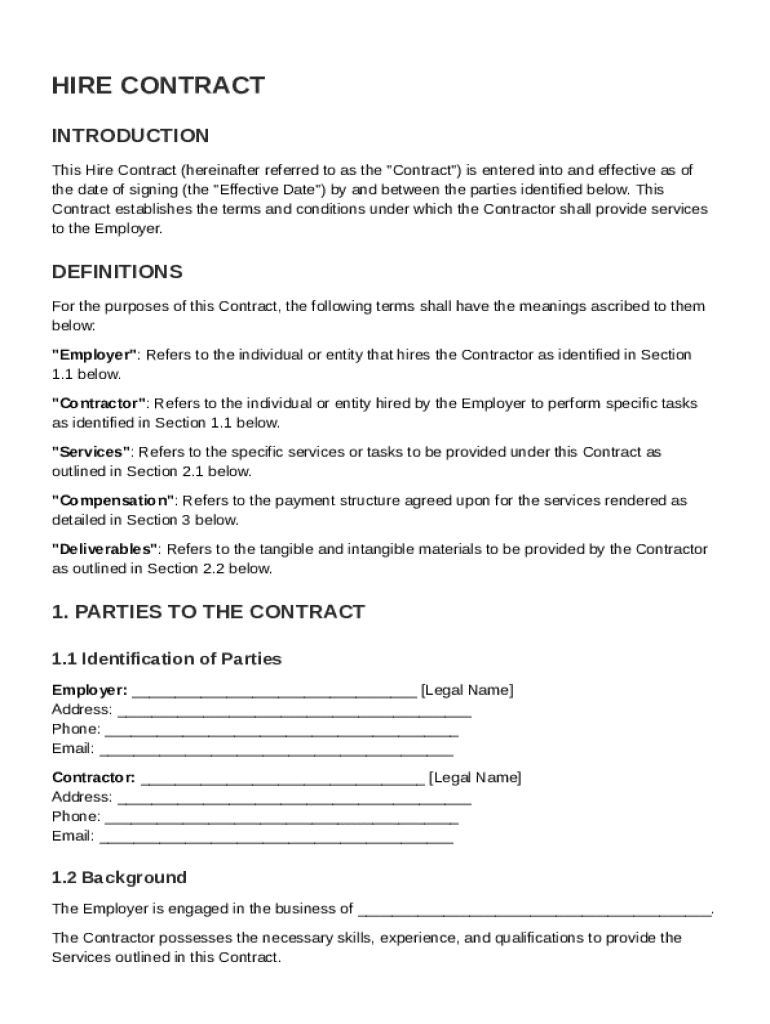
The hire contract template is a standard legal document used to define the relationship between an employer and a contractor. This contract outlines the scope of work, compensation structure, and responsibilities of both parties involved. Additional elements often include confidentiality obligations, termination conditions, dispute resolution processes, and miscellaneous provisions. This template aims to ensure mutual understanding and clarity of expectations, providing a solid foundation for the contractual relationship.
How to Use the Hire Contract Template
To effectively use a hire contract template, it is important to customize it according to the specific needs of the project and the parties involved. Begin by filling in the details of the employer and contractor, including their official names and contact information. Next, clearly define the scope of work and outline any deliverables expected from the contractor. Specify the compensation terms, including the payment schedule and methods. Finally, review the document with both parties to ensure all terms are understood and agreed upon before being signed.
Key Sections to Customize
- Employer and Contractor Details: Names, addresses, and contact information.
- Scope of Work: Detailed description of services and expected outcomes.
- Compensation Terms: Payment amounts, schedules, and methods.
- Confidentiality Obligations: Clauses to protect sensitive information.
- Termination Conditions: Terms under which the contract may be ended.
Steps to Complete the Hire Contract Template
Completing the hire contract template involves several vital steps to ensure it accurately reflects the agreement between the employer and contractor. Here is a structured approach:
- Gather Necessary Information: Collect basic information regarding both parties, the scope, delineations of work, and competition.
- Customize the Template: Fill out the template by adding specific details like names, service descriptions, payment terms, and deadlines.
- Review Legal Clauses: Examine confidentiality, termination, and dispute resolution clauses.
- Seek Legal Advice if Necessary: Consult with a legal professional to ensure the contract complies with local laws and regulations.
- Finalize and Sign: After all parties have reviewed and agreed to the terms, sign the document to make it legally binding.
Key Elements of the Hire Contract Template
The hire contract template comprises several critical elements that form its structure. These include:
- Definitions of Key Terms: Establish clear understanding of terms used in the contract.
- Scope of Work: Detailed articulation of services and expected outputs.
- Compensation Structure: Clarity on payment terms and conditions.
- Responsibilities: Specific duties and obligations of each party.
- Confidentiality Obligations: Measures in place to protect sensitive information.
- Termination Conditions: Circumstances under which the contract can be ended.
Supporting Features
- Dispute Resolution: Processes for handling disagreements.
- Miscellaneous Provisions: Additional clauses tailored to the contract's specifics.
Legal Use of the Hire Contract Template
A hire contract must comply with applicable laws to be enforceable. It adheres to legal standards that oversee contracts related to employment and service provisioning. Such contracts often incorporate clauses that cater to federal and state-specific regulatory requirements. Legal validity is achieved through mutual consent, meaningful exchange, and the genuine purpose of the contractual elements.
Importance of Legal Compliance
- Avoiding Disputes: Ensures clarity and reduces the potential for misunderstandings leading to conflicts.
- Compliance with Legal Standards: Maintains adherence to employment and contract laws specific to the United States.
Examples of Using the Hire Contract Template
Examples of utilizing the hire contract template in various scenarios can provide significant insight. Common use cases include hiring freelance professionals like writers or designers, engaging specialists for short-term projects, or contracting consultants for expert advice. Each scenario requires specific elements of the contract to be adjusted to reflect the unique nature of the work and expectations of the involved parties.
Practical Applications
- Freelancers: Ensuring clarity in project deliverables and payment schedules.
- Consultants: Defining duration and specific outcomes of consultancy services.
- Temporary Staffing: Detailing expectations for a fixed project period.
State-Specific Rules for the Hire Contract Template
Although templates provide foundational elements applicable across various scenarios, state-specific rules may require particular attention when drafting or finalizing a hire contract. Different states in the U.S. may have unique requirements regarding worker classification, minimum wage laws, and employment protections.
Notable State Variations
- Worker Classification: How contractors are distinguished from employees.
- Wage Requirements: Adherence to state-specific wage stipulations.
- Employment Protections: Observing regional worker rights and obligations.
Versions or Alternatives to the Hire Contract Template
Several versions or alternative templates exist to cater to varied hiring contexts. While the standard hire contract template serves general purposes, specialized contracts address specific employment arrangements like independent contractor agreements, consulting contracts, or freelance work templates. Choosing the appropriate version ensures alignment with project-specific needs and compliance requirements.
Specialized Alternatives
- Independent Contractor Agreements: For projects needing a clear delineation of contractor independence.
- Consulting Contracts: Tailored for consultancy-specific services.
- Freelance Work Templates: Customizable for freelance assignments with specific scope definitions.
Business Types that Benefit Most from the Hire Contract Template
Various business entities stand to gain considerably from adopting a standardized hire contract template. Small businesses, startups, and corporations frequently engage external parties for services, making a structured contract indispensable. Nonprofit organizations and educational institutions also benefit by formalizing occasional professional engagements through clear contractual agreements.
Beneficial Business Structures
- Startups and Small Businesses: Often require flexible staffing solutions.
- Corporations: Engage contractors for specific project-based work.
- Nonprofits: Utilize templates to formalize volunteer and service provider agreements.