




Definition and Meaning
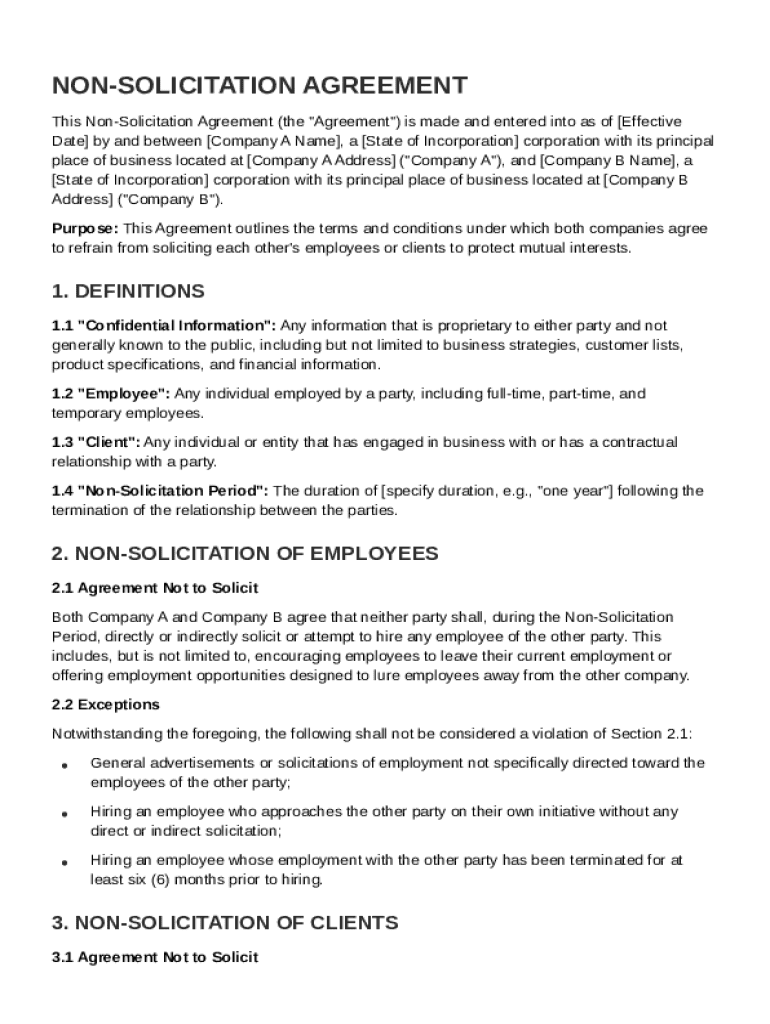
A Non-Solicitation Between Two Companies Agreement Template serves as a legally binding document designed to prevent each party from engaging in activities that solicit the other party's employees, clients, or contractors. This agreement is crucial in maintaining the integrity of relationships between companies by clearly outlining the boundaries and expectations regarding solicitation practices. It plays a significant role in protecting proprietary information and maintaining fair competition in the business landscape.
Core Components
- Employee and Client Protection: The agreement specifically highlights the prohibition of any actions aimed at attracting the other party's employees or clients.
- Duration and Scope: These agreements often include a defined period during which the non-solicitation clauses remain in effect and specify the geographic scope of enforcement.
- Confidentiality Clauses: To safeguard sensitive information, these clauses ensure that trade secrets or business strategies are secured against external solicitations.
Key Elements of the Template
The Non-Solicitation Between Two Companies Agreement Template typically contains detailed sections to ensure that both parties have a mutual understanding of the terms. Each section addresses critical aspects to develop a comprehensive agreement.
Primary Sections
- Purpose of the Agreement: Outlines the reason behind creating the document and the mutual interests it aims to protect.
- Definitions: Clearly defines the terms used within the document, ensuring precise understanding for both parties, like "solicitation," "employees," and "clients."
- Obligations and Restrictions: Details the specific restrictions imposed on each company regarding solicitation activities.
- Enforcement and Penalties: Includes measures and consequences in case of breach, detailing how disputes will be managed legally.
- Termination Clauses: Describes the conditions under which the agreement may be terminated before the expiration of the stipulated time.
Legal Use of the Template
The template must adhere to legal standards to be enforceable, with careful consideration of jurisdictional differences. It is essential for companies to consult legal experts when tailoring this agreement to specific needs, ensuring compliance with applicable laws.
Legal Considerations
- Jurisdiction Requirements: Some states have unique laws affecting the enforceability of non-solicitation clauses.
- Contractual Validity: An agreement is only legally binding if both parties have signed with full understanding and consent.
- Legal Advisement: Professional legal counsel is recommended when drafting the agreement to avoid potential legal pitfalls and to maintain compliance across various jurisdictions.
Steps to Complete the Agreement
Completing the Non-Solicitation Between Two Companies Agreement Template involves specific steps to ensure all necessary information is accurately captured.
Detailed Guide
- Gather Business Information: Collect details about the involved parties, including legal business names and contact information.
- Define Terms Clearly: Work out specifics around the solicitation provisions, including employees, clients, duration, and geographical scope.
- Customize the Template: Adapt the template to reflect the specialized needs and contexts of your business situation.
- Review with Legal Counsel: Ensure the agreement covers all legal bases by having it reviewed by an attorney.
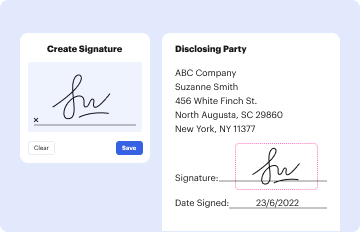
- Execute the Agreement: Both companies’ representatives should sign the document, confirming mutual understanding and agreement.
- Distribute Copies: Provide a copy to each party and store securely for reference.
Examples of Using the Template
Various scenarios highlight the use of a Non-Solicitation Between Two Companies Agreement, offering real-world application and understanding.
Practical Applications
- Co-marketing Efforts: Two companies partnering for joint marketing projects can use the agreement to prevent talent-poaching.
- Technology Partnerships: IT firms collaborating on a shared platform may apply non-solicitation clauses to safeguard against losing key employees or clients.
- Joint Ventures: Businesses entering a joint venture can employ this agreement to secure client lists from being solicited by each other.
Who Typically Uses the Template
The template is predominantly used by businesses operating in competitive sectors where client relationships and skilled employees are critical assets.

Primary Users
- Technology Companies: High-tech industries where innovation and personnel are key.
- Professional Services Firms: Including legal, marketing, and consultancy firms.
- Manufacturing and Supply Chain Partners: Where multiple entities cooperate in a shared ecosystem.
Important Terms Related to the Agreement
Understanding terms common to Non-Solicitation Agreements is vital for both drafting and enforcing them.
Glossary of Key Terms
- Solicitation: Actions that entice or encourage employees or clients to move from one company to another.
- Confidential Information: Data or knowledge that a company possesses that is not intended for public sharing and provides a competitive edge.
- Enforceability: Legal standing or capability for an agreement to be upheld in a court of law.
Why You Should Use the Template
Employing a Non-Solicitation Between Two Companies Agreement Template provides strategic advantages in maintaining stability and competitiveness.
Strategic Benefits
- Protection of Interests: Guards against loss of important business relations and intellectual capital.
- Clarity and Transparency: Ensures both parties have a clear understanding of boundaries and expectations.
- Conflict Mitigation: Proactively addressing potential points of conflict reduces the risk of disputes arising from solicitation issues.
By incorporating these insightful elements and practical guidance, businesses can ensure their agreements are robust, clear, and effectively protect their interests.