




01. Edit your ekg competency checklist online
Type text, add images, blackout confidential details, add comments, highlights and more.

Type text, add images, blackout confidential details, add comments, highlights and more.

Draw your signature, type it, upload its image, or use your mobile device as a signature pad.

Send ekg checklist via email, link, or fax. You can also download it, export it or print it out.
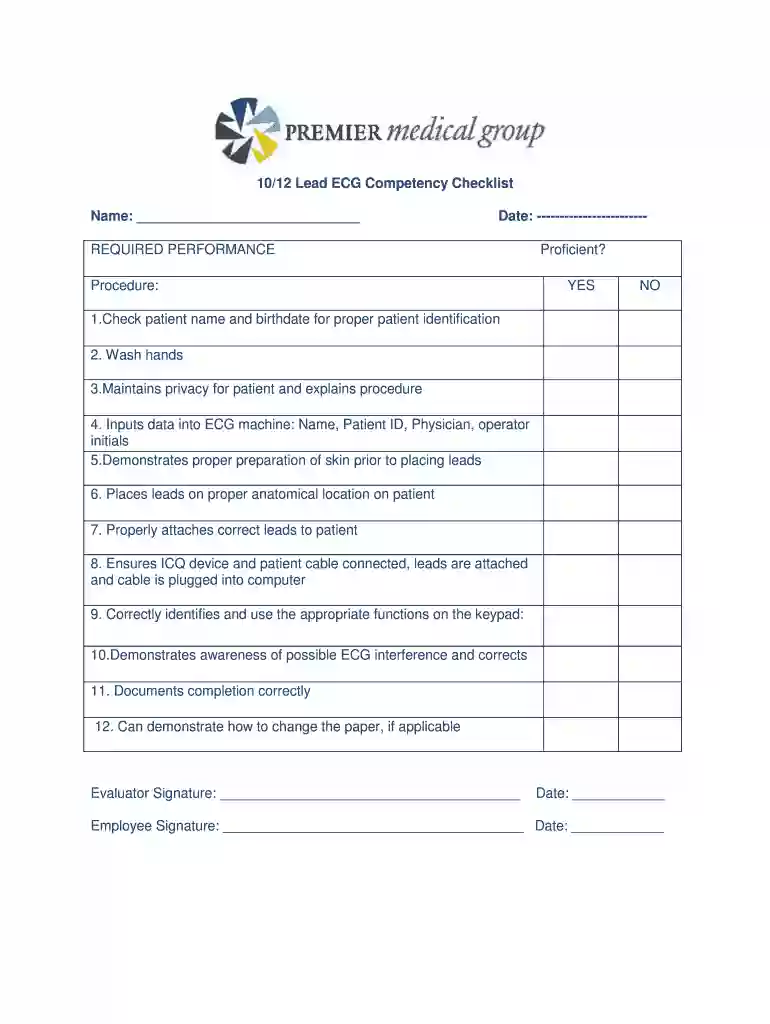
An ECG competency checklist is a structured document used to evaluate and ensure proficiency in performing electrocardiograms (ECGs) on patients. It provides a detailed outline of the procedures and performance criteria required for accurate ECG administration, ensuring healthcare professionals are adequately trained and capable of conducting ECG tests. This checklist acts as a standardized tool to assess skills across various stages of the ECG process, including patient identification, preparation, lead placement, and documentation.
Patient Identification and Verification:
Patient Preparation for ECG:
Lead Placement:
Performing the ECG:
Documentation and Review:
Evaluator and Employee Sign-Off:
Healthcare facilities such as hospitals, clinics, and cardiac care centers typically utilize the ECG competency checklist. The users include:
Nurses and Medical Assistants: To ensure they are skilled in performing ECGs before engaging with patients.
Cardiologists and Physicians: To verify that the staff is trained adequately, thus maintaining the quality of patient care.
Training Coordinators and Educators: To assess the effectiveness of ECG training programs and modify them if necessary.


Employee Information: Name, position, and contact details of the healthcare professional being evaluated.
Performance Criteria: Detailed description of required skills and knowledge in ECG administration.
Evaluation Metrics: Criteria for assessing proficiency, which may include practical demonstrations and theoretical knowledge.
Comments and Feedback: Space for evaluators to provide constructive feedback and suggestions for improvement.
Signatures: Areas for both evaluator and employee signatures to validate the competency assessment.
The ECG competency checklist is used within a legal context to ensure healthcare providers meet certain standards of practice. By documenting proficiency, healthcare facilities can:
Ensure compliance with professional standards and accreditation requirements.
Provide evidence in the event of audits or investigations.
Enhance patient safety by ensuring competent care delivery.
The checklist helps mitigate risks associated with improper ECG administration, thereby protecting both patients and healthcare providers.
Ensuring competency in performing ECGs is crucial for patient safety and accurate diagnosis. The checklist:
Promotes consistent training and evaluation standards across healthcare settings.
Reduces the likelihood of errors during ECG procedures, improving patient outcomes.
Encourages continual professional development by providing feedback and areas for improvement.
The ECG competency checklist can be digitized for use with document management software like DocHub, which integrates efficiently with cloud services such as Google Drive. Benefits of using digital platforms for checklist management include:
Efficient distribution and access to updated checklist versions.
Enhanced collaboration through shared access for trainers and evaluators.
Secure storage and retrieval of completed checklists for audits and reviews.
Digital Checklists: Allow for easy updates and distribution, real-time data tracking, and reduced paper waste.
Paper Checklists: Traditional format often used in settings without digital infrastructure but can be prone to wear and loss over time.
Digitizing checklists with tools like DocHub offers advantages such as accessibility, security, and integrative capabilities but may require initial setup and training.
We've got more versions of the ekg competency checklist form. Select the right ekg competency checklist version from the list and start editing it straight away!
| Versions | Form popularity | Fillable & printable |
|---|---|---|
| 2016 | 4.6 Satisfied (46 Votes) |
At DocHub, your data security is our priority. We follow HIPAA, SOC2, GDPR, and other standards, so you can work on your documents with confidence.


