
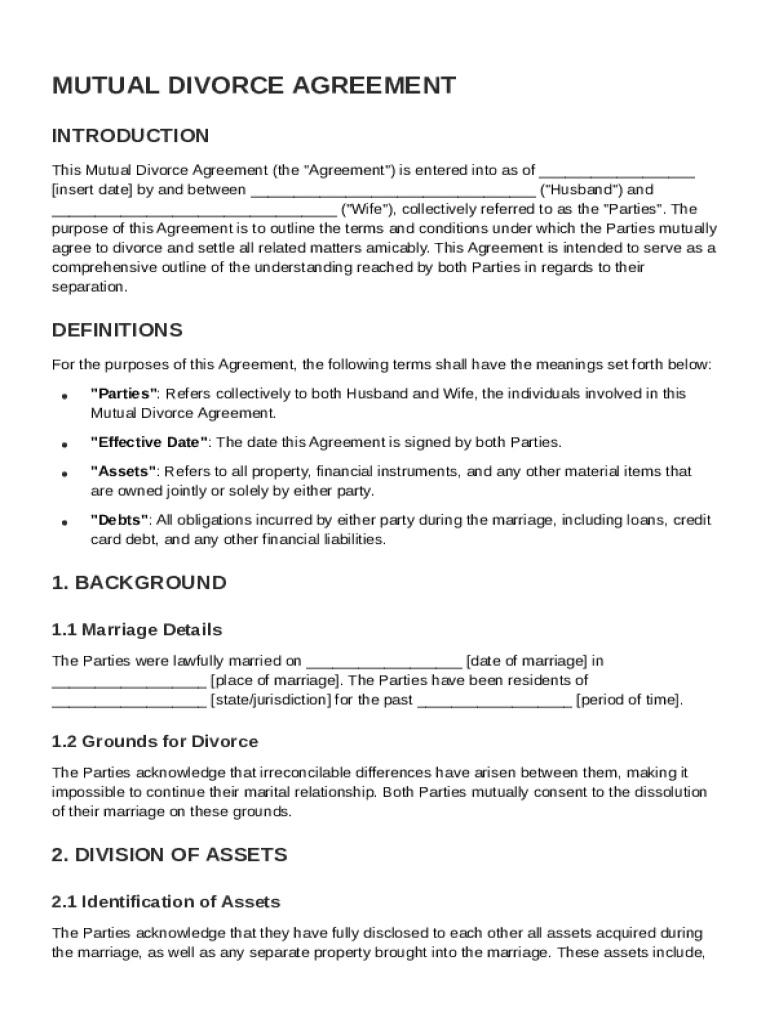







Definition and Purpose of a Mutual Divorce Agreement Template
A Mutual Divorce Agreement Template is a legally binding document used to outline the terms and conditions agreed upon by both parties in a divorce. The purpose of this agreement is to ensure clarity, fairness, and mutual consent in ending a marriage. It includes detailed sections on asset division, custody arrangements, alimony, and any other pertinent issues that need resolution. By using a template, the divorcing couple can ensure that all necessary aspects of their agreement are covered in a structured format, reducing misunderstandings and legal hassles.
- Asset and Debt Division: The agreement specifies how marital assets and liabilities are to be divided. This includes real estate, financial accounts, debts, and personal property. It is crucial for the equitable distribution of both assets and liabilities.
- Child Custody and Support: Outlines the custody arrangement, including legal and physical custody, visitation schedules, and child support obligations. These sections ensure that children's best interests are prioritized.
- Alimony/Spousal Support: Details any financial support one spouse may provide to the other post-divorce. This can include the amount, duration, and conditions for terminating such payments.
Key Elements of the Mutual Divorce Agreement Template
The agreement is structured to cover all critical aspects necessary to finalize a divorce amicably and thoroughly.
- Introduction and Recitals: Provides background information on the parties involved, date of marriage, and the mutual decision to divorce.
- Definitions: Clarifies any legal terms used within the agreement to avoid ambiguity and ensure both parties clearly understand the document.
- Final Provisions: Sets forth conditions regarding future amendments, the enforceability of the agreement, and conditions for modifications.
Important Terms Related to the Agreement
Certain terms are critical for understanding and completing the agreement:
- Custodial Parent: The parent who is granted primary care and custody of the children.
- Marital Property: Assets acquired during the marriage which must be divided.
- Non-Custodial Parent: The parent who does not have primary custody but may have visitation rights.
Steps to Complete the Mutual Divorce Agreement Template
- Initial Negotiations: Both parties should discuss and negotiate terms amicably before writing them down on the template.
- Template Selection: Choose a comprehensive template that reflects the specific requirements of the divorcing parties.
- Information Compilation: Gather all necessary information and documents related to assets, children, and finances.
- Template Customization: Input the negotiated terms into the template, ensuring accuracy and completeness.
- Review: Both parties review the completed document, ideally with individual legal counsel, to ensure fairness and legality.
Who Typically Uses a Mutual Divorce Agreement Template
The template is used by divorcing couples who prefer to settle their matters outside of court:
- Couples Seeking Amicable Separation: Those who wish to avoid contentious court proceedings.
- Parties With Clear Asset and Custody Agreements: Couples who have already agreed on division specifics and child-related arrangements.
- Individuals Seeking Cost-Effective Divorce Solutions: Using a template can significantly reduce legal costs involved in divorce proceedings.
State-Specific Rules for the Mutual Divorce Agreement Template
Divorce laws can vary significantly between states, affecting the contents and enforceability of a mutual divorce agreement.
- Residency Requirements: States have different rules about how long one must reside within their borders before filing for divorce.
- Asset Division Laws: States may follow different rules such as community property or equitable distribution when dividing assets.
- Child Custody Guidelines: Individual states have unique standards for determining custody and visitation rights.
Legal Use of the Mutual Divorce Agreement Template
The agreement must comply with applicable state laws to be enforceable in court.
- Validity: Must be signed by both parties voluntarily and without coercion.
- Court Approval: In some cases, the court may need to approve the agreement to ensure it aligns with state laws and adequately addresses child welfare.
- Amendments: The agreement should include terms for making future modifications, acknowledging that changes may be necessary over time.
Examples of Using the Mutual Divorce Agreement Template
- Example 1: A couple decides to equally share joint custody of their children and splits their marital assets 50/50, reflecting their mutual desire for fairness.
- Example 2: One spouse retains the family home, but agrees to compensate the other with comparable value through other assets, ensuring both parties agree upon division.
Conclusion
A well-structured Mutual Divorce Agreement Template is instrumental for couples seeking a less adversarial divorce process. It offers a comprehensive framework to resolve key issues, ensuring both parties can move forward with clear responsibilities and mutual understanding.




