




Definition & Meaning
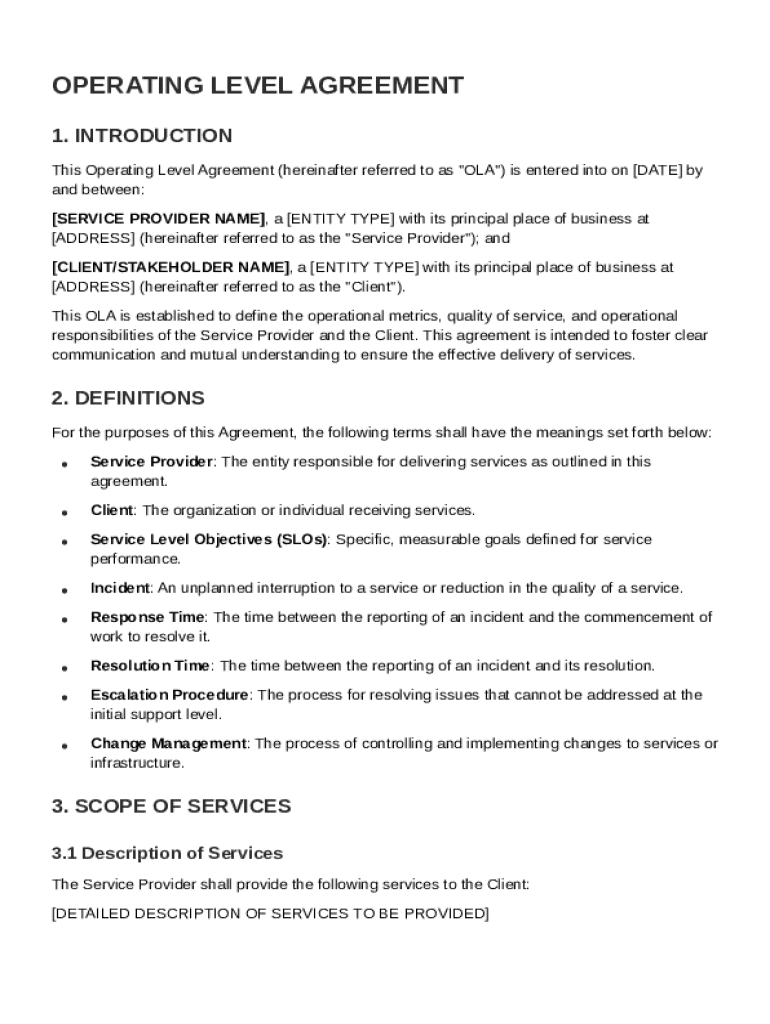
The "Operating Level Agreement Template" is a formal document that outlines the expected operational metrics, quality standards, and responsibilities between a service provider and their client. This agreement establishes key terms and conditions, describes the scope of services, and sets forth the service level objectives (SLOs) that both parties aim to achieve. It details roles and responsibilities for both parties, ensuring that all stakeholders have a clear understanding of their tasks and obligations.
Components
- Operational Metrics: Measurement tools to assess service performance.
- Quality of Service: Standards the service provider must meet.
- Client Responsibilities: Expected tasks and participation from the client.
- Dispute Resolution Mechanism: Steps to address conflicts.
- Termination Clauses: Conditions under which the agreement can be terminated.
Practical Example
Consider an IT services provider and a mid-sized company. The provider's responsibilities could include maintaining server uptime at 99.9%, while the client agrees to provide timely feedback on performance.
How to Use the Operating Level Agreement Template
Using the Operating Level Agreement Template involves several steps to ensure it is effectively tailored to your specific needs. Here’s how you can go through this process:
Step-by-Step Process
- Identify the Parties: Clearly define who the service provider and the client are.
- Define the Services: Outline the services to be provided in detail.
- Set Service Level Objectives: Establish clear criteria for success.
- Agree on Roles: Assign specific roles and responsibilities to each party.
- Establish KPIs: Determine key performance indicators to monitor service levels.
- Customize Terms: Tailor general terms to fit specific business requirements.
- Review & Revise: Have both parties review the agreement and suggest revisions.
Practical Scenario
A software company providing cloud hosting services should tailor the template to include specific service metrics unique to cloud computing, such as data transfer speeds and security protocols.
Key Elements of the Operating Level Agreement Template
The Operating Level Agreement Template contains several critical elements that contribute to its effectiveness:
Main Elements
- Scope of Services: Precisely what services will be delivered.
- Performance Metrics: Benchmarks against which performance is measured.
- Roles & Responsibilities: Duties of the provider and client.
- Support Procedures: How support issues will be managed.
- Amendment Process: How changes to the agreement will be handled.
Examples of Key Metrics
For a logistics provider, key metrics may include delivery time windows and accuracy in delivery tracking.
Steps to Complete the Operating Level Agreement Template
Completing the template requires careful attention to detail and collaboration between all parties involved:
Detailed Instructions
- Input Organizational Details: Begin with contact information for all parties.
- Customize Performance Metrics: Modify default metrics to suit your specific needs.
- Define Communication Channels: Establish how parties will communicate.
- Outline Review Processes: Agree on regular check-ins to review performance metrics.
- Include Signature Lines: Ensure space for official signatures from both parties.
Example
For an insurance provider, performance metrics might focus on claim processing times and customer satisfaction scores.
Why Should You Use an Operating Level Agreement Template
The Operating Level Agreement Template offers several important benefits that can enhance business operations:
Benefits
- Clarity: Provides clear expectations for both parties.
- Accountability: Sets specific responsibilities, reducing the risk of disputes.
- Efficiency: Streamlines processes and enhances operational effectiveness.
- Risk Reduction: Mitigates risks by clearly defining terms and conditions.
- Performance Tracking: Enables better monitoring and management of service levels.
Use Case
In a managed IT services scenario, using an OLA can ensure consistent system performance and proactive problem-solving.
Legal Use of the Operating Level Agreement Template
Understanding the legal implications of the Operating Level Agreement Template is crucial:
Legal Aspects
- Compliance: Ensure the agreement aligns with federal and state laws.
- Binding Nature: Once signed, it becomes a legally binding contract.
- Dispute Resolution: Clearly defined methods for conflict resolution can prevent legal issues.
- Confidentiality Clauses: Protection for sensitive business information.
Example
A healthcare provider using an OLA should comply with HIPAA regulations regarding patient data confidentiality.
Who Typically Uses the Operating Level Agreement Template
The template is commonly used by various industries and business types:

Typical Users
- IT Service Providers: Ensure consistent service delivery and system uptime.
- Manufacturers: Improve supply chain efficiency and performance.
- Customer Service Centers: Enhance response times and service quality.
- Healthcare Institutions: Maintain regulatory compliance and service output.
- Financial Institutions: Manage transaction processing and client interactions.
Case Study
A call center uses the template to define response times and customer satisfaction targets for its service agents.
Important Terms Related to the Operating Level Agreement Template
There are several key terms associated with an Operating Level Agreement that users should be familiar with:
Key Terms
- Service Level Agreement (SLA): Typically broader in scope, might outline penalties for noncompliance.
- Key Performance Indicators (KPIs): Metrics used to evaluate success.
- Incident Management: Procedures for handling service disruptions.
- Customer Responsibilities: Tasks the client agrees to perform.
- Quality Assurance Protocols: Methods for maintaining service standard.
Example
In customer service environments, understanding KPIs like average handling time and first contact resolution is crucial for meeting terms outlined in the OLA.