
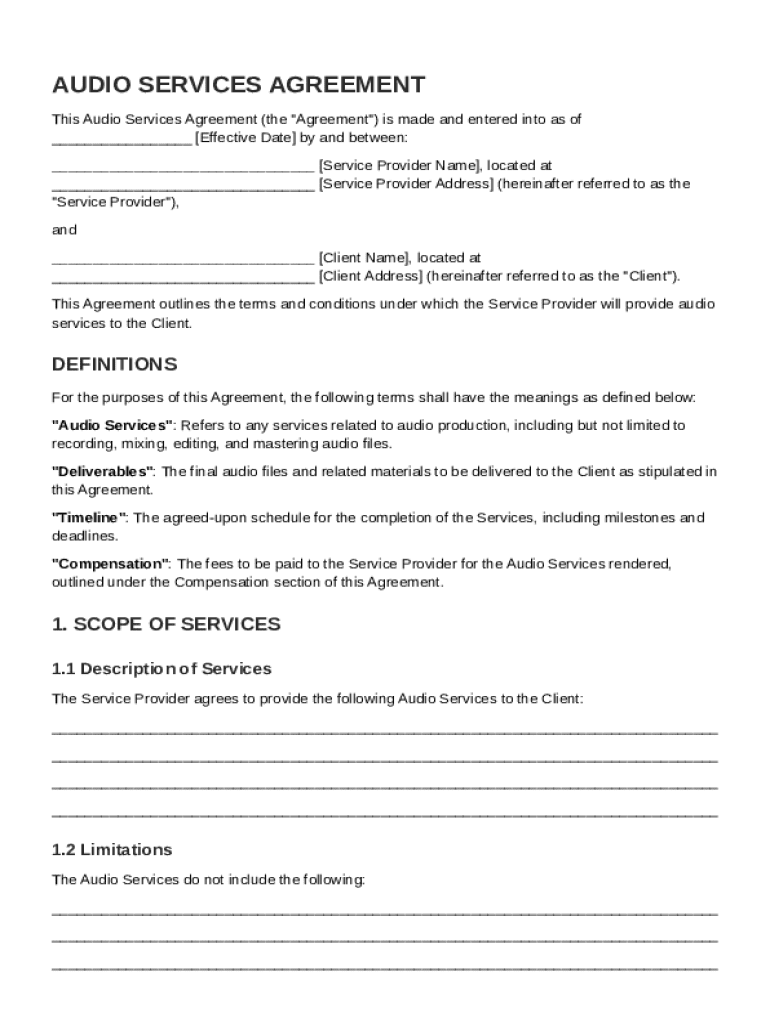







Definition & Meaning
The "Audio Contract Template" serves as a structured agreement that outlines the roles and responsibilities between a service provider and a client within the audio industry. Specifically, it covers aspects like recording, mixing, editing, and mastering services. It's designed to provide clear mutual expectations and legal protections for both parties, facilitating a smoother working relationship. The agreement typically includes project timelines, compensation structures, intellectual property rights, confidentiality obligations, liability limitations, and dispute resolution processes.
Key Elements of the Audio Contract Template
A well-drafted Audio Contract Template includes several essential elements to ensure clarity and mutual understanding:
- Scope of Services: Detailed description of services to be provided.
- Project Timeline: Clear deadlines for deliverables and project milestones.
- Compensation Structure: Payment terms, including rates, schedules, and methods of payment.
- Intellectual Property Rights: Specifies ownership and usage rights for the audio content.
- Confidentiality Obligations: Expectations around keeping project details private.
- Termination Conditions: Circumstances under which the contract can be ended.
- Liability Limitations: Defines the extent of responsibility for potential damages.
- Dispute Resolution: Procedures for handling disagreements, potentially including arbitration or mediation.
How to Use the Audio Contract Template
Using the Audio Contract Template involves several key steps to tailor the document to specific project requirements:
- Review the Template: Carefully read through the template to understand each section.
- Customizing the Scope: Modify the scope of services to match the project’s needs.
- Define Timelines: Set realistic deadlines for different phases of the project.
- Specify Payment Details: Clearly outline the compensation terms, including any upfront fees or milestone payments.
- Detail Intellectual Property Clauses: Adjust clauses to reflect the agreement on content ownership and rights.
- Draft Confidentiality Clauses: Ensure confidentiality clauses align with project sensitivities and client preferences.
- Outline Termination Terms: Set clear conditions under which either party can terminate the contract.
- Include Legal Provisions: Ensure the contract is legally binding, including necessary legal language or references.
Legal Use of the Audio Contract Template
Using an Audio Contract Template legally involves adhering to certain guidelines and ensuring compliance with applicable laws. Key considerations include:
- Compliance with ESIGN Act: If using electronic signatures, they must comply with the Electronic Signatures in Global and National Commerce Act, ensuring they are legally binding.
- Jurisdictional Requirements: The contract should state which jurisdiction’s laws govern the agreement.
- Contractual Capacity: Both parties must have the legal ability to enter into a contract.
- Clear Language: Terms must be clearly defined to prevent ambiguities that could lead to legal disputes.
Who Typically Uses the Audio Contract Template
This template is widely used by various professionals within the audio industry, including:
- Audio Engineers: Professionals involved in recording, mixing, or mastering audio tracks.
- Music Producers: Individuals overseeing the production of music for artists or media companies.
- Freelance Sound Designers: Independent contractors providing custom audio solutions.
- Media Companies: Organizations hiring services for film, television, or commercial audio production.
- Artists and Bands: Musicians engaging services for recording and producing their work.


Steps to Complete the Audio Contract Template
Completing the Audio Contract Template requires a systematic approach:
- Gather Information: Collect critical details about the project, including parties involved, scope, budget, and deadlines.
- Fill Out Basic Information: Enter client and service provider details at the beginning of the template.
- Customize Specific Sections: Modify sections like services offered, payment terms, and project timelines.
- Review Legal Clauses: Ensure legal clauses are appropriate for the project’s context and jurisdiction.
- Final Review and Edits: Re-read the completed template for accuracy and completeness.
- Sign the Agreement: Both parties should sign the contract to make it legally binding, using digital or handwritten signatures.
- Store Securely: Keep a secure copy of the signed contract for future reference and compliance purposes.
Important Terms Related to Audio Contract Template
Understanding key terms related to the Audio Contract Template is crucial for effective use:
- Service Provider: The individual or business offering audio services.
- Client: The entity or person engaging the services of the audio provider.
- Deliverables: The specific outputs or products expected from the service provider.
- Force Majeure: Often included as a clause to cover events beyond control that could affect the project timeline.
- Retention of Rights: Clarity on which party retains rights to the intellectual property created.
Examples of Using the Audio Contract Template
Consider the following real-world scenarios where the Audio Contract Template proves valuable:
- Music Recording Project: A band hires an audio engineer to record their new album, using the template to outline deliverables, fees, and royalty arrangements.
- Film Soundtrack: A filmmaker contracts a sound designer to create an original score, with the template defining work scope, deadlines, and intellectual property rights.
- Freelance Mix Engineer: A mix engineer signs an agreement with an independent artist to mix several tracks, with terms regarding payment milestones and revision limits.
State-Specific Rules for the Audio Contract Template
When employing the Audio Contract Template, being mindful of state-specific regulations is essential:
- California: Requires additional clauses under the California Talent Agencies Act if the services involve any element of talent representation.
- New York: May necessitate adaptations for union affiliations or specific industry standards.
- Texas: Considerations for entertainment law around contracting minors or using specific venues for performances.
Including these tailored sections ensures the Audio Contract Template remains legally compliant and culturally appropriate for users within the United States.




