
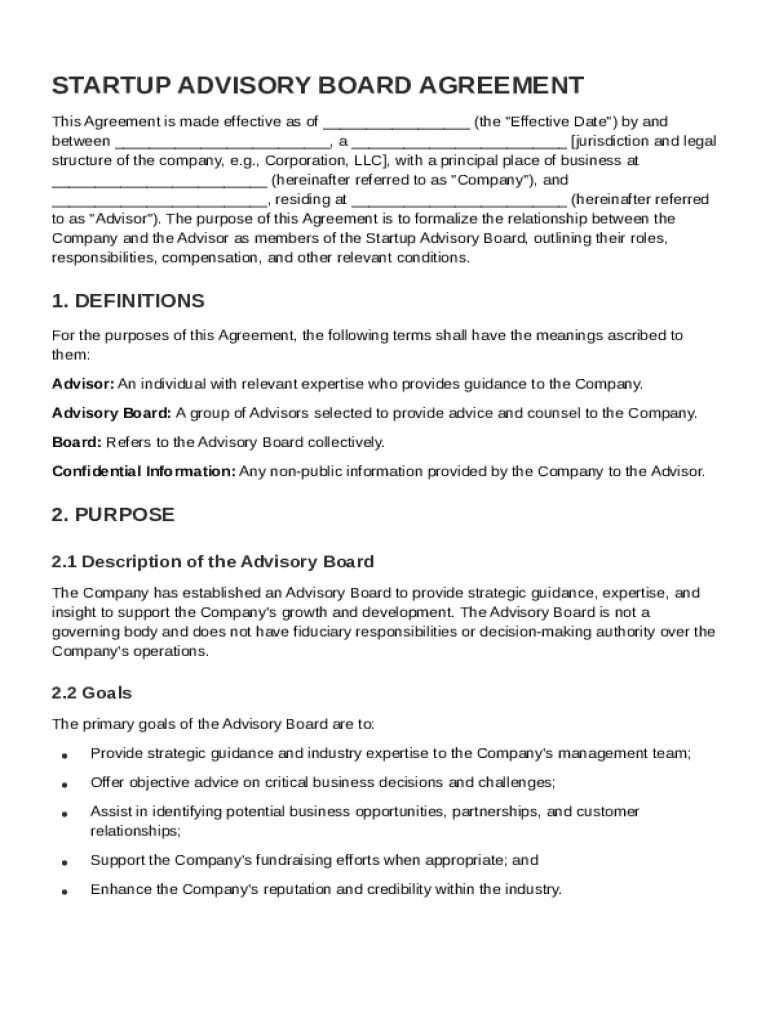







Definition & Meaning
A Startup Advisory Board Agreement formalizes the relationship between a company and an advisor. It outlines the roles and responsibilities of the advisor, including providing strategic guidance and expertise to support the company's growth. Such agreements are crucial for establishing clear expectations and boundaries, ensuring that the advisor's contributions are recognized while protecting the company's intellectual property and confidential information. Advisors typically have no governing authority, distinguishing their role from that of board directors. The agreement also outlines the terms of compensation, potentially involving equity or cash payments, and establishes the parameters for conflict of interest disclosures and other legal provisions.
How to Use the Startup Advisory Board Agreement Template
The template serves as a structured guide to creating a tailored agreement that reflects the specific needs of your startup and advisor. Begin by downloading the document and reviewing each section carefully. Customize the template by filling in the relevant company and advisor information. Ensure that all details about the advisor's roles and responsibilities align with the company's expectations. Adjust the compensation and termination clauses based on the mutually agreed terms. Collaboration tools within document management platforms can help multiple stakeholders review and revise the template before finalizing it. Once completed, both parties should review the document, seek legal counsel if needed, and sign to formalize the agreement.
Steps to Complete the Startup Advisory Board Agreement Template
- Identify Participants: Clearly define the parties involved, including the company and each advisor.
- Outline Roles & Responsibilities: Specify the advisor's duties and how they will contribute to the startup's strategic direction.
- Define Compensation: Determine whether the advisor will receive equity, cash, or other benefits, and outline these terms in detail.
- Confidentiality & IP Protection: Include clauses that protect the company's sensitive information and intellectual property.
- Establish Term & Termination Conditions: Define the agreement's duration and the conditions under which it can be terminated.
- Legal Provisions: Include any additional legal terms relevant to jurisdictional requirements.
- Review & Revise: Collaborate with stakeholders to ensure all terms are agreeable.
- Sign the Document: Both parties should sign the agreement to make it legally binding.
Key Elements of the Startup Advisory Board Agreement Template
- Advisor's Role: Clearly defining what the advisor is responsible for, including strategic direction and specific assignments.
- Compensation Package: Detailing any monetary benefits, equity options, and other forms of compensation.
- Term Length: Stating the duration of the advisory role and any renewal terms.
- Termination Clauses: Conditions under which either party can exit the agreement.
- Confidentiality Obligations: Measures to protect the company’s proprietary information.
- Conflict of Interest Policies: Requirements for disclosure and management of potential conflicts.
Legal Use of the Startup Advisory Board Agreement Template
A well-crafted agreement reinforces the legal framework governing the advisory relationship. It ensures compliance with legal standards like non-disclosure obligations and intellectual property laws. The agreement should be periodically reviewed by legal professionals to reflect any changes in the law or business structure. Additionally, creating a legally binding document involves ensuring that the agreement complies with jurisdiction-specific legal requirements, which may necessitate state-specific clauses or adaptations.
Examples of Using the Startup Advisory Board Agreement Template
Startups across various sectors utilize advisory board agreements to formalize engagements with industry experts. For instance, a tech startup might engage a seasoned tech entrepreneur as an advisor to navigate early growth challenges and help sculpt the product vision. Alternatively, a health-focused company could use the template to bring on board a healthcare policy expert to guide regulatory compliance and market penetration strategies. These examples highlight the versatility of the agreement in different industry contexts.
Who Typically Uses the Startup Advisory Board Agreement Template
Founders of new companies seeking guidance from seasoned professionals frequently use this template. These individuals may come from diverse industry backgrounds and provide insights not only in strategic planning but also in networking and operational challenges. Venture capital-backed companies might also leverage advisory board agreements to attract reputable advisors who can enhance credibility with investors. Additionally, existing businesses entering new markets or launching new products may rely on advisory boards to gain necessary domain expertise.


Important Terms Related to Startup Advisory Board Agreement Template
- Equity Compensation: Often, advisory positions include stock options as part of the compensation scheme.
- Non-Disclosure Agreement (NDA): A critical component that prevents the unauthorized sharing of confidential company information.
- Indemnification Clause: Protects advisors against personal liability stemming from their role.
- Exclusive vs. Non-Exclusive Engagement: Determines if the advisor can work with competing firms.
- Deliverables: Specific outcomes or contributions the advisor is expected to make.
State-Specific Rules for the Startup Advisory Board Agreement Template
While many facets of an advisory board agreement are universally applicable, there can be state-specific requirements, especially concerning equity distribution and local business laws. For example, California has unique rules concerning non-compete clauses and equity compensation structures. Startups should research local corporate laws or consult with legal experts to ensure compliance. Adapting the agreement to align with state regulations helps mitigate legal risks and fosters smoother operational execution.




