




Definition and Meaning of the Software Development Agreement Template
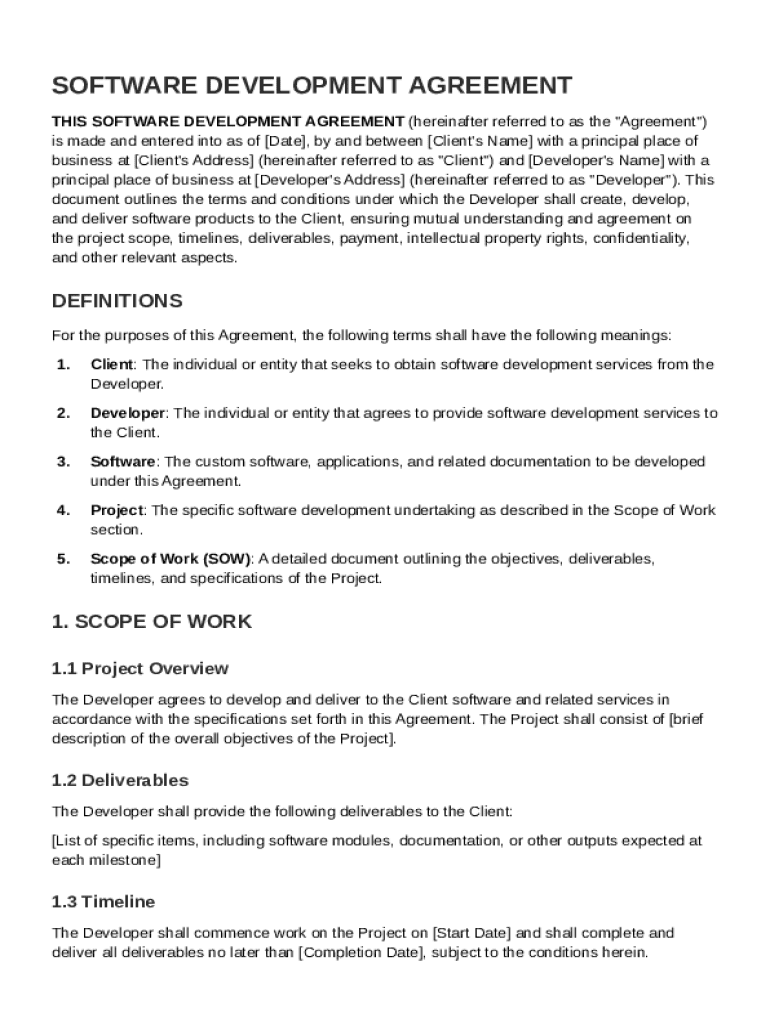
A Software Development Agreement Template serves as a structured legal document that clearly defines the relationship between a client and a software developer. This agreement outlines the expectations, deliverables, and responsibilities for both parties involved in the creation and delivery of software products. It includes several critical sections such as definitions of key terms, project scope, payment terms, intellectual property rights, confidentiality agreements, warranties, limitations of liability, and conditions for termination. This template ensures that both parties have a mutual understanding of the project's parameters and agree to comply with the defined terms, reducing the risk of disputes.
Examples of Crucial Definitions
- Client: The individual or business entity commissioning the software.
- Developer: The individual or firm responsible for creating the software.
- Project Deliverables: Specific outputs expected at various project stages.
How to Use the Software Development Agreement Template
Utilizing the Software Development Agreement Template involves several methodical steps designed to ensure clarity and mutual agreement. First, both parties should review the template thoroughly to tailor its content to their specific project requirements. The customization process includes inserting the project scope, defining milestones, and setting payment schedules. It's essential for both parties to clearly delineate the intellectual property rights and responsibilities for maintenance and updates post-completion. After modifications, the agreement should be reviewed by legal counsel to ensure compliance with local laws and industry standards.
Steps for Customization
- Review the template to understand its structure.
- Adapt the sections to reflect the specific project details.
- Specify payment terms and deliverables.
- Adjust intellectual property clauses according to the preference of both parties.
Key Elements of the Software Development Agreement Template
The Software Development Agreement Template consists of several pivotal components that must be addressed. These include:
- Project Scope: Clearly outlines the software features and functionalities.
- Payment Terms: Specifies payment structures, including schedules and methods.
- Intellectual Property Rights: Details who retains ownership of the software.
- Confidentiality Obligations: Ensures that proprietary information is protected.
- Termination Conditions: Defines circumstances under which the agreement may be terminated without penalties.
Practical Considerations
- Ensure clarity in the project's scope to prevent misunderstandings.
- Define the payment schedule to accommodate the project's timeline and deliverables.
- Clearly articulate intellectual property rights to avoid future disputes.
Important Terms Related to the Software Development Agreement Template
The Software Development Agreement Template contains numerous terms integral to its understanding and execution. These include:
- Milestones: Specific points in the project timeline where agreed deliverables are due.
- Change Requests: Procedures for altering the project scope after initiation.
- Liability Limitations: Constraints on the developer's responsibility for damages.
Understanding Key Legal Terms
- Warranty: Assurances provided by the developer concerning the software's performance.
- Indemnification: Protection provided to the client against potential legal claims arising from the software.
Legal Use of the Software Development Agreement Template
This agreement must conform to applicable jurisdiction laws to be enforceable. Legal use entails ensuring that all sections meet regional statutory requirements and industry best practices. It's advisable for both parties to seek legal counsel to verify that the agreement aligns with their obligations and rights under local laws, particularly concerning intellectual property and data protection.
Compliance Tips
- Review with a legal professional to accommodate state-specific laws.
- Ensure intellectual property rights are enforceable in the relevant jurisdiction.
- Confirm that the confidentiality clause complies with data protection laws.
State-Specific Rules for the Software Development Agreement Template
While the general structure of a Software Development Agreement remains consistent, certain state-specific rules may apply, particularly concerning intellectual property and employment law. For example, California has specific laws regarding non-compete clauses and employee classification, which can affect the terms of software development agreements.
Adapting to State Requirements
- Research state laws concerning software development agreements and intellectual property.
- Adjust non-compete and confidentiality clauses to adhere to local regulations.
- Consult a local attorney to ensure legal compliance in your state.
Who Typically Uses the Software Development Agreement Template
This template is commonly used by a range of parties involved in software development projects. Key users include software development companies, freelance developers, startups, and corporations seeking to outsource software creation. Each party benefits by having a clear, written document that sets expectations, responsibilities, and terms of the engagement.

Scenarios Where This Template is Essential
- Startups hiring freelance developers for new projects.
- Companies outsourcing development to external vendors.
- Development agencies establishing terms with subcontractors.
Versions or Alternatives to the Software Development Agreement Template
There are various versions and alternatives to the standard Software Development Agreement Template, often customized to meet specific industry needs or project types. Variations may include Joint Development Agreements, Consulting Agreements, and Service Level Agreements, each catering to distinct project scopes and relationship dynamics. It is crucial to select the version that best fits the project specifics, keeping in consideration factors like international collaboration, long-term maintenance, or open-source use.
Example Alternatives
- Joint Development Agreement: For projects involving collaboration between multiple developers.
- Consulting Agreement: Used when the engagement leans heavily on advisory services rather than direct development.