






Definition & Meaning
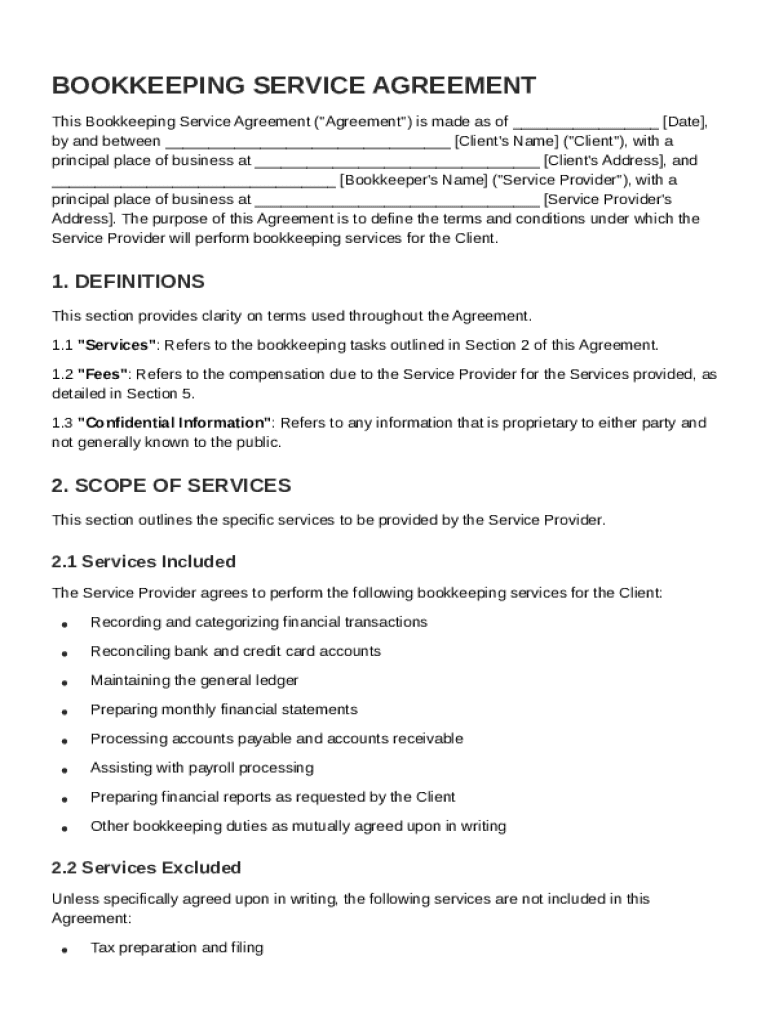
A Bookkeeping Service Agreement Template is a legal document outlining the terms and conditions under which bookkeeping services will be provided. It typically clarifies the obligations of both the Service Provider and the Client, including the scope of services, payment terms, confidentiality clauses, and dispute resolution procedures. This template serves to ensure that both parties are fully aware of their responsibilities and the expectations involved in the agreement, supporting a professional relationship and minimizing potential conflicts.
- Scope of Services: This section details the specific tasks the Service Provider will perform, such as maintaining financial records, reconciling accounts, generating financial reports, and more. The clarity here is crucial to prevent misunderstandings.
- Payment Terms: Outlines how and when the Service Provider will be compensated. This may include rates, invoicing schedules, late fees, and acceptable payment methods.
- Confidentiality Obligations: Ensures that any sensitive financial data shared remains secure and only used for the intended purposes of the agreement.
- Liability and Indemnity: Defines the limits of liability for both parties, protecting them from potential financial or reputational damages due to breaches or errors.
Key Elements of the Bookkeeping Service Agreement Template
The Bookkeeping Service Agreement Template comprises several critical elements that form the foundation of a sound professional relationship between the Service Provider and the Client.
- Definitions: Clarifies essential terms within the agreement to avoid any ambiguity.
- Responsibilities of Parties: Clearly delineates what tasks each party is expected to perform to ensure smooth cooperation.
- Non-Disclosure Agreements (NDAs): Protects both parties’ information and ensures privacy and security.
- Termination Clauses: Dictates the manner in which the agreement can end, the required notice period, and the circumstances under which termination might be immediate.
Steps to Complete the Bookkeeping Service Agreement Template
Filling out the Bookkeeping Service Agreement Template involves several key steps to ensure accuracy and compliance with both parties' expectations.
- Review the Template: Carefully read all sections to understand the terms and adjust sections to reflect the precise services and conditions pertinent to your agreement.
- Fill in Identifying Information: Include full names, addresses, and contact details for both the Service Provider and the Client.
- Specify Terms and Conditions: Customize the template by adding or amending sections relevant to your specific agreement, such as service details, payment terms, and confidentiality measures.
- Include Relevant Dates: Clearly indicate when the agreement begins and any deadlines or schedules relevant to the services.
- Seek Legal Counsel: Particularly for more complex arrangements, having a lawyer review the agreement can safeguard against legal pitfalls.
- Secure Signatures: Ensure both parties sign the document to make it a legally binding contract.
Why Should You Use a Bookkeeping Service Agreement Template?
Using a Bookkeeping Service Agreement Template offers several benefits aimed at fostering a clear and mutually beneficial professional relationship.
- Clarity and Transparency: By laying out detailed terms and conditions, both parties are aware of their responsibilities and expectations, minimizing the risk of disputes.
- Legal Protection: The agreement ensures that both parties are legally protected against misunderstandings, breaches of contract, and liability issues.
- Professionalism: Provides a structured and formal basis for the service relationship, enhancing credibility and trust.
- Efficiency: Pre-defined templates save time by providing a ready-to-use framework that only requires minor adjustments, thus expediting the setup of new business relationships.
Important Terms Related to Bookkeeping Service Agreement Template
Understanding the terminology within the Bookkeeping Service Agreement Template is crucial for ensuring all parties comprehend the document fully.
- Engagement Letter: Often used interchangeably with service agreements, detailing services and terms under which they will be rendered.
- Retainer Fee: An upfront payment made before services are provided, often used to secure a service provider's availability.
- Deliverables: Specific outcomes or quantities of work the Service Provider is expected to complete.
- Force Majeure: A clause that exempts both parties from fulfilling the agreement due to extraordinary events beyond control, such as natural disasters.
Who Typically Uses the Bookkeeping Service Agreement Template?
The Bookkeeping Service Agreement Template is most commonly used by the following parties:
- Freelance Bookkeepers: Independent professionals specializing in bookkeeping services who wish to formalize their client engagements.
- Accounting Firms: Organizations that offer a broad range of financial services, including bookkeeping, seeking to establish clear service contracts with their clientele.
- Small to Medium-sized Enterprises (SMEs): Businesses engaging bookkeepers to manage their day-to-day financial transactions and reporting.
- Non-Profit Organizations: These groups often require bookkeeping services to manage donations, grants, and other financial activities to ensure compliance and transparency.


Examples of Using the Bookkeeping Service Agreement Template
Exploring real-world scenarios can demonstrate the practical application of the Bookkeeping Service Agreement Template.
- Case Study 1: A freelance bookkeeper engages with a small start-up, using the template to outline responsibilities such as monthly financial report preparation and tax document organization.
- Case Study 2: An accounting firm uses the template to formalize a service relationship with a non-profit organization, specifying terms for quarterly financial audits and donor fund management.
- Case Study 3: A medium-sized enterprise employs the template to hire a bookkeeper part-time, ensuring that confidentiality regarding product development costs is maintained via the agreement's NDA clause.
State-Specific Rules for the Bookkeeping Service Agreement Template
Certain state-specific laws might influence how a Bookkeeping Service Agreement Template is structured and enforced.
- California: The state's strong consumer protection laws may require additional disclosure and transparency mandates in contracts.
- New York: Agreements might need to address particular employment laws, including details on employment classification criteria.
- Texas: State law may necessitate clauses allowing the bookkeeper to opt out of certain state taxes, impacting payment structures.
Each of these areas reflects how localization can influence the creation and enforcement of a bookkeeping service agreement. It's essential to tailor each agreement to the specific legal environment of the jurisdiction involved to ensure compliance and enforceability.