




Definition and Importance of a Preferred Vendor Contract
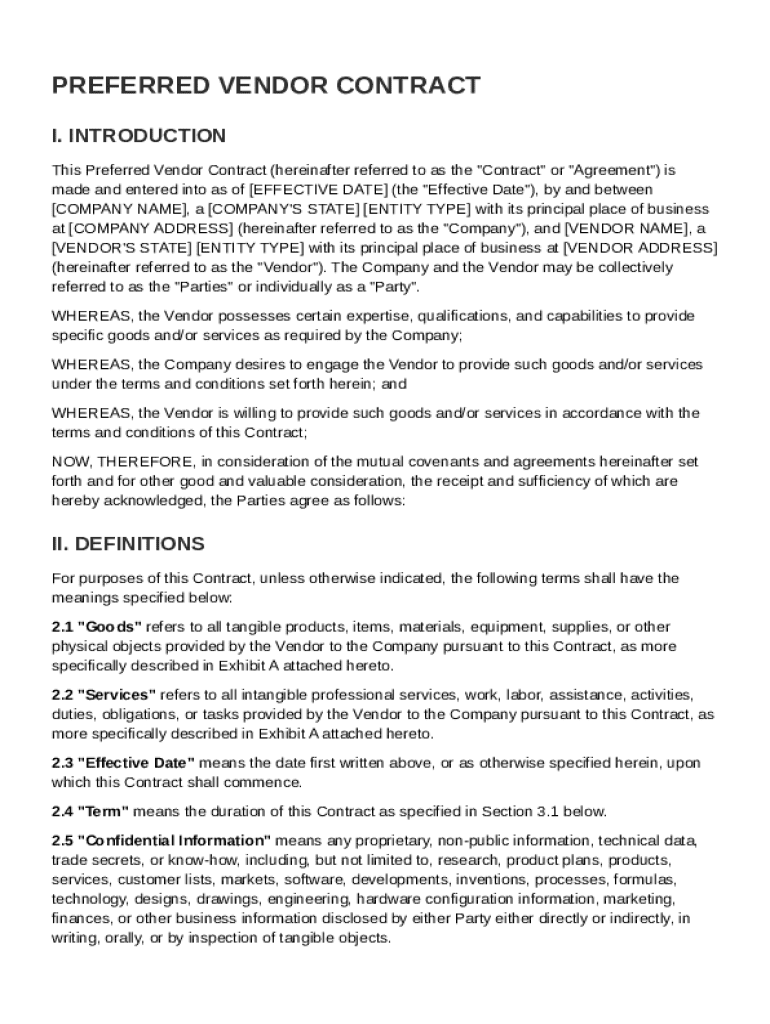
A Preferred Vendor Contract is a crucial legal agreement forged between a company and a vendor to facilitate the supply of specific goods and services. This document serves as a foundational pillar in vendor management, steering the relationship toward mutual benefit by establishing clear responsibilities and expectations. The contract typically encompasses key elements such as the scope of work, payment terms, performance metrics, and compliance standards, all of which are essential in ensuring the quality and efficiency of service delivery. The agreement’s focus on confidentiality and intellectual property rights further safeguards the interests of both parties, reducing potential legal disputes and fostering a trust-based partnership.
Core Components of the Contract
- Definitions and Scope of Work: Clearly outlines the services or goods to be provided, including detailed descriptions to avoid ambiguity.
- Contract Duration: Specifies the term of the agreement, offering clarity on timelines and potential renewal conditions.
- Payment Terms: Establishes the financial arrangements, including payment schedules, methods, and any late payment penalties.
- Performance Standards: Details the criteria for evaluating vendor performance, ensuring accountability and quality assurance.
- Confidentiality Obligations: Highlights the requirement for both parties to protect sensitive information, with specific clauses on data handling.
- Intellectual Property Rights: Defines the ownership and usage rights regarding any intellectual property developed during the contract.
- Termination Conditions: Lays out the circumstances under which either party may terminate the agreement.
How to Use the Preferred Vendor Contract Template
Navigating the Preferred Vendor Contract Template requires a strategic approach to maximize its utility and ensure all necessary details are captured effectively. Begin by identifying the primary objectives and areas where vendor support is required. Next, tailor the template to reflect these goals, filling in comprehensive descriptions under each section.
Step-by-Step Guide
- Gather Relevant Information: Collect details about the vendor's offerings, company requirements, and anticipated project timelines.
- Customize Clauses: Modify sections such as payment terms and performance standards to reflect the specific needs of the partnership.
- Add Legal Provisions: Consult with legal experts to incorporate clauses that address jurisdictional specifics and dispute resolution processes.
- Review and Refine: Collaborate with the vendor to review the drafted document, ensuring consensus on all terms and conditions.
- Finalize and Sign: Obtain all required signatures to formalize the agreement, utilizing DocHub’s electronic signature functionality for convenience.
Key Elements Required in the Contract Template
When completing the Preferred Vendor Contract Template, it is vital to include elements that encapsulate all facets of the vendor relationship. From definitive terms to compliance requirements, each section must be meticulously detailed to prevent misinterpretations.
Critical Sections
- Definitions: Provide precise interpretations of key terms used within the contract to eliminate uncertainties.
- Responsibilities and Expectations: Detail what each party is accountable for, including timelines and deliverables.
- Compliance Requirements: Specify adherence to industry regulations and company policies, ensuring legality in operations.
- Miscellaneous Provisions: Include clauses covering amendments, assignments, or unforeseen circumstances to maintain contract integrity.
Legal Usage and Compliance
Legal compliance is a cornerstone of the Preferred Vendor Contract, necessitating adherence to national and state-specific regulations. The contract must be drafted in accordance with pertinent legal frameworks to be enforceable.
Ensuring Legal Validity
- Adherence to ESIGN Act: Ensure electronic signatures comply with the ESIGN Act to guarantee their legal binding status.
- Inclusion of Jurisdictional Clauses: Add terms specifying governing law, drawing on the legal standards of the involved parties’ locations.
- Consultation with Legal Experts: Engage with attorneys specializing in contract law to ensure all provisions meet legal requirements.
Who Typically Uses the Preferred Vendor Contract Template
The Preferred Vendor Contract Template is widely utilized across varied business sectors, predominantly by companies seeking a structured, formalized vendor management approach. This includes industries such as manufacturing, information technology, healthcare, and retail.

Beneficiaries of the Template
- Procurement Departments: Leverage the template to streamline sourcing processes and establish clear vendor agreements.
- Project Managers: Use the contract to set performance expectations and manage vendor deliverables effectively.
- Legal Teams: Ensure compliance and protect organizational interests through well-drafted legal provisions.
State-Specific Considerations
Navigating the legal landscape across different states can impact the construction and enforceability of a Preferred Vendor Contract. Each state may have unique regulations influencing various aspects of the vendor agreement.
Navigating State Laws
- Research Jurisdictional Differences: Identify any state-specific requirements that may influence contract terms or stipulations.
- Adjust Terms Accordingly: Tailor clauses related to compliance, dispute resolution, and performance evaluations to align with state laws.
- Utilize Local Counsel: Engage local legal experts for insights into regional legislative nuances that might affect the contract.
Form Variants and Alternatives
While the Preferred Vendor Contract Template serves as a robust framework, there might be instances where alternate forms or variations are more suitable. Consider options that provide flexibility in accommodating distinctive business needs or industry-specific demands.
Exploring Alternatives
- Master Service Agreements: Use for long-term relationships where a generalized framework is advantageous.
- Non-Disclosure Agreements: Complement contracts with NDAs for scenarios requiring heightened confidentiality.
- Service Level Agreements: Implement when performance metrics and guaranteed support levels are critical.
Digital vs. Paper Versions
Deciding between digital or paper formats of the Preferred Vendor Contract can affect workflow efficiency and accessibility. With advancements in technology, transitioning to digital versions often enhances collaboration and document management.
Choosing the Right Format
- Benefits of Digital Formats: Greater ease in modifying, sharing, and storing contracts, particularly with platforms like DocHub.
- Considerations for Paper Formats: Preferable when digital resources are limited or when original signatures are mandated by jurisdiction.
- Achieving a Hybrid Approach: Employ both formats to leverage the flexibility of digital versions while retaining the traditional integrity of paper documentation when necessary.