






Definition and Meaning
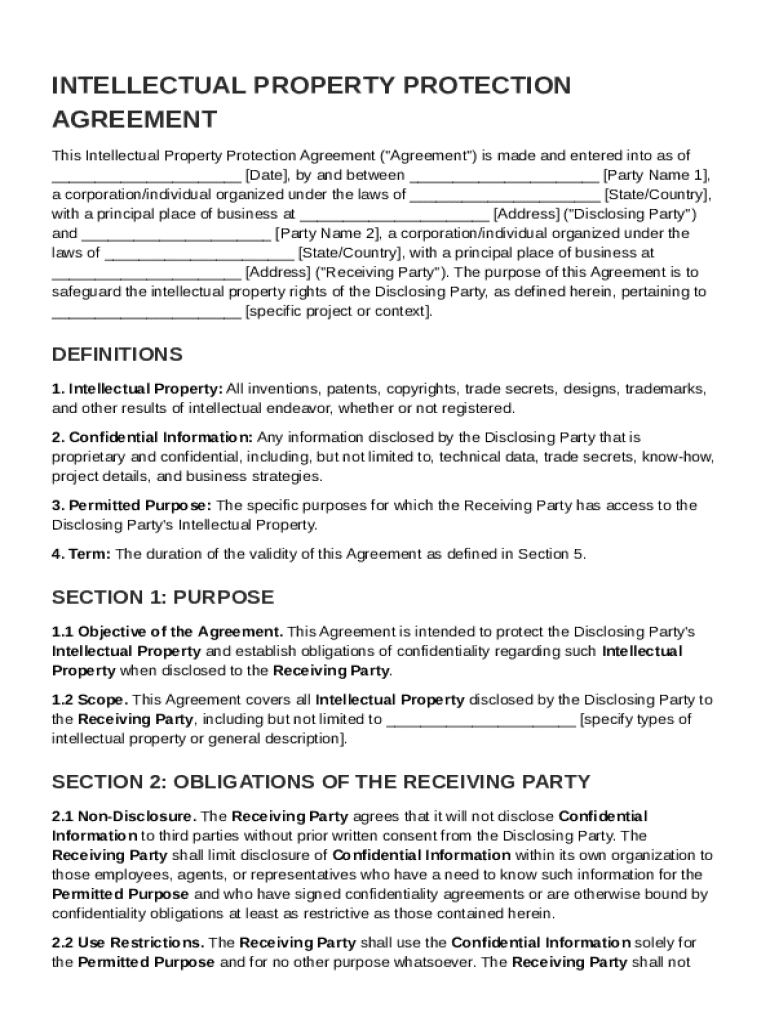
The Intellectual Property Protection Agreement Template is a legal document designed to protect intellectual property (IP) by defining the terms under which information can be disclosed and shared. This agreement primarily serves to safeguard the rights of the Disclosing Party, ensuring that the Receiving Party understands and respects the limitations on use, distribution, and confidentiality of the shared intellectual property. It includes essential components such as definitions of the types of IP covered, obligations to maintain confidentiality, and the duration of confidentiality obligations.
How to Use the Intellectual Property Protection Agreement Template
To use the Intellectual Property Protection Agreement Template effectively, begin by identifying the Disclosing and Receiving Parties and explicitly state the purpose of sharing the intellectual property. Customize the template by clearly outlining the scope of the information being protected and specifying any particular terms or conditions relevant to the parties involved. Ensure both parties carefully review and agree to the terms before signing the document, thereby creating a binding legal agreement.
Tailoring for Specific Needs
- Identify specific intellectual property: Clearly describe the type of IP being disclosed (e.g., patents, trademarks, or trade secrets).
- Defined purpose: Specify the reasons for which the Receiving Party can use the disclosed information.
- Limitations: Detail any limitations or exemptions, such as information already publicly available.
Key Elements of the Intellectual Property Protection Agreement Template
The core components of the Intellectual Property Protection Agreement Template are crucial for establishing thorough protection for the Disclosing Party's IP rights.
Essential Clauses
- Confidentiality Obligations: The Receiving Party must maintain strict confidentiality of the shared IP, using it only for the specified purposes.
- Ownership Rights: Reaffirm that all intellectual property rights remain with the Disclosing Party.
- Term and Termination: Define how long the Receiving Party is obliged to keep the disclosed information confidential, and the conditions under which the agreement can be terminated.
- Governing Law: Specify which jurisdiction's laws will govern the agreement, typically aligning with where the parties operate.
Steps to Complete the Intellectual Property Protection Agreement Template
- Gather Necessary Information: Collect details about the intellectual property, involved parties, and specific terms relevant to the agreement.
- Customize the Template: Modify the sections to reflect the specifics of your situation, using clear and concise language.
- Review and Edit: Ensure accuracy and completeness by carefully reviewing the terms, making any necessary adjustments.
- Approval by Legal Counsel: For additional assurance, seek a legal professional to review the document.
- Signature Collection: Upon agreement by both parties, collect signatures to formalize the contract.
Legal Use of the Intellectual Property Protection Agreement Template
The template operates under the protection of U.S. law, providing a standardized way to enforce confidentiality and usage terms for intellectual property. Utilizing this document aligns with legal standards, thereby offering enforceable rights in the event of a breach by the Receiving Party. Both parties should maintain signed copies of the agreement to ensure that they have legal recourse if necessary.
Important Terms Related to the Intellectual Property Protection Agreement Template
Discussing key terminology clarifies expectations and ensures comprehensive understanding.
Definitions
- Disclosing Party: The owner of the intellectual property.
- Receiving Party: The individual or entity that will access or receive the disclosed IP.
- Confidential Information: Information that is protected under the agreement’s terms.
Business Types That Benefit Most from the Intellectual Property Protection Agreement Template
The protection facilitated by this agreement is beneficial across various industries and business types, particularly those with valuable proprietary information needing protection.
Industries Benefiting from IP Protection
- Technology Companies: Protection of software, algorithms, and inventions.
- Manufacturing Firms: Safeguarding trade secrets and product designs.
- Creative Enterprises: Ensuring confidentiality of artistic works, designs, and scripts.
State-Specific Rules for the Intellectual Property Protection Agreement Template
While the template provides a general framework, certain states may have specific rules or requirements that necessitate adjustments to the agreement. Parties should seek legal advice to ensure compliance with local laws, particularly concerning the enforceability of non-compete and confidentiality clauses, which can vary significantly between jurisdictions in the United States.
Examples of Regional Considerations
- California: Generally more restrictive on non-compete clauses.
- Texas: Allows enforcement of reasonable non-disclosure terms.
Digital vs. Paper Version
The Intellectual Property Protection Agreement can be executed in both digital and paper forms. The choice between them often depends on convenience, access to technology, and the parties’ preference. Digital signatures are legally recognized under the ESIGN Act, providing a flexible and efficient method for executing the agreement without compromising on validity or enforceability.