






Definition & Meaning
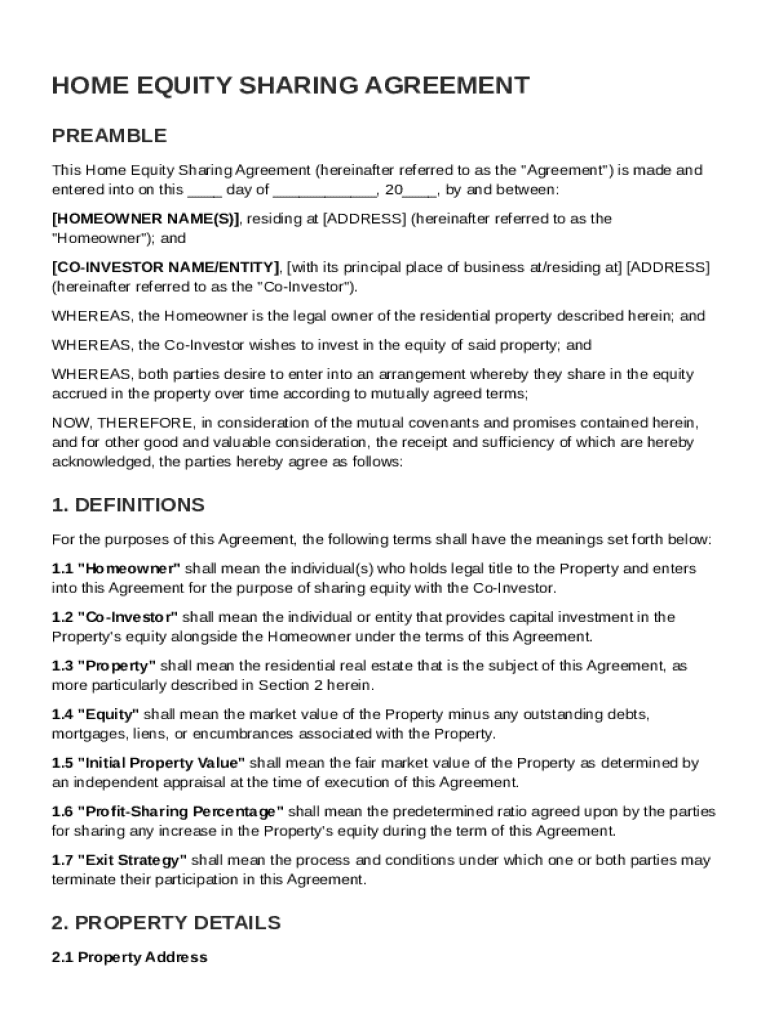
A Home Equity Sharing Agreement is a legal contract between a homeowner and a co-investor outlining shared ownership of equity in a residential property. This agreement defines the investment terms, profit or loss sharing ratios, and responsibilities of each party involved. It is designed to facilitate financial collaboration between individuals or entities interested in a joint investment in real estate, ensuring mutual benefits and clear terms for all participating parties.
The primary goal of this agreement is to clarify the financial relationship between the homeowner and the co-investor. Key components of the contract include the investment amount contributed by each party, ownership percentages, profit distribution, and specific conditions under which the property can be sold or refinanced. Additionally, exit strategies are typically detailed, outlining how the agreement can be concluded or dissolved.
How to Use the Home Equity Sharing Agreement Template
Proper use of the Home Equity Sharing Agreement Template requires several crucial steps to ensure all necessary details are captured and legally binding. The template serves as a comprehensive guide for drafting an agreement that meets both parties' needs. Begin by entering the personal information of the homeowner and the co-investor, including names and contact details.
Then, specify the property's address, investment contributions, and equity percentages. Ensure that both parties agree on any additional terms included in the agreement before proceeding to sign. By diligently filling out each section of the template, the document will provide robust legal protection and transparency for both parties.
- Identify the specific property and its value.
- Determine the amount of equity each party will hold.
- Specify terms related to maintenance and improvements.
Steps to Complete the Home Equity Sharing Agreement Template
Completing the Home Equity Sharing Agreement Template involves a multi-step process. Follow these detailed steps to ensure that the agreement is accurate and legally binding.
-
Collect Required Information: Gather the full legal names, addresses, and contact information for all parties involved.
-
Detail Investment Contributions: Clearly state the amount each party will contribute to the equity.
-
Define Ownership Percentages: Include the percentage of ownership or equity share for each party based on their financial contribution.
-
Specify Terms and Conditions: Outline any specific conditions related to the management of the property, profit sharing, or responsibilities for maintenance.
-
Sign and Date: Both parties must sign the document for it to be legally binding. Consider having the document notarized for added legal validity.
-
Review and Revise: All parties should review the completed agreement for accuracy and comprehensiveness before signing.
Key Elements of the Home Equity Sharing Agreement Template
Several essential components must be included in the Home Equity Sharing Agreement Template to ensure it fulfills its purpose effectively.
-
Property Description: Clearly describe the property involved in the agreement, including its legal address and any unique features.
-
Investment Details: Specify the monetary contributions from the homeowner and the co-investor, as well as any outside liabilities.
-
Profit Sharing Ratios: Clearly define how profits, and potentially losses, will be distributed between parties.
-
Management Responsibilities: Include any specific responsibilities each party will have related to the property's upkeep, management, or development.
-
Exit Strategy Clauses: Outline the conditions under which either party can exit the agreement, including potential options for buy-out or sale of the property.
Legal Use of the Home Equity Sharing Agreement Template
The legal use of a Home Equity Sharing Agreement Template ensures that both parties' interests are protected and provides a framework that is compliant with relevant legal standards. This document is legally binding once signed and should be drafted in accordance with state and federal laws.
Consulting with a legal professional before finalizing the agreement is recommended to account for regional regulations and any unique circumstances related to the property. This consultation helps to verify that all aspects of the agreement are enforceable and that no critical details have been overlooked.
Important Terms Related to Home Equity Sharing Agreement Template
Understanding the terminology within a Home Equity Sharing Agreement Template is essential for all parties.
- Co-Investor: The individual or entity partnering with the homeowner to invest in the property.
- Equity: The portion of the property owned outright by a party, typically reflected as a percentage.
- Profit Sharing: The agreed-upon percentage of profits each party receives from the property's financial gains.
- Exit Strategy: The plan detailing how the parties can conclude their investment relationship.
- Notarization: The official certification process to make a document legally recognized.
State-Specific Rules for the Home Equity Sharing Agreement Template
Rules and regulations surrounding Home Equity Sharing Agreements can vary by state. It is crucial to ensure that the agreement complies with state-specific laws, which may dictate certain requirements for legal validity.
Consulting a real estate lawyer within the state where the property is located can provide insights into specific legal requirements or recommendations. They can help tailor the agreement to address state-specific conditions, ensuring compliance with local property and contract laws.
Who Typically Uses the Home Equity Sharing Agreement Template
The Home Equity Sharing Agreement Template is commonly used by:
- Homeowners: Those looking to leverage their property to access additional funds or investments.
- Real Estate Investors: Individuals or entities seeking to invest in residential properties without full ownership.
- Family Members: Relatives who are co-investing in a property as part of a joint financial endeavor.
These users seek to establish clear financial and operational frameworks for their property investments, relying on the agreement to delineate responsibilities and profits clearly.