






Definition & Meaning
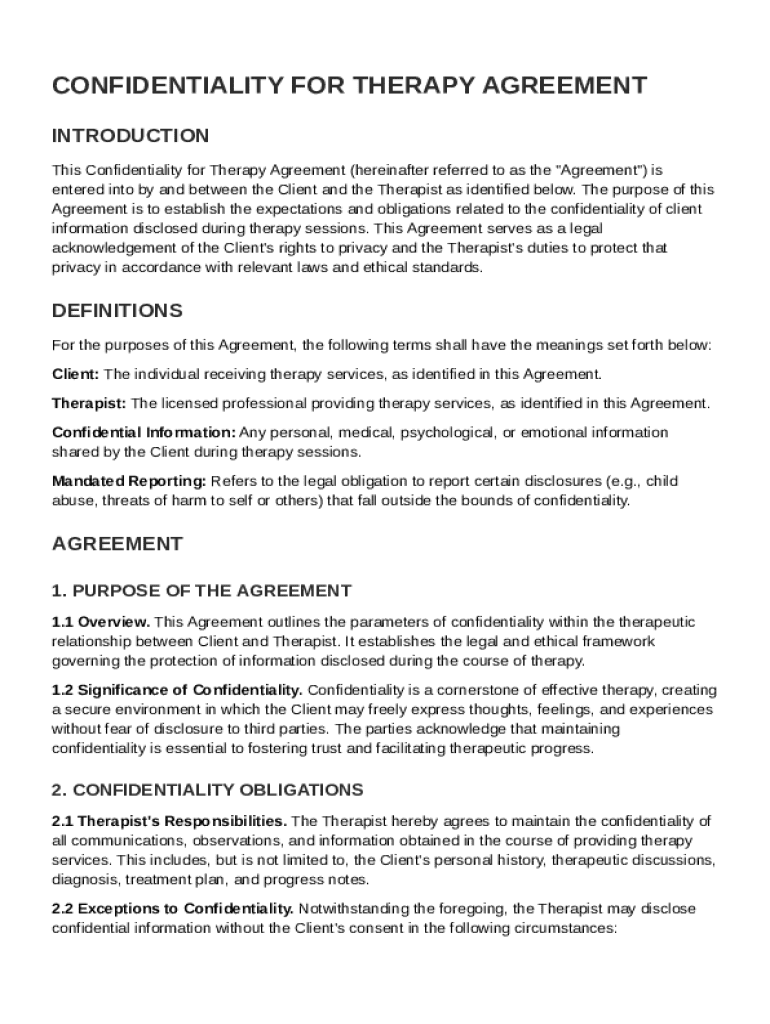
The "Confidentiality for Therapy Agreement Template" is a formal document outlining the confidentiality protocols that therapists and clients adhere to during therapy sessions. This template serves as an agreement to protect the client's sensitive information shared in therapy. It highlights the mutual understanding between therapist and client regarding the privacy of disclosed information, outlining circumstances where confidentiality might be breached, such as in cases involving the safety of the client or others, or as required by law.
- Mutual Obligations: Both the therapist and client agree on the importance of confidentiality in building trust and facilitating effective therapy.
- Exceptions to Confidentiality: Details specific instances where confidentiality may be legally breached.
- Importance in Therapy: Reinforces the critical role of confidentiality in ensuring a therapeutic relationship remains secure and trust-driven.
How to Use the Confidentiality for Therapy Agreement Template
This template can be utilized by therapists to tailor confidentiality agreements specific to their practice or jurisdiction. The document is editable, ensuring therapists can adapt the terms to align with relevant legal standards and ethical guidelines.
- Customize the Template: Modify sections to reflect specific legal obligations and practice policies.
- Discuss with Clients: Present the agreement to clients at the start of therapy to ensure mutual understanding and consent.
- Seek Legal Advice: Consider consulting a legal professional to verify that the customized agreement complies with current laws and standards.
Steps to Complete the Confidentiality for Therapy Agreement Template
Completing the template involves a systematic approach to ensure all necessary elements are included. Here are the steps:
- Download the Template: Access the template from a reliable source and open it in an editing tool compatible with DOC, PDF, or other supported formats.
- Fill in Therapist Information: Include the therapist's name, contact information, and practice details.
- Outline Confidentiality Terms: Clearly articulate the conditions under which information will remain confidential.
- Include Exceptions: Specify situations where confidentiality cannot be guaranteed.
- Signature Section: Ensure there is a space for both the therapist and client to sign and date the agreement.
- Review for Completeness: Double-check that all applicable areas are filled out correctly and that the document reflects current legal requirements.
Key Elements of the Confidentiality for Therapy Agreement Template
This agreement template includes critical components that define the scope and limitations of confidentiality in the therapeutic context.
- Client Information: Personal details to identify the client.
- Confidentiality Clause: Provision stating the general assurance of confidentiality during therapy.
- Exceptions: Comprehensive listing of exceptions legally allowed that may require breach of confidentiality.
- Legal Compliance: Clauses that ensure conformity with applicable federal and state laws.
- Dispute Resolution: Mechanism to handle any disagreements regarding confidentiality breaches.
Legal Use of the Confidentiality for Therapy Agreement Template
Therapists using this template should be knowledgeable about the legal implications and requirements associated with confidentiality in therapy. The document should be used in conjunction with applicable legal standards in the United States and updated regularly to reflect any changes in confidentiality laws.
- Compliance with Laws: Ensure the agreement aligns with HIPAA and other relevant privacy laws.
- Ethical Standards: Maintain ethical conduct by regularly reviewing the template against the ethical guidelines provided by professional organizations.
State-Specific Rules for the Confidentiality for Therapy Agreement Template
Privacy laws and regulations can vary significantly from state to state. Consequently, the template should be adapted to comply with state-specific rules and regulations.
- Research State Laws: Identify and incorporate any state-specific requirements impacting confidentiality.
- Update Regularly: Stay informed about legislative changes that may affect how confidentiality is understood and practiced within the state.
Examples of Using the Confidentiality for Therapy Agreement Template
This template can be applied in various therapeutic settings, demonstrating its versatility and importance.
- Individual Therapy: Used to assure personal confidentiality in one-on-one sessions.
- Group Therapy: Employed to clarify confidentiality expectations among multiple participants.
- Teletherapy: Adapted for remote sessions, emphasizing the security of digital communication channels.
Versions or Alternatives to the Confidentiality for Therapy Agreement Template
While the standard template provides a solid baseline, different versions or alternatives may be needed based on specific practice needs or contextual considerations.
- Tailored Agreements: Create custom agreements for different therapy types, such as family therapy.
- Pre-existing Templates: Explore other templates available for specific niches or therapeutic approaches to ensure a perfect fit.
By understanding these aspects, therapists and clients can effectively utilize the Confidentiality for Therapy Agreement Template to maintain privacy and trust within the therapeutic relationship.