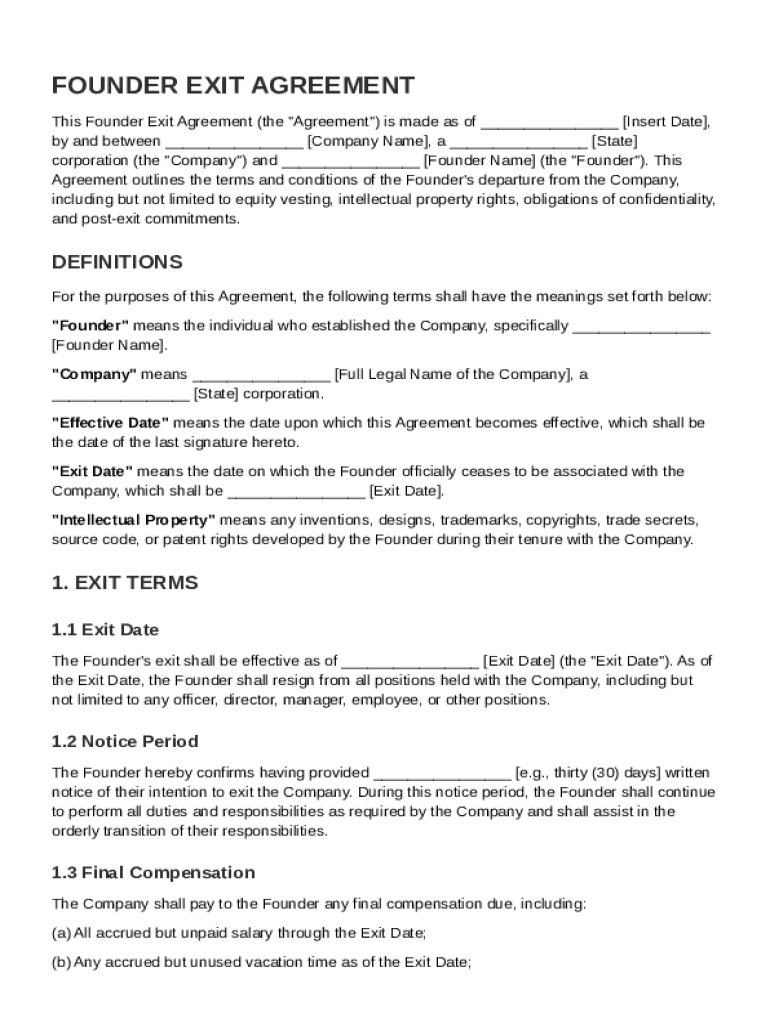







Definition & Meaning
The Founder Exit Agreement Template is a legal document that formalizes the exit of a founder from a company. It outlines the terms and conditions for leaving, including exit date, notice period, final compensation, and equity vesting. It also addresses important legal considerations such as intellectual property rights, confidentiality obligations, and non-compete and non-solicitation clauses. By clearly defining these aspects, the agreement protects both the outgoing founder and the company, helping to prevent potential disputes.
Purpose and Importance
The primary purpose of this template is to ensure a smooth transition during a founder's departure, maintaining business continuity and safeguarding company interests. It serves as a crucial tool for defining obligations and rights, ensuring that both parties understand their responsibilities. By covering comprehensive legal and financial terms, it minimizes the risk of future misunderstandings and legal challenges.
Key Elements of the Founder Exit Agreement Template
A well-structured Founder Exit Agreement includes several key components:
- Exit Date and Notice Period: Clearly specifies the founder's last working day and the notice period required to facilitate a smooth handover.
- Final Compensation and Benefits: Details the severance pay, outstanding bonuses, or any financial settlements due, as well as continued benefits if applicable.
- Equity Vesting and Options: Addresses how the founder's shares or stock options will be treated upon their departure, including accelerated vesting or buyback options.
- Intellectual Property and Confidentiality: Ensures that all intellectual property developed by the founder remains with the company and outlines confidentiality obligations.
- Non-Compete and Non-Solicitation: Prevents the departing founder from competing directly with the company or soliciting the company's employees or clients for a specified period.
Comprehensive Terms and Clauses
By incorporating well-defined clauses addressing the above elements, the agreement reduces ambiguity. This clarity ensures all parties are aligned with the expectations and legal commitments established for the founder's exit.
How to Use the Founder Exit Agreement Template
Utilizing the template involves several important steps:
- Review and Customize: Begin by thoroughly reviewing the template to ensure it aligns with your specific needs. Customize sections to reflect unique company policies and founder agreement terms.
- Consult Legal Counsel: Given the legal implications, it's crucial to have a lawyer review the agreement. This helps to tailor the template accurately and ensure compliance with applicable laws.
- Negotiate Terms: Engage with the departing founder to discuss and negotiate terms, making sure both parties have mutual agreement on all aspects of the exit.
- Sign and Execute: Once all terms are finalized, both parties should sign the document. Ensure proper execution and storage for future reference.
Practical Use Case
For instance, a co-founder leaving a tech startup would need their exit agreement to address the handling of proprietary software rights in the intellectual property clause, thus safeguarding both personal and company interests.
Who Typically Uses the Founder Exit Agreement Template
The Founder Exit Agreement is typically utilized by:
- Startups and Small Businesses: These entities often have founders playing pivotal roles, making structured exit agreements essential to protect business operations and continuity.
- Corporate Lawyers: Legal professionals use the agreement to standardize exit processes, ensuring fair and compliant transitions for both founders and companies.
- HR and Administrative Departments: These departments oversee execution and ensure that all procedural aspects align with company policies and legislations.


Real-World Scenario
Consider a healthcare startup where a founding doctor decides to pursue new ventures. The agreement would ensure a seamless transfer of their shareholding components and safeguard ongoing projects from confidentiality breaches.
Important Terms Related to Founder Exit Agreement Template
Several terms often associated with a founder's exit include:
- Vesting Schedule: The timeline over which the founder gains full ownership of shares or benefits, crucial for determining potential equity at the exit.
- Good Leaver/Bad Leaver Provisions: Defines exit scenarios to determine reduced or enhanced benefits based on the circumstances of the founder's departure.
- Clawback Provisions: Allows the company to reclaim benefits or compensation under specific conditions, providing a safeguard against detrimental actions by the founder.
Examples of Use
A founder leaving due to personal reasons might be classified as a "good leaver," entitling them to favorable exit terms. Conversely, a founder exiting due to a breach of contract might face "bad leaver" terms, affecting their compensation structure.
Legal Use of the Founder Exit Agreement Template
This document must adhere to certain legal standards to be valid:
- Compliance with State Laws: The agreement must conform to specific state laws governing employment, contracts, and business operations.
- Alignment with Company Bylaws: It should complement the existing company bylaws and shareholder agreements to prevent conflicts.
- ESIGN Compliance: Digital signatures on the agreement must adhere to the Electronic Signatures in Global and National Commerce (ESIGN) Act for enforceability.
Legal Consultation
Engaging a legal professional ensures the agreement's full compliance and alignment with broader contractual obligations and practices. It's essential for preventing any legal voids that could render the document unenforceable.
Versions or Alternatives to the Founder Exit Agreement Template
While the Founder Exit Agreement is standardized, variations may exist:
- Tailored Agreements: Specific customizations for sole proprietorships, partnerships, or large corporations might be necessary to address unique needs.
- Supplementary Documents: Additional agreements, such as nondisclosure agreements (NDAs) or settlement agreements, may complement the exit document for thorough coverage.
- Digital Templates: Online platforms often offer digital templates that facilitate ease of use and integration with business operations through software compatibility.
Template Customization Example
For a tech-focused business, the exit agreement might highlight detailed provisions related to patent rights or the transfer of proprietary technology, which might not be as critical in other industries.
State-by-State Differences
State legislations can impact the content of the agreement significantly:
- Non-Compete Clauses: Enforceability and limitations on non-compete clauses can vary by state, impacting how these are structured in the agreement.
- Severance and Compensation Laws: Different states have varying requirements for severance packages, affecting final compensation terms.
- Employee Rights and Obligations: State labor laws might influence the required notice period and other employee rights-related provisions in the contract.
Example of State Variation
In California, strict regulations around non-compete clauses mean these might be unenforceable. In contrast, other states may allow non-compete terms, requiring careful customization of the agreement to comply with regional laws and practices.