







Definition and Meaning
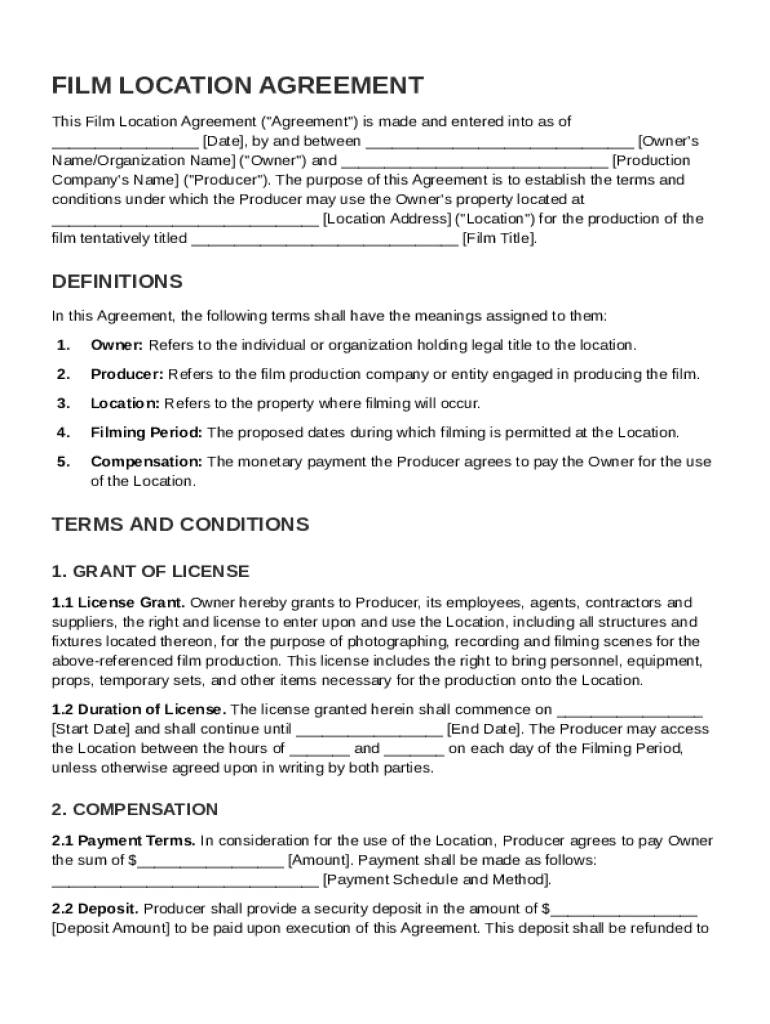
A Film Location Agreement Template is a formal contract between a property owner and a production company that details the terms and conditions for using a specific location for filming. This agreement serves to ensure that both parties have a clear understanding of their rights and responsibilities regarding the use of the location. The document includes essential elements like the grant of license, compensation, responsibilities, indemnification clauses, and termination rights. By defining these terms clearly, the agreement helps prevent misunderstandings and legal disputes, providing a secure framework for both parties.
Key Elements of the Film Location Agreement Template
-
Grant of License: This section outlines the specific rights granted to the production company to film on the property. It includes the duration and scope of use, ensuring the owner knows exactly what activities are permitted.
-
Compensation Details: This clause specifies the amount and method of payment that the production company will provide to the property owner. It might include rental fees, security deposits, or compensation for any damages incurred during filming.
-
Responsibilities of Both Parties: This part outlines the obligations of both the production company and the property owner. It includes maintaining the property, adhering to agreed-upon schedules, and other operational responsibilities.
-
Indemnification Clauses: These clauses protect both the property owner and the production company from potential legal claims arising from the filming activities. It ensures that any damages or legal issues are covered appropriately.
-
Termination Rights: This section allows either party to terminate the agreement under specific conditions, such as breach of contract or unforeseen circumstances, providing flexibility and protection for both.
-
Governing Law: This part designates which state or jurisdiction's laws will govern the agreement. It provides legal clarity and helps resolve any disputes that may arise.
How to Use the Film Location Agreement Template
To effectively use the Film Location Agreement Template, begin by carefully reviewing the document to ensure all elements align with your needs. Follow these steps:
-
Customize the Template: Fill in specific details about the location, filming dates, compensation, and any particular requirements or permissions.
-
Review Indemnification and Liability Clauses: Make sure both parties understand and agree to these terms, as they protect against potential legal issues.
-
Negotiate Terms: Discuss and adjust any terms as needed to meet the needs of both the production company and the property owner.
-
Legal Review: Consider having the agreement reviewed by a legal professional to ensure it complies with local laws and regulations.
-
Signatures: Ensure the document is signed by both parties, which legally binds them to the terms of the agreement.
-
Distribution: Share copies of the signed agreement with relevant parties, ensuring everyone involved is informed.
Who Typically Uses the Film Location Agreement Template
The Film Location Agreement Template is commonly used by:
-
Production Companies: They need formal permission to use a location for filming, ensuring legal compliance and smooth operation.
-
Property Owners: Individuals or organizations offer their location for filming in exchange for compensation and other benefits outlined in the agreement.
-
Legal Professionals: They may use the template to draft, review, or modify agreements as part of legal consulting services.
-
Entertainment Lawyers: These professionals ensure that all contractual terms are legally binding and protect their client’s interests.
-
Location Scouts: They often facilitate these agreements as part of their role in securing sites for production companies.


Steps to Complete the Film Location Agreement Template
-
Download and Review: Acquire the template and read it thoroughly to understand its structure and content.
-
Insert Specific Details: Input the necessary information about the property, production company, filming dates, and compensation.
-
Modify Clauses as Needed: Adjust any sections to fit specific requirements or to comply with local laws.
-
Consult with Legal Counsel: If necessary, seek advice from a legal professional to ensure the agreement is comprehensive and legally binding.
-
Finalize the Agreement: Make sure all parties agree to the terms before proceeding to the signing stage.
-
Execute and File: Sign the document, distribute copies to relevant parties, and store it securely for future reference.
Legal Use of the Film Location Agreement Template
These agreements are legally binding documents under U.S. law, subject to various state-specific statutes. It’s crucial to:
-
Follow Jurisdictional Requirements: Ensure the agreement complies with local law, including zoning laws, noise ordinances, and permits required for filming.
-
Liability Protection: The agreement should include clauses that protect both parties from unforeseen liabilities arising during filming.
-
Ensure Compliance: Both parties must adhere to state and federal regulations, ensuring full legal compliance with environmental, safety, and labor laws.
State-Specific Rules for the Film Location Agreement
Since laws can vary significantly by state, the Film Location Agreement Template may need adjustments to meet specific state regulations:
-
Permitting Requirements: Different states or cities may require unique permits or licenses for filming. It’s essential to verify these requirements in advance.
-
Insurance Stipulations: Insurance requirements can also vary, with some states mandating specific coverage levels for filming activities.
-
Environmental Regulations: States with strict environmental laws might impose additional restrictions on filming locations, especially if the site is environmentally sensitive.
Examples of Using the Film Location Agreement Template
To illustrate practical use, here are a few scenarios:
-
Urban Filming: A production company secures a downtown location for a week-long movie shoot. The agreement specifies daily rental fees, access times, and street closure permissions.
-
Residential Property Use: A TV show obtains a permit to film in a private residence, detailing cleanup responsibilities, property restoration, and compensation for the homeowner.
-
Historic Site Filming: A documentary crew films at a historic site, with conditions set to preserve the location’s integrity and ensure public safety during filming.
These scenarios provide a clear picture of how the Film Location Agreement Template facilitates transparent, legally sound arrangements between property owners and production companies.




