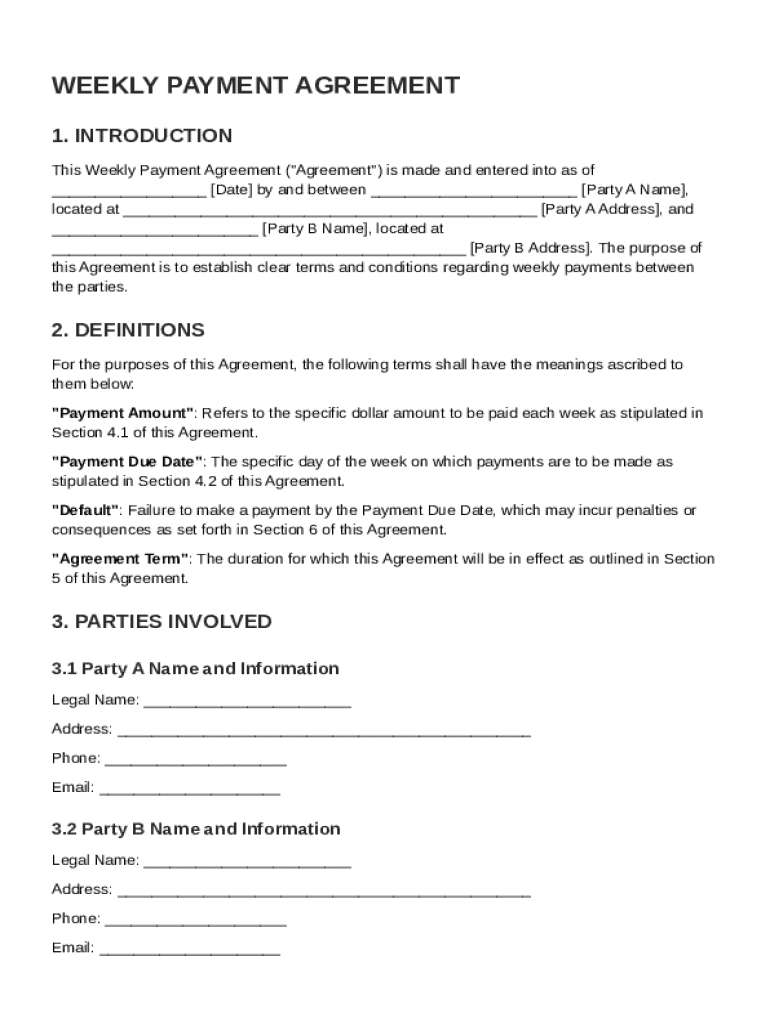







Definition and Meaning
The Weekly Payment Agreement Template is a structured contract used to outline payment terms and conditions between two parties engaged in a financial transaction requiring weekly settlements. It is essential for establishing mutual understanding and expectations regarding payment amounts, schedules, methods of payment, and the duration of the agreement. The template helps both parties clarify all aspects and obligations of their financial relationship, preventing misunderstandings and disputes. By using this template, both parties agree on the legal terms and conditions governing their financial interactions.
Key Components of the Agreement
- Payment Terms: Clearly defining the amount, frequency, and currency of the payments helps both parties understand what is expected in terms of financial transfers.
- Schedule and Duration: Establishing a timeline for when payments should be made ensures consistency and reliability in financial planning.
- Late Payment Fees: Outlining penalties for late payments motivates timely transfers and provides redress for the receiving party in the case of delays.
- Amendment Procedures: Including a clause on how changes to the agreement can be made prevents unauthorized alterations and maintains contract integrity.
- Governing Law: Specifying the jurisdiction whose laws will apply guarantees clarity on legal matters in the event of disputes.
How to Use the Weekly Payment Agreement Template
Utilizing the Weekly Payment Agreement Template involves several strategic steps to ensure its effectiveness and legal standing. Individuals and businesses can follow these steps to customize the document for their specific needs:
- Identify Parties Involved: Clearly outline the names and contact information of both the paying and receiving parties to establish identity and accountability.
- Customize Payment Details: Adjust the payment amounts, dates, and frequency as required by the specific agreement, ensuring all financial terms reflect the mutual understanding of both parties.
- Incorporate Relevant Terms and Clauses: Ensure all clauses, such as penalties for late payment and amendment procedures, are included and clearly defined to avoid future conflicts.
- Review Legal Conformity: Verify that the agreement abides by applicable local, state, or federal laws to ensure it remains enforceable.
- Sign and Store Securely: Both parties should thoroughly review, sign the document, and store copies in a secure manner for future reference and legal enforcement.
Key Elements of the Weekly Payment Agreement Template
Understanding and appropriately addressing the key elements of the Weekly Payment Agreement Template ensures the document's efficacy and legality.
Essential Elements:
- Parties and Addresses: The agreement must specify the legal names and addresses of all entities to avoid any ambiguity about participant identities.
- Payment Info: Detailed sections describing the payment frequency, method (e.g., bank transfer, electronic payment), and amount to establish consistency.
- Termination Conditions: Clearly define what constitutes termination events (such as contract breach) to safeguard both parties' interests.
- Conflict Resolution Mechanisms: Including options for arbitration or mediation can provide pathways for resolving disputes without escalating to litigation.
Legal Use of the Weekly Payment Agreement Template
The Weekly Payment Agreement Template is a legally binding document acknowledged within the U.S. legal system. Its proper use assures both validity and enforceability:
- Legal Compliance: The template should be structured to comply with the Uniform Commercial Code (UCC) where applicable, as well as any relevant state-specific law duly noted within the document.
- Legal Consultation: While using templates can streamline the process, consulting legal counsel ensures that the specific terms are enforceable and protect all parties involved.
- Binding Nature: Upon signing, the document binds both parties to its terms, though analyzable and acceptable under legal scrutiny.
Important Terms Related to the Weekly Payment Agreement Template
Comprehension of key terminologies within the Weekly Payment Agreement is crucial for both parties:
- Payee: The party receiving the payments. They have the authority to enforce payment and penalties under the agreement.
- Payer: The entity obliged to make scheduled payments. This party commits to fulfilling financial responsibilities as agreed.
- Amendment: Changes or additions to the original agreement terms which must be agreed upon and acknowledged by both parties.
- Default: Failure to adhere to the payment terms as stipulated in the agreement, usually triggering penalties.
Examples of Using the Weekly Payment Agreement Template
Practical applications of the Weekly Payment Agreement Template can vary depending on industry and transaction type:
- Freelancers and Clients: Freelancers may require weekly payments for services rendered, creating a reliable income flow while clients budget consistent outgoing payments.
- Landlords and Tenants: In cases where rental agreements allow for weekly rent payments, the template secures consistent rental income while accommodating tenants with flexible payment schedules.
- Suppliers and Retailers: Regular supplier deliveries to retailers may necessitate weekly payments in return, ensuring product supply and financial liquidity.
Steps to Complete the Weekly Payment Agreement Template
Completing the Weekly Payment Agreement Template effectively requires attention to detail:
- Gather Necessary Information: Collect all relevant details from both parties, including legal identity and contact information.
- Enter Financial Terms: Add specific data such as payment schedule, amount, and methods, ensuring the information aligns with both parties' agreements.
- Include Legal Clauses: Ensuring protection mechanisms for scenarios like default or amendment needs.
- Review and Sign: Both parties should review the agreement comprehensively before signing to ensure transparency.
- Document Storage: Securely store signed copies to facilitate easy retrieval when needed.
State-Specific Rules for Weekly Payment Agreement Template
Certain rules vary state-by-state, affecting how weekly payment agreements are constructed and enforced:
- Consumer Protection Laws: Each state may have distinct regulations safeguarding against unfair payment agreements, often requiring explicit terms in clearer language.
- Local Jurisdiction Influence: While many aspects of contract law are universally recognized, some specifics could vary, requiring localization, such as in California's own consumer protection and business contract laws.
Understanding such differences empowers businesses and individuals to frame agreements compliant with their specific state's legal expectations.